11 Energizing Kundalini Yoga Poses to Activate Your Inner Energy
You've felt it before—that 2 p.m. crash that sends you reaching for coffee, or the sense that you're running on fumes instead of genuine fuel. You're not lacking energy. Your body already contains the prana, or life force, it needs. The question isn't where to find more energy. It's how to circulate what you already have.
Kundalini yoga offers a direct answer. Unlike gentle yoga styles that calm the nervous system, kundalini practices are designed to move energy through the body and awaken the dormant shakti coiled at the base of your spine. The poses matter, yes. But the real magic is in the breath. When you combine specific asanas with breath of fire—the rapid, rhythmic breathing at the heart of kundalini practice—ordinary poses become energy-circulating tools that target chakra centers and build sustainable vitality from within.
This is not mysticism dressed up as fitness. These are techniques that have been refined over thousands of years and are now studied in neuroscience labs. The Kundalini Research Institute and certified teachers worldwide use these poses and pranayama techniques to help people access their own reservoir of power.
What Makes a Pose Kundalini
Many yoga poses appear in kundalini classes. Cat-cow, forward folds, warrior poses—you'll recognize them. What transforms a standard asana into a kundalini practice is the breath and intention. Most kundalini sequences are performed with breath of fire (bhastrika), a powerful, rhythmic breathing pattern where the diaphragm pumps at a steady pace, usually 2-3 breaths per second. The exhale is forced; the inhale is passive.
Breath of fire activates the solar plexus and core muscles, heats the body, and stimulates the vagus nerve—which shifts your nervous system toward alertness and presence. This breath combined with movement is what creates the energetic effect. Without it, you're just doing poses. With it, you're moving prana through specific nadis (energy channels) and activating chakras—the seven energy centers running along the spine from muladhara (root) to sahasrara (crown).
The poses themselves are held for specific durations—often 1 to 3 minutes, sometimes longer—which builds stamina and deepens the energetic work. This is different from power yoga or vinyasa flow, which emphasize movement. Kundalini asks you to stay, breathe intensely, and let the energy work happen.
Before You Begin: Preparation and Safety
Kundalini practice is powerful and deserves respect. If you're new to breath of fire or kundalini, start slowly. This practice isn't recommended for pregnant people, people with high blood pressure, or those with a history of trauma without experienced guidance. Kundalini can surface emotional release; working with a certified kundalini teacher (KRI-trained through the Kundalini Research Institute is the gold standard) is ideal, especially in your first experiences.
If you're practicing at home, do breath of fire for no more than 1-2 minutes when starting out. If you feel dizzy, stop. If you feel heat, tingling, or unusual sensations, that's often normal—kundalini students call this 'kundalini energy moving'—but honor your body's signals. Never push into pain.
Wear comfortable, loose clothing. Kundalini teachers traditionally wear white, which is said to extend the aura, but any neutral color works. You'll want a yoga mat and possibly a blanket to sit on—many poses are done seated, and your sitting bones need support.
1. Breath of Fire Itself: The Foundation
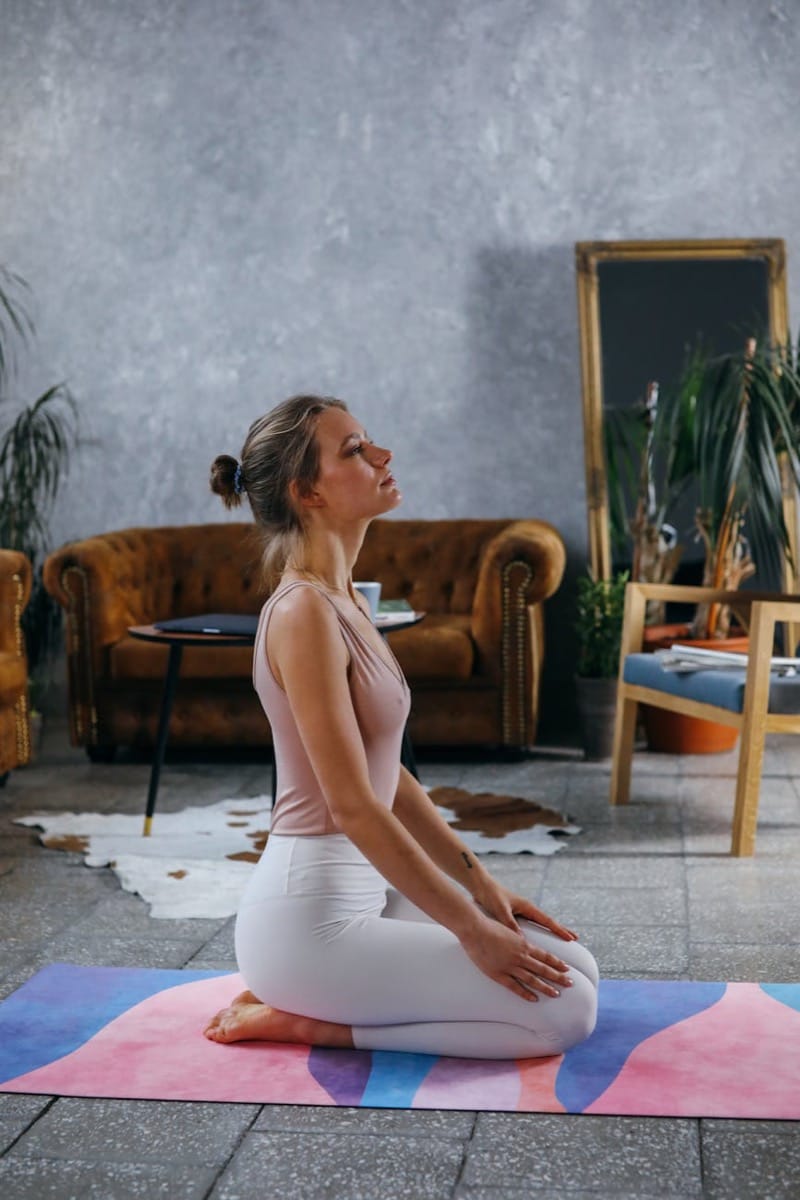
Before moving through poses, master the breath. Sit in easy pose (sukhasana) or hero pose (virasana) with your spine straight. Place one hand on your belly, one on your chest. Inhale passively through the nose as your belly expands. Exhale forcefully through the nose as your belly pulls in and up. The movement comes from your diaphragm and navel center, not your chest. Start at a comfortable pace—maybe 60 breaths per minute—and gradually build to 120 breaths per minute as you practice over weeks.
This breath alone activates the third chakra (manipura), your power center. Do breath of fire for 3 minutes daily and you'll notice increased alertness, steadier mood, and a sense of inner strength. This is your baseline practice. All the poses that follow gain their potency from this breath.
2. Sat Kriya: The Core Kundalini Practice
Sit in rock pose (virasana) or easy pose with your spine tall. Interlace your fingers and raise your arms overhead, index fingers pointing up. Begin breath of fire while chanting 'SAT' (truth) on the exhale and 'NAM' (identity) on the inhale. As you chant SAT, pull your navel in sharply; on NAM, release it. The sound vibrates at the solar plexus and crown.
Hold for 3 minutes. This is the most important kundalini kriya—the practice that integrates all chakras and balances the nervous system. When you finish, keep your arms overhead and suspend your breath for 15 seconds. Then inhale, hold for 15 seconds, exhale, and lie down flat for 2 minutes. The lying down is essential; it allows the energy to settle and integrate.
3. Shoulder Rolls with Breath of Fire
Sit tall with your hands on your thighs. Begin breath of fire and roll both shoulders back simultaneously in large circles. Do this for 1-2 minutes, then reverse direction for another minute. This mobilizes the heart chakra (anahata) and releases tension stored in the shoulders and upper back. Many of us carry stress here; this pose is both releasing and energizing.
4. Spinal Twists
Sit in easy pose with your hands behind your head, elbows wide. Begin breath of fire and twist your spine from side to side—a gentle rotation, not a jerky movement. Let your arms move freely with the motion. Do this for 2-3 minutes. The spine is the central channel for kundalini energy (the sushumna nadi). Twists keep it fluid and open so energy can flow freely from your root chakra all the way to your crown.
5. Stretch Pose
Lie on your back with your legs straight. Lift your head and shoulders slightly off the ground—your chin slightly tucked, your gaze forward. Press your arms straight down by your sides, palms down. Begin breath of fire. This activates your core and builds tremendous heat in the navel center. The heat itself is kundalini fire; it burns through stagnation and fear. Start with 30 seconds if you're new; work up to 3 minutes.
6. Bow Pose (Dhanurasana) with Breath of Fire
Lie on your belly, bend your knees, and reach back to grab your ankles. Press your feet into your hands to lift your chest and thighs off the ground. Keep your head neutral or gaze slightly forward. Begin breath of fire. Hold for 1-2 minutes. This pose directly activates kundalini at the sacral center (svadhisthana) and opens the heart. The backbend creates a channel for energy to rise. You'll feel heat in your belly and chest.
7. Camel Pose (Ustrasana)
Kneel with your hips over your knees, about hip-width apart. Place your hands on your low back for support. Inhale, lengthen your spine, then exhale as you gently arch backward, letting your head fall back only if your neck is comfortable. Begin breath of fire. This is an intense heart opener that directly activates the heart and throat chakras (anahata and vishuddha). Camel releases deep grief and opens you to love and authentic expression. Hold for 1-2 minutes.
8. Cat-Cow Pose with Breath of Fire
Come to all fours with your wrists under your shoulders and knees under your hips. As you exhale with breath of fire, round your spine, drop your head, and draw your navel in (cat). As you inhale, arc your spine, lift your gaze, and press your chest forward (cow). Move rhythmically with your breath for 2-3 minutes. This spinal wave moves energy from root to crown and is gentler than many kundalini poses—a good option if you need to modify.
9. Frog Pose with Breath of Fire
Squat with your feet flat or heels slightly off the ground, feet hip-width apart. Place your fingertips on the floor inside your feet. Begin breath of fire and bounce gently up and down, your heels lifting and lowering. Do this for 1-2 minutes. Frog pose awakens the first and second chakras (muladhara and svadhisthana), grounding you and building sexual and creative energy. It's also deeply cleansing for the pelvic floor.
10. Shoulder Stand (Sarvangasana) or Supported Shoulder Stand
Lie on your back. Press your elbows into the ground, placing your hands on your upper back for support. Press into your elbows to lift your torso and legs toward the ceiling. Your weight rests on your shoulders and upper arms, not your neck. If this is too advanced, do a supported version with your legs up the wall or hips elevated on a block. Begin breath of fire or simply breathe deeply. Hold for 1-3 minutes. Shoulder stand activates the throat and third eye chakras and is said to calm kundalini energy if it rises too quickly.
11. Lion Breath (Simhasana) for the Crown
Sit in rock pose or easy pose. Inhale deeply through your nose. Exhale forcefully through your mouth with the sound 'HA,' opening your mouth wide and extending your tongue toward your chin. Let your eyes cross slightly toward the third eye. Do this 3-5 times. Lion breath releases tension in the face, jaw, and throat while activating the crown chakra (sahasrara) and the ajna (third eye). It's often used at the end of practice to seal the energy work.
A Simple Kundalini Sequence You Can Practice Today
If you're new, don't try all 11 poses at once. Here's a 15-minute sequence to start:
Begin with 1 minute of breath of fire seated. Move into Sat Kriya for 3 minutes. Follow with spinal twists for 2 minutes. Move into stretch pose for 1 minute. Flow through cat-cow for 2 minutes. Finish with shoulder stand (or supported version) for 1-2 minutes. Close with lion breath 3 times. End lying down for 2 minutes.
Do this 3-4 times per week for 2 weeks. Notice what shifts—your energy, mood, mental clarity, sleep. This is kundalini working. Once you're comfortable, add more poses or extend the holds.
Why Kundalini Works Differently Than Other Yoga
Most yoga styles aim to calm the nervous system and build flexibility. Kundalini explicitly aims to move energy and awaken consciousness. The breath of fire alone increases your metabolism by up to 25% in short-term studies. The rapid diaphragmatic engagement stimulates the vagus nerve and parasympathetic system, which is counterintuitive—intense breath should stress you, but instead it grounds and energizes you.
The poses are often held longer than in other yoga, building muscular endurance and mental stamina. Sitting in bow pose for 2 minutes with breath of fire isn't about flexibility; it's about training your mind and body to stay present with intensity. Over time, this translates to real life—you become unshakeable, energized, and less reactive to external stress.
Common Questions About Kundalini Practice
Will my kundalini awaken? Kundalini awakening is gradual for most people. You don't need dramatic experiences to benefit. Consistent practice with breath of fire will move energy, increase vitality, and shift your consciousness—awakening doesn't have to look dramatic.
Can I practice kundalini every day? Yes. Many teachers recommend it. Start with 15 minutes daily rather than long sessions 2-3 times per week. Your body will adapt and respond faster.
What if breath of fire makes me dizzy? You're likely hyperventilating. Slow your pace, do it for less time, or practice exhale-focused breathing instead. Never push past dizziness.
Is kundalini yoga spiritual or physical? Both. It's a system that recognizes you as more than a body—you have an energetic dimension. But the benefits are felt in your body and nervous system. You don't need to be spiritual to practice; you'll become more aware naturally.
Next Steps: Going Deeper
These 11 poses and this sequence are a starting point. If kundalini resonates with you, consider finding a certified kundalini yoga teacher (the Kundalini Research Institute maintains a directory) or taking an in-person class. The energetic transmission that happens in a group or one-on-one setting is powerful. Online classes through platforms like Yogini or teachers trained at KRI are accessible if studios aren't available near you.
Read Yogi Bhajan's 'Kundalini Yoga Manual' or Sat Honore's 'Kundalini Rising' for deeper study. Join a practice group. Most importantly, commit to consistency. Kundalini rewards regular practice. Three weeks of daily 15-minute sessions will shift your energy, mood, and sense of possibility more than months of occasional practice.
Your body already holds the energy you need. These poses and this breath are the keys to unlock it.
Chakras and astrology are deeply connected — explore how planetary energies map to the chakra system on Online Astrology Planet.
Go Deeper
Compare real programs in the OYP YTT Database:
Related Reading
Subscribe to my newsletter to get the latest updates and news