10 Best Yoga Nidra Certifications Online: Accredited Programs for 2026

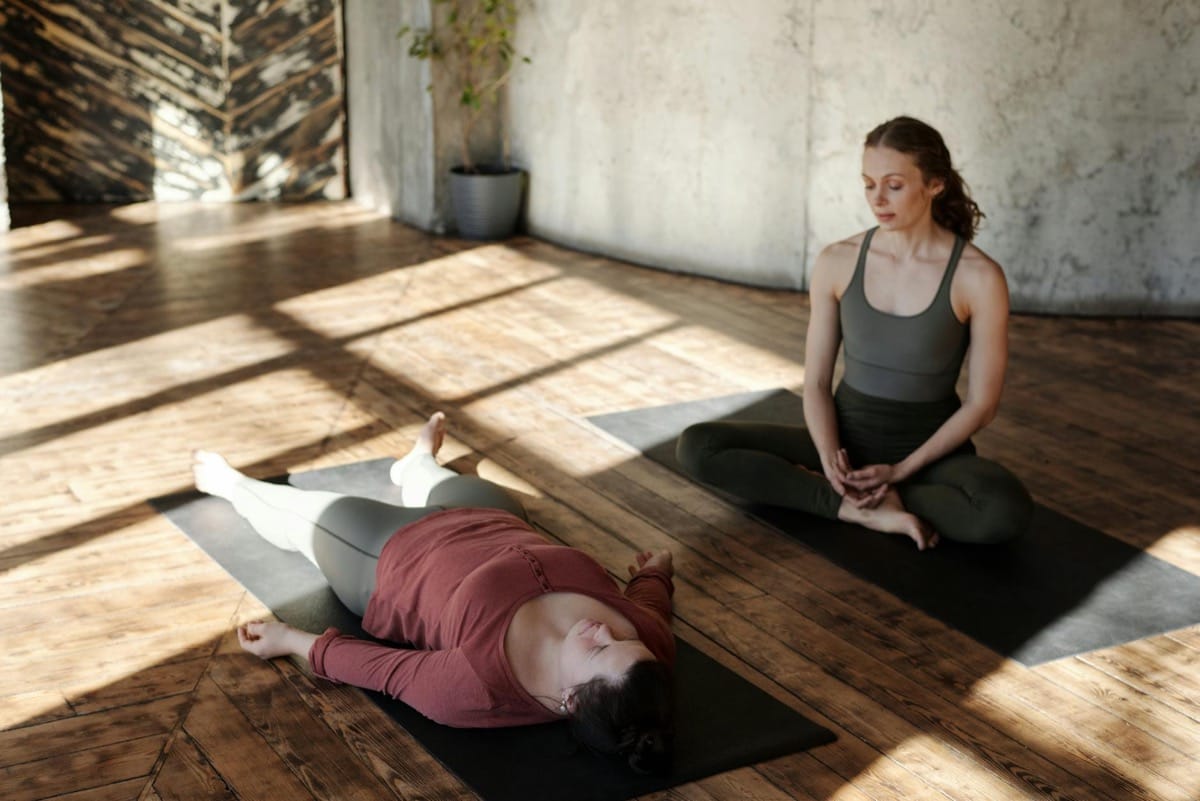
Explore 10 legitimate online yoga nidra certifications with real accreditation status, pricing, and schedule details to match your teaching goals.
You've experienced yoga nidra—that profound state where your body releases tension while your mind stays gently aware. Now you're considering guiding others into that same sanctuary of rest. But the certification world feels murky. You're asking real questions: Which programs are actually accredited? How much will this cost? Can I balance training with my current life? Will this prepare me to teach with confidence, not just credential in hand? These questions deserve specific answers, not marketing language. This guide walks through 10 legitimate yoga nidra certifications available online, with real details about costs, schedules, accreditation status, and what you'll actually learn.
What Makes a Yoga Nidra Certification Legitimate
Before comparing specific programs, it helps to know what separates rigorous training from credential-only courses. A legitimate yoga nidra certification should be backed by either Yoga Alliance accreditation (the most widely recognized standard in North America), International Association of Yoga Therapists (IAYT) accreditation, or clear affiliation with established yoga lineages. Accreditation doesn't make a program perfect—it means someone outside the organization has verified their curriculum meets minimum standards. The program should require at least 100 hours of training (many offer 200+), include both live instruction and recorded modules, and have clear expectations around practice hours and assignments beyond video watching. You should also be able to name the actual teachers, see their credentials, and understand what happens after certification—will you receive a recognized credential? Can you list yourself as RCYT (Registered Yoga Teacher) with Yoga Alliance if applicable? These details matter because your students, and referral sources, will ask.
1. Yoga Alliance Registered Yoga Nidra Programs via IAYT
The International Association of Yoga Therapists (IAYT) maintains a directory of yoga nidra trainings that meet their standards. These programs vary widely in format, but all are taught by instructors who meet IAYT criteria. Cost typically ranges from $2,000 to $5,000 for 100- to 200-hour trainings. Most offer hybrid options (some live classes, some recorded). The advantage: IAYT accreditation carries weight with healthcare providers, wellness centers, and employers seeking evidence-based yoga instruction. The trade-off: these programs often have longer timelines (6-12 months) because they require substantial personal practice documentation and mentorship. Check the IAYT website directly (iayt.org) rather than third-party aggregators—you'll find the current list of accredited trainers and their specific offerings. Many are small, individual-teacher operations rather than large franchises, which means personalized feedback but also less institutional structure.
2. Yoga Alliance RYT-500 Programs with Yoga Nidra Specialization
If you're new to yoga teaching overall, some programs combine RYT-500 (Registered Yoga Teacher at 500-hour level) with integrated yoga nidra training. YogaWorks Online and Yoga International offer tracks where nidra training is embedded within a broader teacher certification. Cost runs $3,000 to $6,000, and these programs typically span 6-9 months with a mix of live Zoom classes, self-paced modules, and mentor feedback. The benefit: you're building a foundation in asana, philosophy, and anatomy while specializing in nidra. The drawback: if you already teach yoga, you're repeating material you may know. Yoga Alliance accreditation means you can register as an RYT-500 with Yoga Alliance upon completion (provided you also have 100+ hours of yoga nidra specifically). This opens doors to corporate wellness contracts and insurance-reimbursable sessions in some regions. Check that the program clearly states which hours count toward yoga nidra specialization versus general teacher training.
3. iRest Yoga Nidra Certification Program
iRest (Integrative Restoration) is a specific lineage of yoga nidra developed by Richard Miller, a pioneering yoga therapist. The iRest Facilitator Certification is 200 hours over 12 weeks (intensive online schedule) or extended over 6 months. Cost is approximately $3,500 to $4,200. This program is distinctive because it integrates yoga nidra with somatic therapy principles and trauma-informed teaching. You'll learn detailed protocol for guiding the iRest practice (which has a specific sequence and language), and you'll receive training in working with anxiety, PTSD, chronic pain, and sleep issues. iRest carries significant clinical credibility—it's used in VA hospitals and research studies. Accreditation: iRest programs are recognized by Yoga Alliance for RYT credit and by IAYT for continuing education. The curriculum is standardized across certified teachers, so your iRest credential means something consistent wherever someone encounters it. If you're drawn to trauma-informed, therapeutically rigorous work, this is worth the investment. The trade-off: iRest has a specific pedagogy, so you're learning one system rather than a broader yoga nidra toolkit.
4. Yoga Nidra Network Certification with Swami Satyananda Lineage
The Bihar School of Yoga tradition, established by Swami Satyananda Saraswati, offers yoga nidra training through affiliated teachers and centers worldwide. The Yoga Nidra Network (a collective of certified teachers from this lineage) offers online certification at 100-hour and 200-hour levels. Cost ranges from $1,800 to $3,500. Training includes the classical Satyananda yoga nidra protocol, Sankalpa (resolve) work, and the theoretical underpinnings from the Upanishads and Tantric philosophy. Classes blend recorded instruction with live Q&A sessions and personal practice requirements. Accreditation: Bihar School lineage programs are recognized by Yoga Alliance for RYT hours, though not all are IAYT-accredited individually (check your specific teacher). This lineage offers authentic, traditional teaching with less clinical adaptation than some newer programs. If you're interested in the philosophical depth and classical sequencing of yoga nidra, this is a valuable path. The consideration: the lineage-based approach means less emphasis on trauma work or clinical adaptation compared to iRest or IAYT-affiliated therapy tracks.
5. Tias Little's Restful Yoga Nidra Training
Tias Little, an anatomist and yoga teacher with decades of experience, offers a yoga nidra specialization through his Prajna Yoga Institute. The 200-hour Yoga Nidra Certification is available online (asynchronous modules plus live sessions) at approximately $3,000. This program emphasizes anatomy, nervous system science, and the somatic dimension of yoga nidra. You'll learn how to guide practices for different nervous system states and anatomical considerations. The teaching style is scholarly without being abstract—Tias grounds yoga philosophy in contemporary neuroscience and anatomy. Accreditation: Yoga Alliance RYT-creditable and accepted for continuing education by most yoga organizations. This program appeals to teachers who want depth in the bio-mechanics of relaxation and those working with physically-complex populations. Timeline: typically 6-8 months with flexibility in pacing. The strength is the integration of anatomy and nervous system regulation. The consideration: the program requires comfort with scientific content and embodied learning (you practice the entire yoga nidra curriculum yourself as part of the training).
6. Yoga International Yoga Nidra Teacher Certification
Yoga International, founded by Himalayan Institute lineage teachers, offers a 100-hour Yoga Nidra Certification entirely online. Cost is approximately $1,500 to $2,000, making it one of the more accessible options. The program includes recorded video modules, live group calls, personal coaching sessions, and a practice journal. Teachers include Raghu Markus and other senior Himalayan Institute-trained instructors. Accreditation: Yoga Alliance RYT-creditable. This program is well-structured and accessible for working professionals—you can move through modules at your pace, but there's accountability through coaching calls and peer community. The strength: affordability, flexibility, and connection to a deep lineage. The consideration: 100 hours is the minimum standard, so less depth than 200-hour programs. Best suited for teachers who already have a personal yoga nidra practice and want to learn how to guide it, rather than beginners to nidra entirely.
7. Yoga Alliance RYS Continuing Education in Yoga Nidra
If you're already an RYT-200 or RYT-500, some programs offer 50- to 100-hour continuing education specifically in yoga nidra, rather than full certifications. Providers include Yoga Journal's Academy (partnering with various teachers), Do Yoga Institute, and individual Yoga Alliance-listed trainers. Cost typically $800 to $2,000 for 50-hour trainings, $1,500 to $3,000 for 100-hour. These programs are condensed and assume you understand yoga fundamentals, so they move faster than foundational certifications. You won't receive a separate credential (you remain RYT-200 or 500), but you can document the continuing education and mention yoga nidra specialization on your teaching bio. Accreditation: these hours often count toward Yoga Alliance CE requirements for maintaining your RYT status. This option is ideal if you want to add nidra to your teaching without investing in another full certification program. The trade-off: you're not receiving a formal yoga nidra credential from an outside body—it's a specialization added to your existing credential.
8. Certification Through Yoga Nidra Teachers' Guild
The Yoga Nidra Teachers' Guild (YNTG) is an emerging professional organization supporting yoga nidra teachers. While they don't offer direct training, they maintain directories of certified teachers and approved training programs, similar to Yoga Alliance's role. Some programs seek YNTG endorsement—look for this if you want assurance that a smaller program meets peer-reviewed standards. Cost varies by program, but YNTG-endorsed trainings typically range $1,500 to $4,000 for 100- to 200-hour certifications. YNTG accreditation is newer and less universally recognized than Yoga Alliance, but it's growing in credibility, particularly among yoga nidra specialists. If you're considering a smaller or emerging program, checking YNTG status (yntg.org) gives you an additional verification layer. This option is useful if you're drawn to a specific teacher whose program isn't Yoga Alliance-accredited but is vetted by the yoga nidra community specifically.
9. Certification Through Yoga Therapy Organizations (IAYT Specialist Training)
The International Association of Yoga Therapists (IAYT) offers specialized certifications for yoga therapists integrating yoga nidra into therapeutic practice. These programs typically require 500+ hours and are designed for those with healthcare backgrounds (therapists, nurses, counselors) or deep yoga teacher training plus clinical coursework. Cost ranges $5,000 to $12,000+ over 12-24 months. IAYT-certified yoga therapists can integrate nidra into trauma recovery, pain management, and mental health applications with insurance reimbursement in some settings. This is the gold standard for clinical-level training. Accreditation: IAYT credentials are recognized by many insurance companies and healthcare systems. The consideration: this path requires significant investment of time and money, and assumes you're building a clinical practice, not just teaching studio classes. If you're working in healthcare or aspire to, this is the path. If you're teaching community yoga or corporate wellness, it's likely unnecessary.
10. Self-Directed Learning with Mentorship (Non-Traditional Path)
Some experienced teachers pursue yoga nidra training through direct mentorship with established teachers rather than formal programs. This might involve private study with a teacher (cost: $50-200 per session, total investment $2,000-5,000 over 6-12 months), combined with self-directed practice and study of foundational texts (Upanishads, Yoga Sutras, Tantric philosophy). You wouldn't receive a formal credential, but you'd receive personalized guidance. This path requires deep self-motivation and already-developed teaching skills. It's most viable if you're learning from a teacher you can work with consistently (some offer online mentorship). The advantage: highly personalized and authentic. The disadvantage: no formal credential means you can't list formal certification, and some teaching contexts require it. This is best pursued as a complement to one of the accredited options above, not as a replacement—take a structured program, then deepen with personal study and mentorship.
Cost Comparison and Value Assessment
Program costs range from $1,500 to $12,000+ depending on hours, accreditation level, and teacher expertise. Here's a rough breakdown: 100-hour beginner certifications cost $1,500-$3,000 and suit teachers wanting to add nidra to existing skills or practitioners with strong personal practices. 200-hour comprehensive trainings cost $3,000-$5,000 and provide deeper knowledge, more teaching practice, and stronger credentials. Yoga therapy certifications (500+ hours, IAYT-level) cost $5,000-$12,000+ and are designed for clinical practitioners. Cost alone doesn't indicate quality. A $2,000 program from an IAYT-accredited teacher with a structured curriculum may serve you better than a $4,000 program from an unaccredited provider. Look at: accreditation status, teacher credentials, curriculum specificity (do they address trauma-informed teaching, different populations, assessment?), and included support (mentorship, community, job placement resources). Many programs offer payment plans (monthly installments of $200-400 over 6-12 months), which makes them more accessible if upfront cost is a barrier.
Questions to Ask Before Enrolling
Before committing to any program, get specific answers to these questions: First, what accreditation does this program hold? If it claims Yoga Alliance recognition, ask for the specific RYS (Registered Yoga School) number. Second, how many hours are nidra-specific versus general yoga content? Some programs bundle nidra into broader teacher training; clarify how many of the total hours are actually nidra. Third, what's the teaching team? Ask for teacher bios, credentials, years of experience, and their own yoga nidra training. Fourth, what happens after certification? Will you be listed in any directory? Can you market yourself as certified? Is there ongoing community or continuing education? Fifth, what's the schedule? Can you complete it around work and family, or is it high-commitment? Sixth, is there a satisfaction guarantee or money-back period? Reputable programs offer at least 14-30 days to evaluate whether the program is right for you. Seventh, are payment plans available? If cost is a barrier, ask directly. Finally, ask for references—contact a few past students and ask them candidly: Did this program prepare you to teach? Would you recommend it? Did the marketing match the reality?
What You'll Learn: Common Curriculum Across Programs
Most legitimate yoga nidra certifications cover similar core content, though in different depths and styles. You'll study the philosophy and history of yoga nidra (its roots in Vedic and Tantric traditions), the neuroscience of the relaxation response and nervous system regulation, and detailed anatomy of the parasympathetic nervous system. Curriculum includes the structure of a yoga nidra practice (opening, body awareness, breath, visualization, resolve/sankalpa, return), how to guide different lengths (15 minutes to 90 minutes), and adaptations for different populations (anxiety, insomnia, grief, chronic pain, prenatal). Most programs include some trauma-informed teaching basics, though yoga therapy programs go much deeper. You'll practice yoga nidra extensively (often 100+ hours over the training), study how to sequence practices thematically, and learn how to handle common teaching situations (students falling asleep deeply, strong emotional releases, difficulty visualizing). Advanced content might include somatic principles, working with dissociation, integrating mantras or spiritual philosophy, and research literacy. You'll typically submit teaching recordings or attend live practice sessions where instructors give feedback on your guiding voice, pacing, and presence.
After Certification: Building Your Teaching Practice
Having a certification is the credential; having a practice is the real work. After certification, most teachers start by offering free or donation-based classes to build confidence and gather reviews. Studio teaching opportunities (yoga studios, wellness centers, corporate wellness programs) typically pay $25-75 per class depending on your experience and location. Online teaching (Zoom groups or recorded classes) can range from $5-20 per student per class, or $20-100 per private session. Many teachers blend: studio classes for steady income, private sessions for deeper relationships, and corporate or healthcare work (which pays $100-200+ per session) for higher earnings. Your certification opens doors, but your presence, reliability, and student outcomes build your reputation. Track your student feedback, ask how people's sleep or anxiety changes, and stay current with continuing education (Yoga Alliance requires RYTs to complete CE hours to maintain status). Many teachers find their niche—perhaps you specialize in prenatal nidra, or nidra for chronic pain, or corporate stress relief. The certification is the foundation; your unique way of holding space is what creates lasting teaching.
Choosing the Right Program for You
Your choice depends on your experience level, goals, timeline, and budget. If you're an existing yoga teacher wanting to add nidra, a 100-hour program like Yoga International's or a 50-100 hour continuing education works well. Cost is lower ($1,500-$2,500), timeline is shorter (3-6 months), and you're not repeating foundational yoga teaching content. If you're new to yoga teaching but drawn to nidra, or if you want a comprehensive foundation, choose a 200-hour program from an IAYT-affiliated teacher or Yoga Alliance RYS. Investment is higher ($3,000-$5,000), but you're building credentials for broader teaching opportunities. If your interest is clinical (you're a therapist, nurse, or healthcare provider), or if you're drawn to trauma-informed work, consider iRest or IAYT yoga therapy certification. The investment is significant ($5,000+), but the credential opens healthcare and insurance pathways. If you're passionate but have limited budget, Yoga International or other $1,500-$2,000 programs provide legitimate training without overwhelming financial burden. If you want the deepest traditional lineage study, explore Satyananda-lineage or Himalayan Institute programs. If you value personalized mentorship and can commit to a longer timeline, combine a structured program with personal study and mentorship. Whatever path you choose, prioritize accreditation (Yoga Alliance, IAYT, or lineage-based recognition), meet the teacher before enrolling if possible, and give yourself permission to walk away if the program doesn't feel aligned. Your students will sense whether you were genuinely trained or just credentialed. Choose the path that develops you, not just your resume.
Related programs in our directory:
- a spiritually-oriented yoga school in New Delhi — 4.99★ · 154 reviews
- an alignment-focused yoga retreat in Costa Rica — 4.89★ · 630 reviews
Related Reading
what to expect during a yoga nidra session
stages of yoga nidra explained
best online yoga teacher training
differences between 200, 300, and 500 hour programs
Explore the Yoga Nidra Series
Ready to Go Deeper?
Colynn Vosburgh's Yoga Nidra for Emotional Intelligence course at Be Well Academy combines traditional nidra practice with emotional intelligence frameworks — helping you use yogic sleep as a tool for real emotional processing and regulation.
Yoga nidra and lunar astrology work beautifully together. For the astrology angle on rest and lunar rhythms, explore Online Astrology Planet.
Go Deeper
Compare real programs in the OYP YTT Database:
Subscribe to the newsletter
Subscribe to my newsletter to get the latest updates and news