Morning Yoga: A 20-Minute Practice to Start Your Day Right
Starting your day with yoga is one of the most powerful gifts you can give yourself. I've taught thousands of students over the years, and the ones who practice a short morning routine consistently report better focus, calmer minds, and more energy throughout the day. The beauty of a 20-minute practice is that it's realistic—it fits into almost any schedule—yet substantial enough to create real physiological and mental shifts before you face the demands ahead.
In this guide, I'm going to walk you through a complete morning yoga sequence you can do right now, plus explain what's happening in your body and mind as you move through it. Whether you're brand new to yoga or you've been practicing for years, this routine will help you understand why morning practice matters and how to make it work for your life.
Why Morning Yoga Changes Everything
There's a reason so many yoga teachers start their own days on the mat. When you practice yoga in the morning, you're not just stretching muscles—you're activating your parasympathetic nervous system (the "rest and digest" mode) while also gently elevating your heart rate and energy. This combination is rare and valuable.
Research shows that a consistent morning yoga practice can improve focus, reduce anxiety, and regulate cortisol levels throughout the day. You're essentially setting your nervous system's tone before stress has a chance to take hold. Students who practice in the morning also tend to make better food choices, move more intentionally, and feel less reactive to setbacks.
Beyond the science, there's something sacred about practicing before the world demands your attention. Your phone isn't buzzing. Your inbox is quiet. You're not yet in "doing" mode—you're in "being" mode. That matters.
How to Prepare Your Space and Body
You don't need much to practice morning yoga. A yoga mat, a quiet corner, and 20 minutes are the essentials. If you have yoga blocks available, they're helpful for modifications, but they're entirely optional for this routine.
Here's what I recommend before you start:
- Hydrate lightly. Drink a small glass of water when you wake up, but not a full glass right before practice. A full stomach or bladder will distract you.
- Wear comfortable clothes. You don't need fancy gear. Any breathable top and pants that allow movement will work beautifully.
- Choose a consistent time. Even if it's just 20 minutes earlier than you normally wake, consistency trains your body to expect and anticipate the practice.
- Silence your phone. These 20 minutes are non-negotiable time for you.
- Don't eat a heavy meal. Wait at least 1–2 hours after eating before practicing. Your energy will be better, and you'll avoid discomfort.
The space should be cool, well-ventilated, and free from clutter. You want your environment to support calm and focus, not add visual noise.
The 20-Minute Morning Yoga Sequence
I've structured this routine to gradually wake up your body and mind. We start grounded, build heat and energy in the middle, and transition toward calm focus by the end. Each pose flows naturally into the next.
Minutes 1–2: Seated Centering and Breath Work
Sit cross-legged on your mat or on the edge of a block if that's more comfortable. Close your eyes and take five deep breaths, exhaling longer than you inhale. This isn't just nice—it's neurochemistry. Lengthening your exhale activates your parasympathetic nervous system, literally calming your body before movement begins.
Set an intention. This might be as simple as "I move with awareness today" or "I greet this day with openness." An intention gives your practice direction and purpose.
Minutes 3–4: Cat-Cow (Marjaryasana-Bitilasana)
Move to your hands and knees. Align your wrists under your shoulders and your knees under your hips. Inhale and drop your belly, lifting your gaze slightly—this is cow pose. Exhale and round your spine, tucking your chin—this is cat. Move with your breath, not against it. Repeat 8–10 times, syncing each movement to one full breath cycle.
Cat-cow wakes up your spine, lubricates your joints, and coordinates breath with movement. It's the foundation of moving mindfully.
Minutes 5–6: Downward Dog (Adho Mukha Svanasana)
From hands and knees, tuck your toes and press your hips high. Downward dog stretches your hamstrings, calves, and shoulders while inverting your head slightly, which increases blood flow to your brain. Stay here for 5–8 breaths. If your shoulders feel tight, bend your knees slightly.
Minutes 7–9: Standing Sequence (Mountain, Chair, Forward Fold, Halfway Lift)
Step or hop to the top of your mat into mountain pose (tadasana)—feet hip-width apart, arms at your sides, pressing all four corners of your feet down. Take two breaths here to ground yourself.
Inhale and sweep your arms overhead into chair pose (utkatasana), bending your knees deeply. Feel your thighs engage. This pose builds strength and heat. Hold for 3–5 breaths.
Exhale and fold forward, letting your head and arms hang heavy. Breathe here for 2–3 breaths.
Inhale and lift halfway, lengthening your spine parallel to the ground. This is the halfway lift—a micro-pose that protects your lower back. Exhale and fold again.
Minutes 10–14: Flow Through Warrior Poses
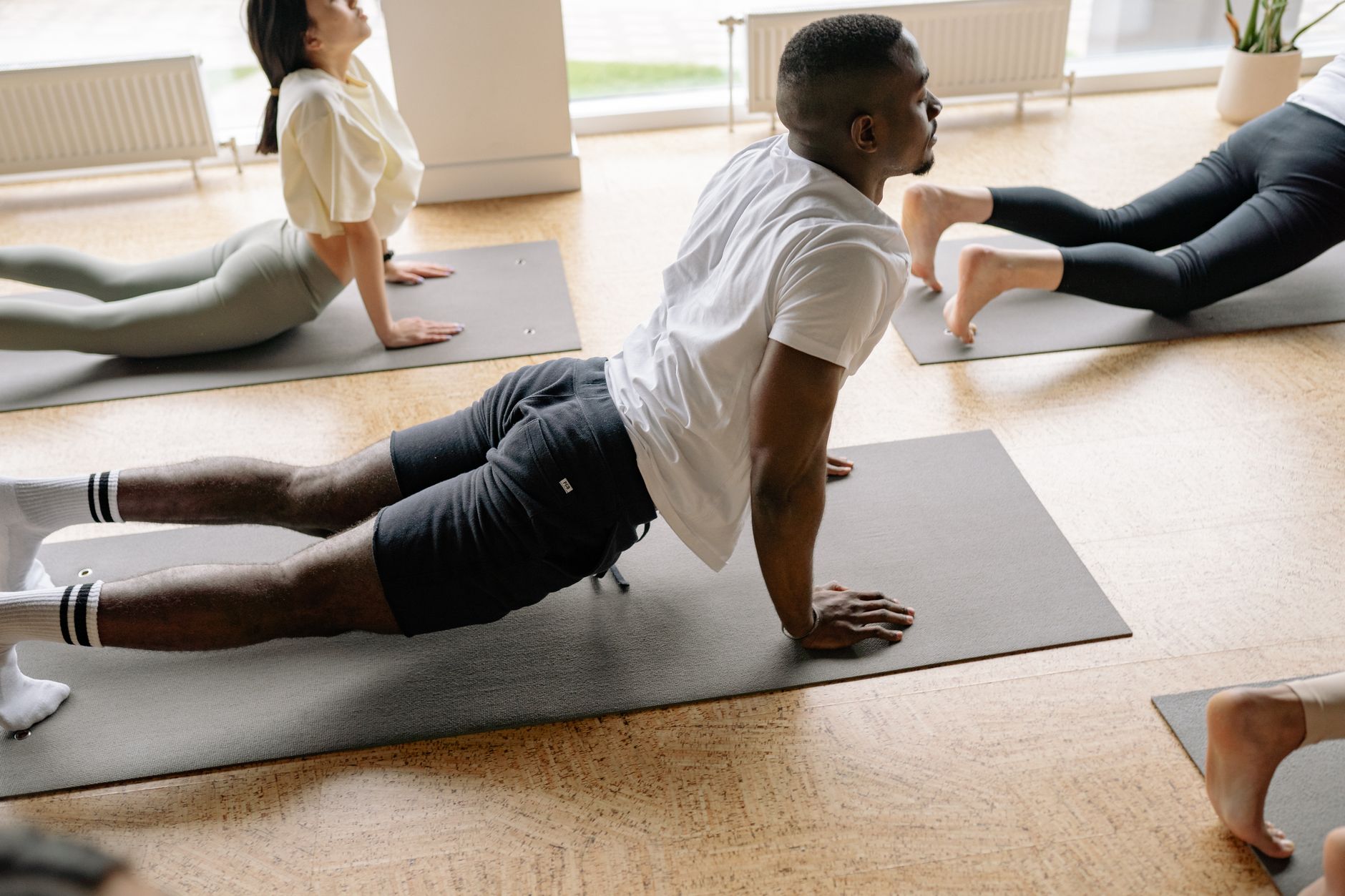
Plant your hands and step or hop back to a plank position. Lower down to a chaturanga (a low push-up) or drop to your knees if needed. Shift forward and open your chest into upward dog or a gentle backbend. Exhale and lift your hips back to downward dog.
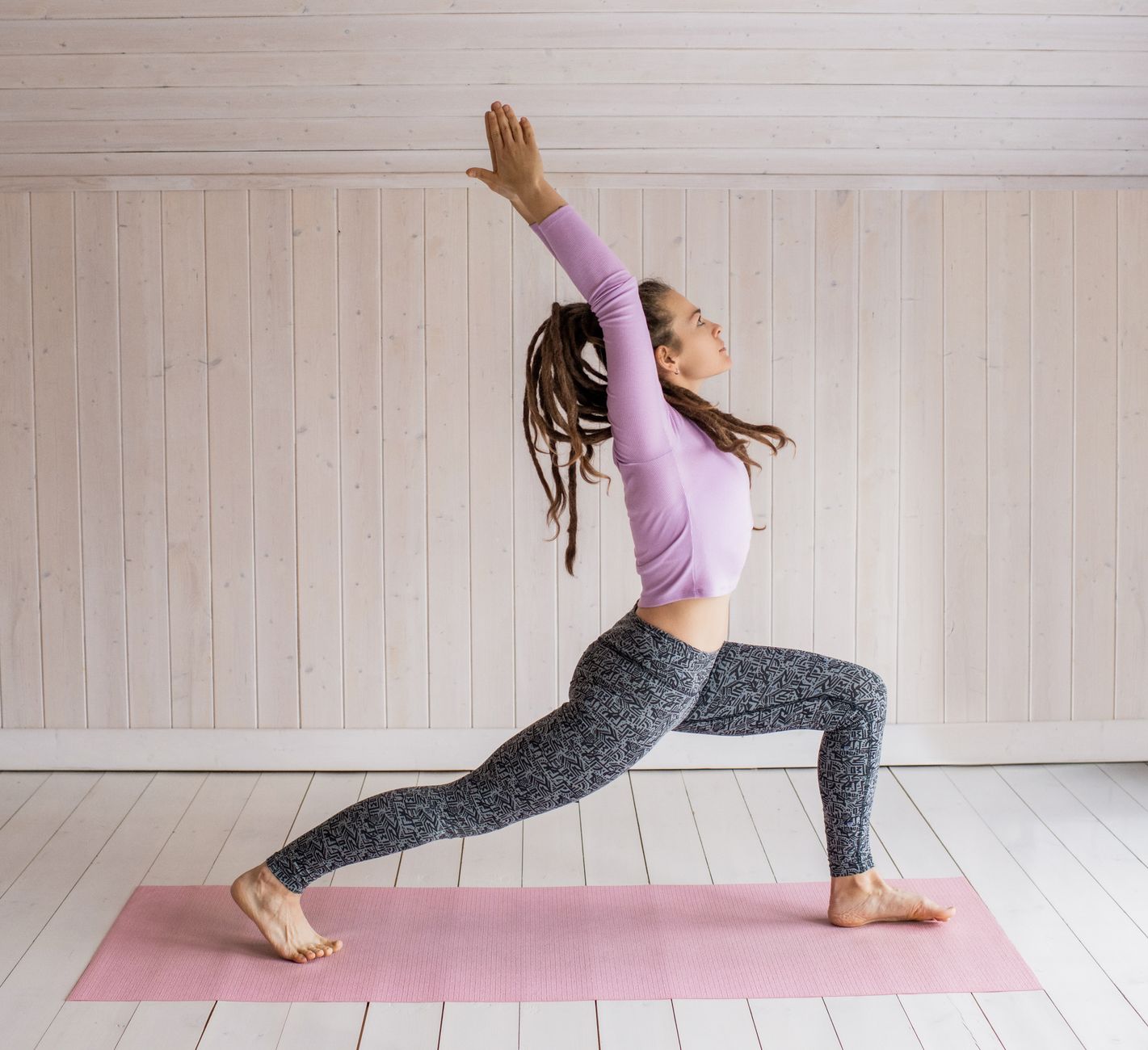
From downward dog, step your right foot between your hands. Rise up into Warrior I pose, grounding both feet and reaching your arms overhead. Hold for 3–4 breaths, feeling the strength and stability this pose cultivates.
Pivot your back heel down and open your hips to face the long edge of your mat, moving into Warrior II pose. Your gaze is over your front fingertips. Stay for 3–4 breaths. This pose builds leg strength and mental focus.
Cartwheel your hands down, step back to downward dog, and repeat on the left side. The warrior sequence creates heat, builds strength, and cultivates the mental quality of steadiness.
Minutes 15–18: Hip Openers and Balance
From downward dog, step forward and rise to standing. Move into tree pose (vrksasana)—press your right foot into the inside of your left thigh and bring your hands to heart center. Gaze at a fixed point (your drishti) to improve balance and focus. Hold for 5–8 breaths, then repeat on the other side.
From tree pose, step your right foot back and lower into a low lunge. Sink your hips forward to stretch your hip flexors. This area holds tension and stress—releasing it signals safety to your nervous system. Stay for 3–4 breaths per side.
Minutes 19–20: Closing and Savasana
Return to a comfortable seated position or lie on your back. Rest here in a gentle pose—savasana, the pose of complete relaxation—for your final 1–2 minutes. There's no "doing" in savasana. You're simply integrating the practice, letting your nervous system settle, and allowing your mind to quiet.
Close with three final deep breaths, and when you're ready, slowly open your eyes.
Tips to Make This Practice Sustainable
The best yoga practice is the one you actually do. Here are my tried-and-true strategies:
- Prep the night before. Lay out your mat and clothes. Remove friction from the decision to practice.
- Practice the same time every day. Your body will start to crave the practice at that time, making it easier to show up.
- Don't aim for perfection. A "bad" practice where your mind wanders and you feel stiff is still a practice. Consistency beats intensity.
- Use modifications without hesitation. Bending your knees in forward folds, dropping to your knees in planks, using props—these aren't shortcuts; they're intelligent practice.
- Notice how you feel. After one week of consistent morning practice, you'll feel more grounded. After two weeks, you'll notice sharper focus. These rewards fuel motivation.
Deepen Your Practice Over Time
Once you've practiced this sequence regularly, you might explore deepening your understanding of yoga philosophy or technique. If you're interested in becoming a yoga teacher or expanding
Related programs in our directory:
- an alignment-focused yoga school in Boulder — 4.98★ · 171 reviews
- a gentle yoga studio in Chicago — 4.95★ · 177 reviews
Related Reading
Subscribe to the newsletter
Subscribe to my newsletter to get the latest updates and news