What Is Yoga Nidra? The Complete Guide to Yogic Sleep

What Is Yoga Nidra? The Complete Guide to Yogic Sleep
You lie down. You close your eyes. A voice guides you through your body — slowly, deliberately — and somewhere between waking and sleep, something shifts. You haven't moved. You haven't tried to relax. But when you open your eyes fifteen minutes later, you feel rested in a way that's hard to explain.
That's yoga nidra.
It's one of the oldest, most researched, and least understood practices in yoga. Not a meditation. Not a nap. Something in between — and more effective than either for certain kinds of rest.
What Is Yoga Nidra?
Yoga nidra (Sanskrit: yogic sleep) is a guided practice of conscious rest. You remain awake — or at the threshold of waking — while your body enters a state of deep physical relaxation and your nervous system settles in ways it rarely gets to during a busy day.
The goal isn't to clear your mind. It isn't to achieve anything. You're guided through layers of awareness — body, breath, sensation, emotion, imagery — and the practice does the work. You receive it rather than perform it.
Unlike most meditation practices, yoga nidra is done lying down. Unlike sleep, it's intentional and structured. Unlike relaxation techniques, it works at a deeper layer than muscular tension — it reaches the nervous system, the emotional body, the subconscious.
The Science Behind Yogic Sleep
During yoga nidra, brain wave activity shifts from the beta waves of active thinking toward alpha and theta states. Theta waves — the same waves you move through just before falling asleep and just after waking — are associated with deep creativity, memory consolidation, emotional processing, and what researchers call "integrative" brain states.
This is the same state that NSDR (Non-Sleep Deep Rest) protocols aim for — a term coined by neuroscientist Andrew Huberman to describe the restorative effects of yoga nidra-style practices on dopamine replenishment and cognitive recovery.
Studies have measured:
- Significant reductions in cortisol (the stress hormone) after a single session (Datta et al., 2021)
- Improved sleep quality in people with chronic insomnia (Datta et al., 2021)
- Significant reductions in anxiety scores in controlled trials (Gunjiganvi et al., 2023)
- Enhanced memory consolidation — particularly for emotional memories
- Activation of the parasympathetic nervous system (rest-and-digest) and confirmed theta brain-wave activity during practice (Datta et al., 2022)
You may have seen the claim that 45 minutes of yoga nidra equals several hours of sleep. This isn't supported by research — and it doesn't need to be. What studies do show is that a single session produces measurable reductions in cortisol and significant improvement in objective sleep quality markers. The practice is well worth doing on its own terms.
The 5 Koshas: What Yoga Nidra Actually Works On
Traditional yoga philosophy describes the human being as made up of five layers (koshas), from the physical body to the innermost self. Yoga nidra systematically moves through each one:
- Annamaya kosha (physical body) — The body scan brings awareness to physical sensation, releasing muscular holding and activating the parasympathetic response.
- Pranamaya kosha (energy body) — Breath awareness shifts the nervous system from sympathetic (fight-or-flight) toward parasympathetic (rest).
- Manomaya kosha (mental/emotional body) — Pairs of opposites (heavy/light, warm/cool, pleasant/unpleasant) help discharge accumulated emotional charge without re-traumatizing.
- Vijnanamaya kosha (wisdom body) — The sankalpa (intention or resolve) plants a seed at the level where beliefs actually form, not just conscious thought.
- Anandamaya kosha (bliss body) — Deep stillness, the witness state, awareness of awareness itself.
Most relaxation and stress-reduction practices work primarily on the first two layers. Yoga nidra works on all five — which is why its effects often feel qualitatively different from other forms of rest.
The 8 Stages of a Yoga Nidra Session
A traditional yoga nidra session follows a specific sequence. The order matters — each stage prepares the nervous system for the next.
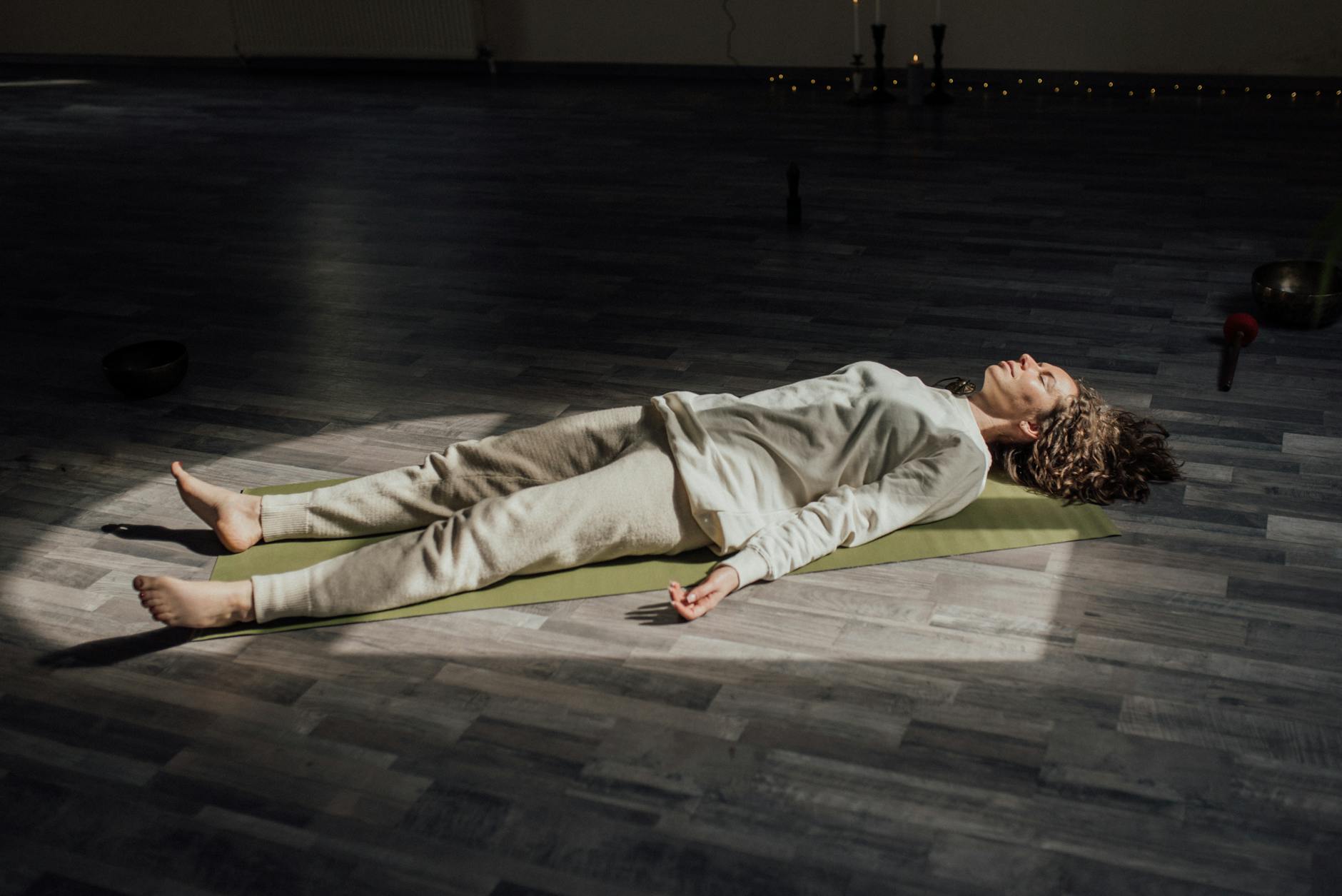
- Physical settling — Finding savasana, making small adjustments, letting the body become still.
- Sankalpa — A short, positive resolve or intention, stated internally three times. This isn't a goal — it's a seed planted at the threshold of the subconscious.
- Rotation of consciousness — Rapid movement of attention through body parts in a specific sequence. Not visualization — simply touching each part with awareness.
- Breath awareness — Observing the natural breath without controlling it. Counting breaths backward from 27.
- Pairs of opposites — Experiencing contrasting physical sensations (heaviness/lightness) or emotions (joy/sadness) briefly and without attachment. This discharges accumulated emotional tension.
- Visualization — Rapid images presented by the guide, received without interpretation. This engages the subconscious and deepens theta state.
- Sankalpa (repeated) — The intention is restated, now at a deeper level of receptivity.
- Externalization — Gradual return to body awareness, movement, and the room. Not rushed.
You can read a detailed breakdown of each stage in our guide to the stages of yoga nidra.
Yoga Nidra vs. Sleep: What's the Difference?
In sleep, consciousness is absent. You're not aware of your experience — you can't observe it.
In yoga nidra, you're at the threshold. You maintain a thread of witness awareness even as the body and mind enter deep rest states. This is called pratyahara — withdrawal of the senses — and it's one of the eight limbs of Patanjali's yoga.
The paradox is that this thread of awareness is what makes yoga nidra restorative in ways sleep sometimes isn't. When you sleep, unprocessed material gets filed away but not necessarily integrated. In yoga nidra, you're present enough that integration can happen consciously — or at least with less unconscious resistance.
That said, many people do fall asleep during yoga nidra — especially at first, or when severely sleep-deprived. This isn't failure. Your body takes what it needs. Over time, with practice, most people learn to stay at the threshold.
Yoga Nidra vs. Meditation: The Key Differences
Many people try yoga nidra after feeling like they "can't meditate." They're not wrong to try it — but the reasons it's different are worth understanding.
Most meditation practices ask you to sit upright and maintain a degree of active effort — returning attention to the breath, the mantra, the body. There's a practitioner doing the practice.
Yoga nidra inverts this. You lie down. The guide does the work of directing attention. Your job is to receive — to follow without effort or judgment. The practice happens to you more than through you.
This makes it more accessible for people in acute stress, chronic fatigue, or trauma recovery. It also means it works on different neural pathways than active meditation. We explore this in depth in our comparison of yoga nidra vs. meditation.
What Is a Sankalpa?
The sankalpa is one of the most distinctive elements of yoga nidra. It's a short resolve — a seed intention — planted in the mind at the beginning and end of the practice, when the subconscious is most receptive.
It's not an affirmation in the positive-thinking sense. It's closer to a declaration of your deepest intention — who you are becoming, not what you want to get. Examples:
- "I am at peace."
- "I am free."
- "I trust myself."
- "I am whole."
The sankalpa is stated in present tense, positively (not "I am not anxious" but "I am calm"), and kept consistent across many sessions. Over time, this repetition — especially during theta states — is thought to create new neural grooves that support change in a way that conscious intention alone doesn't.
Who Benefits from Yoga Nidra?
Yoga nidra is particularly valuable for:
- People with chronic stress or burnout — when the nervous system has been in fight-or-flight so long it's forgotten how to rest
- Those with sleep difficulties — insomnia, fragmented sleep, difficulty falling asleep
- People processing grief, anxiety, or emotional overwhelm — yoga nidra works at the layer where these patterns live, not just the cognitive layer
- Highly sensitive people — who absorb so much sensory and emotional input that rest becomes a necessity, not a luxury
- People who "can't meditate" — who find active meditation inaccessible or frustrating
- Athletes and high performers — for physical recovery and mental reset between effort cycles
- Anyone curious about the terrain of their own mind — yoga nidra is a map of inner experience that most people have never been given
How to Practice Yoga Nidra
You need:
- A flat surface (floor, mat, or bed)
- A blanket and eye pillow if you have them — warmth and darkness deepen the practice
- A guided audio or teacher (especially when starting)
- 15–45 uninterrupted minutes
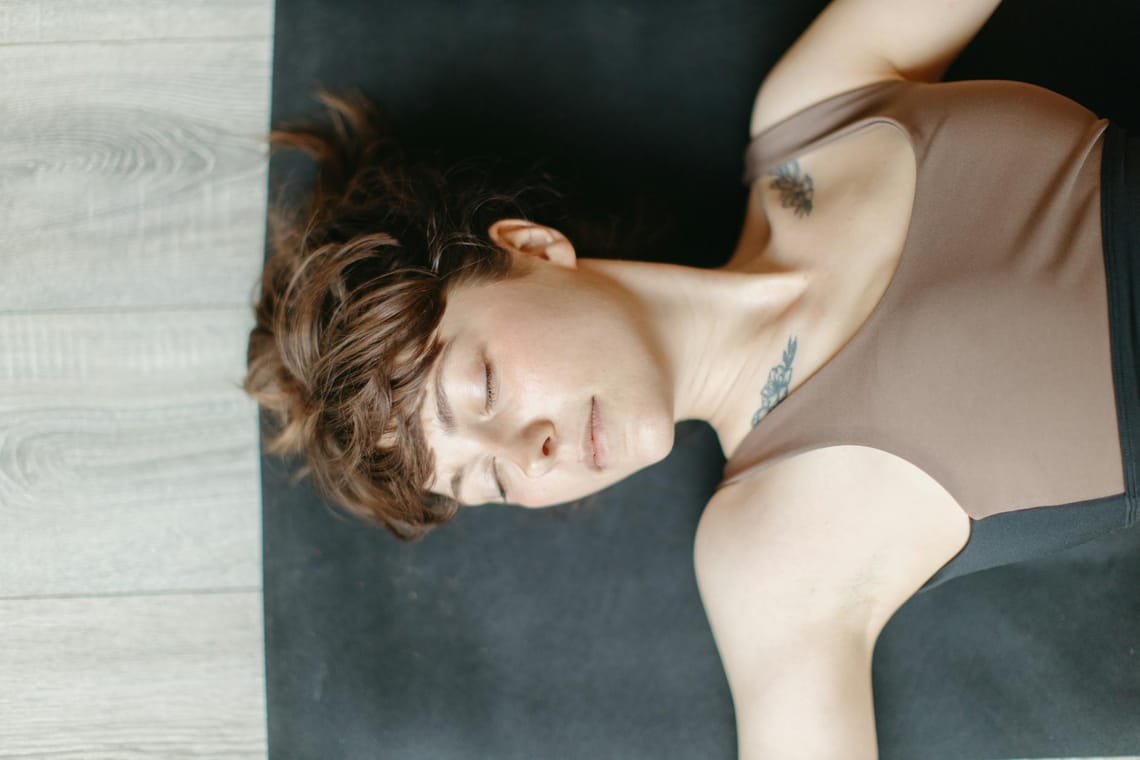
Lie in savasana — on your back, arms slightly away from your sides, palms up. Make any adjustments you need to be completely comfortable. You won't be moving.
Then follow the guide. That's it. You don't need to understand what's happening or why. Just follow.
Most people feel something — some shift, some softening — in their very first session. The deepening comes with regular practice: the nervous system learns to move into rest more quickly, the sankalpa takes root, and the witness awareness becomes more stable.
The Yoga Nidra Certification Path
If you want to teach yoga nidra — or go much deeper into the practice for your own benefit — there are structured training paths available. These teach not just the stages but the philosophy, the neuroscience, the ethics of guiding others into vulnerable states, and the art of scripting sequences for different intentions.
See our guide to yoga nidra certification programs online for an overview of what to look for and which programs are worth your time.
Start Here
The best way to understand yoga nidra is to do it. Read about it, by all means — but the practice lives in experience, not description.
Find a quiet 20 minutes. Lie down. Follow a guide.
Then notice how you feel.
Frequently Asked Questions
Is yoga nidra the same as sleep?
No. Yoga nidra is a state of conscious rest — you remain aware, even as your body and mind enter deep relaxation. In sleep, consciousness is absent. In yoga nidra, a thread of witness awareness is maintained. Many people do fall asleep during sessions, especially early in practice — this isn't failure, but the goal is to stay at the threshold.
How long should a yoga nidra session be?
Sessions typically run 15–45 minutes. Many teachers suggest that 20 minutes of yoga nidra can produce rest equivalent to several hours of sleep, though this depends on depth of practice and individual factors. Even a 15-minute session produces measurable shifts in cortisol and nervous system state.
Can I do yoga nidra every day?
Yes — daily practice is common and recommended by most teachers. Unlike physically demanding yoga, yoga nidra doesn't require recovery time. Many practitioners use it as a daily reset, either midday or before sleep.
What if I fall asleep during yoga nidra?
Your body is taking what it needs. Falling asleep, especially in early practice, is normal. Over time, most practitioners learn to stay at the threshold. If you consistently fall asleep, try practicing at a time when you're less tired, or elevate your head slightly.
Do I need to know yoga to do yoga nidra?
No. You don't need any yoga experience. You don't need to be flexible, fit, or familiar with Sanskrit. Yoga nidra is done lying down and requires no physical movement. It's one of the most accessible practices in the entire yoga tradition.
LEARN WITH BE WELL ACADEMY
Yoga Nidra for Emotional Intelligence
Colynn Vosburgh’s online course takes you beyond the basics — through the eight stages of yoga nidra and how to use the practice to work with stress, anxiety, and unprocessed emotion. Structured, self-paced, and built around the kosha framework.
Explore the Course →$119 · One-time · Lifetime accessYoga nidra and lunar astrology work beautifully together. For the astrology angle on rest and lunar rhythms, explore Online Astrology Planet.
Go Deeper
Compare real programs in the OYP YTT Database:
Medical disclaimer: This content is for informational purposes only and is not a substitute for professional medical advice, diagnosis, or treatment. Always consult a qualified healthcare provider before beginning any new exercise program, especially if you have injuries, chronic conditions, or are pregnant. Listen to your body and stop any practice that causes pain.
Related programs in our directory:
- a spiritually-oriented yoga school in New Delhi — 4.99★ · 154 reviews
- a traditional yoga ashram in Rishikesh — 4.84★ · 206 reviews
Related Reading
Subscribe to the newsletter
Subscribe to my newsletter to get the latest updates and news