
RPYS Prenatal Yoga Certification: In-Person vs Online Hybrid Programs
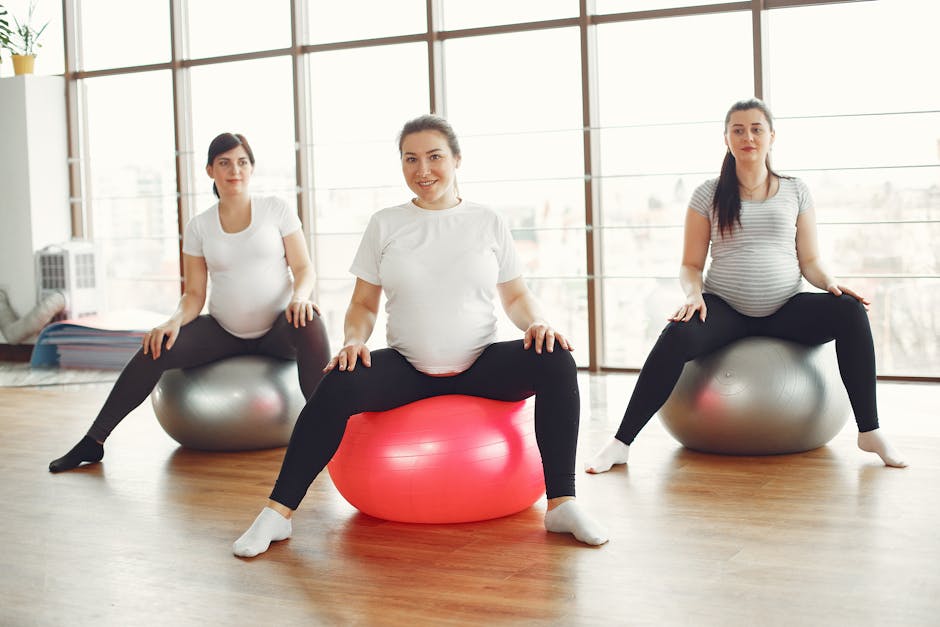
You're already a yoga teacher, or close to one, and now someone in your class is pregnant. Maybe you're pregnant yourself. Maybe you've been teaching for years and noticed how often pregnant students show up looking for someone who actually knows what to do with them. Either way, you're staring down a Registered Prenatal Yoga School (RPYS) credential and trying to figure out whether to sit in a room with other students for two weeks straight or piece it together through a hybrid online format.
It's a real decision with real money attached. And the answer isn't the same for everyone. Let's walk through what these programs actually look like, what each format gives you, and what you might be giving up depending on the route you choose.
What RPYS Actually Means (and What It Doesn't)
RPYS stands for Registered Prenatal Yoga School. That's the school designation. The credential you earn is RPYT — Registered Prenatal Yoga Teacher. To get it, you need an existing RYT-200 (or higher) plus 85 contact hours of prenatal-specific training, plus 30 hours of teaching prenatal classes.
The school you train with has to be RPYS-registered with Yoga Alliance. Out of the 1,617 Yoga Alliance accredited schools in OYP's directory, only a small fraction carry the RPYS designation. So your options are narrower than they look at first glance.
Here's what RPYS doesn't mean: it doesn't make you a midwife, a doula, or a clinical perinatal specialist. It means you're trained to teach yoga safely to people who are pregnant. That distinction matters when you're choosing a program — anyone promising to turn you into a medical authority in 85 hours is overselling.
The 85 hours, broken down
- Anatomy and physiology of pregnancy (typically 15-20 hours)
- Asana modifications by trimester (20-25 hours)
- Pranayama, meditation, and birth preparation (10-15 hours)
- Teaching methodology and class sequencing (15-20 hours)
- Practicum and observation (10-15 hours)
Whether you do these hours in a studio or through a webcam changes the texture of your learning more than it changes the content.
The Case for In-Person RPYS Training
There's something about being in a room with pregnant practitioners — sometimes brought in as guest students for the practicum portion — that you can't replicate through a screen. You see the way a third-trimester body shifts in space. You feel the weight of a pelvis when you're hands-on with a bolster setup. You learn how close to stand, how to read a face that's holding back fatigue.
In-person trainings tend to run as intensives — two to three weeks of full days — or weekend modules across a couple of months. The intensives are common at destination schools. If you've been eyeing a yoga teacher training in Costa Rica with scholarship pricing or a 200-hour program in Ubud, some of those same schools layer prenatal modules on top.
What in-person gives you
- Real bodies, real time. You learn pelvic alignment by looking at a pelvis, not a diagram.
- Hands-on assists practice. Critical for prenatal, where the wrong adjustment can do harm.
- Peer practice partners. You'll teach mock classes to other trainees and get instant feedback.
- Immersion focus. No work emails, no laundry, no half-attention. Two weeks of one subject.
What in-person costs you
Money and time, both significant. A residential RPYS intensive runs $2,500 to $5,000, sometimes more, before flights and meals. You're also taking two weeks off work — or burning vacation. For people with young kids, partners with rigid jobs, or chronic conditions, this isn't always realistic.
And in-person doesn't automatically mean better. A mediocre instructor in a studio is still a mediocre instructor. The format isn't the magic.
The Case for Online Hybrid RPYS Training
Hybrid is where most working teachers land, and for good reason. A typical hybrid RPYS structures the lecture-heavy content — anatomy, philosophy, the science of pregnancy, the historical context of prenatal yoga — through live and recorded online sessions. Then you complete an in-person weekend (or two) for hands-on practicum.
Some programs have shifted to fully online with video-based assist training. That's controversial. It works for some students; it leaves real gaps for others.
What hybrid gives you
- Schedule flexibility. Most lectures are recorded or held evenings/weekends.
- Time to absorb. Pregnancy anatomy is dense. Being able to rewatch a pelvic floor lecture three times is a real benefit.
- Lower cost. Hybrid programs typically run $1,200 to $2,800.
- You can keep teaching. Apply what you're learning in real classes the week you learn it.
If you're already comfortable learning online — and many of us are now, after years of practicing yoga at home online and exploring online learning options — the hybrid format isn't the compromise it might've felt like five years ago.
What hybrid costs you
Discipline, mostly. Without an instructor in the room, you have to actually do the readings. You have to record yourself teaching and watch the playback (which is humbling and useful). You have to seek out pregnant practice clients on your own for the 30 teaching hours, instead of having them lined up for you.
Hybrid also depends on the quality of the online platform and the responsiveness of the lead trainer. A program where you submit videos and wait three weeks for feedback isn't really mentoring you.
How to Evaluate a Specific RPYS Program
Whether you go in-person or hybrid, the same evaluation questions apply. Most schools won't volunteer this information — you have to ask.
Questions to ask before you pay
- Who's the lead trainer, and what's their actual experience with pregnant students? A teacher with 10 years of teaching prenatal classes is not the same as a teacher who took a prenatal training and now teaches it.
- How many pregnant practice clients will you work with directly during the training? If the answer is "you'll find your own," that's a lot of unpaid logistics on you.
- What's the trauma-informed component? Pregnancy can surface birth trauma, miscarriage history, fertility grief. A serious program addresses this.
- Is postpartum included? Many RPYS programs cover the first six weeks postpartum. Some don't, and you'll want it.
- What's the assessment look like? Multiple-choice quizzes don't tell you whether you can teach. Recorded teaching samples plus written feedback do.
The same evaluation discipline you'd apply to any teacher training applies here. If you want a wider primer on that thinking, the breakdown of what to look for in 2026 teacher trainings is a good companion read, as is the article on what's actually included in YTT programs.
Who Thrives in Each Format
Be honest with yourself about how you learn and what your life looks like right now.
In-person tends to suit you if:
- You have a clear two-week window to step away from work and home obligations
- You're a kinesthetic learner who needs to feel a thing to understand it
- You don't have local prenatal practitioners to easily build practicum hours with
- You crave deep peer relationships with other trainees
- You've been teaching less than three years and are still building somatic confidence
Hybrid tends to suit you if:
- You're already an experienced teacher (5+ years) with strong assist instincts
- You have steady access to pregnant students through your existing classes
- You learn well from video and self-directed study
- You're a parent, caregiver, or have a job you can't pause
- The cost difference between $2,000 and $5,000 actually matters to your decision
Neither format is more "serious" than the other. The seriousness lives in how you show up — same as it does in your sadhana on the mat.
Where to Find RPYS Programs Globally
The geography of yoga training shapes your options. OYP's directory tracks 2,389 yoga teacher training schools globally, with the United States hosting 1,280, India 181, Canada 152, Germany 75, and the UK 66. The RPYS subset within those is smaller but follows roughly the same distribution.
The U.S. has the largest concentration of RPYS schools, partly because Yoga Alliance is U.S.-based and the credential is most widely recognized in North America. If you're teaching in Europe, the UK, or Australia, an RPYS still carries weight, but local credentials may matter alongside it.
A few patterns worth knowing
- U.S. urban schools tend to offer hybrid and weekend-module formats, often partnered with hospitals or birth centers for practicum hours.
- Costa Rica and Bali trainings often bundle prenatal as a specialty add-on after a 200-hour foundation. Useful if you're stacking credentials.
- India-based programs, including some of the 300-hour Rishikesh trainings, occasionally include prenatal modules but rarely meet the full 85-hour Yoga Alliance standard. Verify before you book.
- Online-only RPYS programs exist but are still a minority. Most reputable schools require at least one in-person component.
If you're early in your teaching career and considering whether prenatal is even the right specialty, the comparison of 200-hour vs 300-hour pathways can help you sequence your training intelligently. Some teachers also find that continuing education in adjacent areas — like trauma-informed work or somatic anatomy — pairs naturally with prenatal.
Cost, Time, and the Real Math
Let's put numbers on the choice.
In-person intensive (typical range)
- Tuition: $2,500 – $5,000
- Travel and accommodation: $800 – $2,500 (more if it's destination)
- Time off work: 10–14 days
- Total real cost: $3,500 – $8,000
Hybrid program (typical range)
- Tuition: $1,200 – $2,800
- Travel for in-person weekend(s): $200 – $800
- Time off work: 4–6 days spread across months
- Total real cost: $1,500 – $3,800
Then add the 30 hours of prenatal teaching after certification, which most teachers do alongside their existing schedule.
If you're earning teaching income while you train, hybrid usually wins on net cost. If you're already planning a sabbatical or career break, in-person might be the better use of that time you've already carved out. There's a related honest conversation about making a living teaching yoga that's worth reading before you commit thousands to any specialty.
After You Certify: What Actually Builds Your Practice
The credential is the start, not the end. The teachers who become genuinely good at prenatal work are the ones who keep studying after the initial 85 hours — reading birth research, observing experienced teachers, sitting in on doula trainings, building relationships with midwives and pelvic floor therapists in their community.
You'll also benefit from broadening into related areas. Prenatal students often become postpartum students, then parents looking for baby yoga or eventually family-friendly practice. Teachers who can hold someone through that whole arc tend to build deep, loyal communities.
And take care of your own body in the process. Prenatal teaching involves a lot of demoing, kneeling, and hands-on work. The teachers I know who've taught prenatal for fifteen-plus years have all developed their own protocols — practices for neck and shoulder relief, regular restorative work, and serious attention to their own pelvic floor health. Mind is the master, but the body still asks for its due.
Related Reading
- Best Online Yoga Teacher Training Programs: 2026 Comparison
- Children's Yoga Certification for Public School Teachers (RCYS Path)
- IAYT Yoga Therapy Certification Programs Under $8,000 Total Cost
If you're still weighing the format question, sit with it for a week before you book. Notice what comes up — the budget worry, the schedule worry, the quiet excitement about being in a room with other teachers, or the relief of learning at your own pace. Those reactions are data. The right format is the one your real life can actually carry.
Subscribe to the newsletter
Subscribe to my newsletter to get the latest updates and news


