
IAYT Yoga Therapy Certification Programs Under $8,000 Total Cost
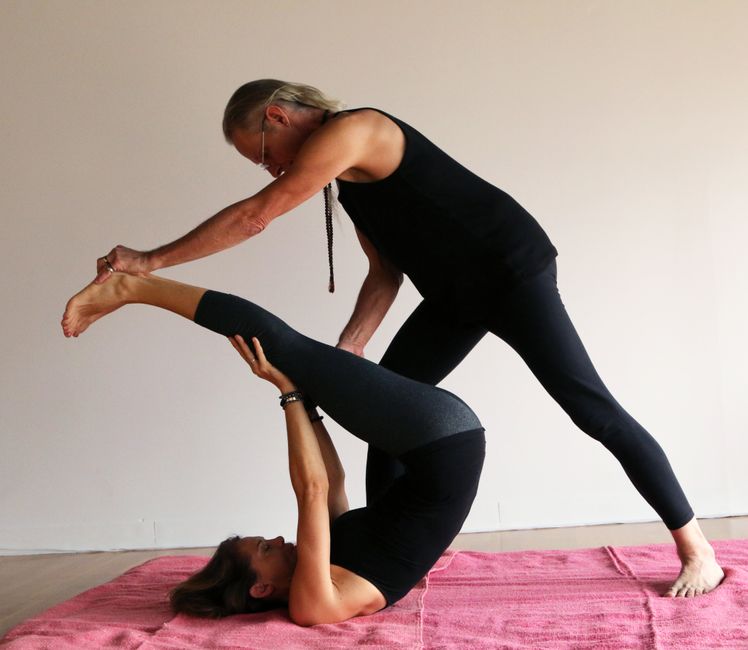
You've already invested in your 200-hour. Maybe your 300-hour too. Now clients are showing up with chronic pain, anxiety spirals, post-surgery limitations, autoimmune flares — and you're realizing general yoga teaching isn't enough for what they actually need.
The International Association of Yoga Therapists (IAYT) certification is the credential that bridges that gap. But the price tags? Most accredited programs run $10,000 to $20,000 or more. That's a serious barrier when you're already balancing studio income with rent.
The good news: programs under $8,000 do exist. They're not the loudest names, and they require some digging. Here's what to know before you commit.
What IAYT Certification Actually Means
IAYT (the International Association of Yoga Therapists) is the credentialing body for yoga therapy in the United States and increasingly worldwide. The C-IAYT credential — Certified Yoga Therapist — signals you've completed an 800-hour minimum training that meets clinical educational standards.
This isn't the same as a 500-hour Yoga Alliance registration. It's a different track entirely. Where Yoga Alliance focuses on teaching public classes, IAYT focuses on one-on-one therapeutic work with people managing health conditions.
For context, our directory tracks 2,389 yoga teacher training schools globally, with 1,617 carrying Yoga Alliance accreditation. Of those, only 110 are full RYS-500 schools. IAYT-accredited yoga therapy programs are a much smaller pool — fewer than 60 globally — which is part of why pricing tends to skew high.
The training prepares you to:
- Conduct intake assessments and build individualized practice plans
- Work with clients managing conditions like anxiety, chronic pain, cancer recovery, PTSD, and autoimmune disease
- Communicate with healthcare providers as part of an integrative care team
- Hold professional liability appropriate to clinical-adjacent work
If you're still weighing whether yoga therapy is the right next step, our piece on becoming a certified yoga therapist walks through the realities before you commit financially.
Why Most Programs Cost More Than $8,000
Before we get to the affordable options, it's worth understanding what you're paying for at the higher price points — and where the savings come from at the lower ones.
Premium IAYT programs typically include:
- In-person residencies at training centers (often multiple weekend or week-long intensives)
- Live mentorship hours with senior faculty
- Supervised practicum with real clients during training
- Anatomy and physiology coursework taught by medical professionals
- Case study supervision and written assessment
Programs under $8,000 usually trim costs through hybrid or fully online delivery, smaller cohort sizes, lean faculty teams, or by being based outside the high-cost US market. They still meet the 800-hour IAYT educational requirements — that part isn't negotiable for accreditation — but they deliver them more efficiently.
IAYT-Accredited Programs Under $8,000 Total
Pricing shifts year to year, so always confirm current tuition directly with the school. These ranges reflect what's been publicly listed for recent cohorts.
Inner Peace Yoga Therapy (Colorado, USA — Hybrid)
Total tuition typically lands in the $7,500 to $7,900 range for the 800-hour program. Mostly distance-based with required in-person retreats. Strong reputation for trauma-informed work and clinical applications.
Yoga Therapy Institute (Online with optional in-person components)
One of the more accessible IAYT-accredited tracks, with payment plans that bring monthly costs into manageable territory. Total program tuition has been listed under $8,000 when you skip optional add-ons. Heavy emphasis on case studies and self-paced modules.
Yoga Vahini (India — Krishnamacharya lineage)
Rooted in the Viniyoga tradition. Tuition is significantly lower than US-based programs — often well under $6,000 total — though you'll need to budget for travel and accommodation if attending in-person residencies in Chennai. The lineage credentials here are some of the deepest in the world.
Svastha Yoga Therapy (International — Mohan Family)
Based on the teachings of A.G. Mohan, a direct student of Krishnamacharya. Modular structure with global cohorts. Total program tuition has historically come in under $8,000, with options to spread payments across the multi-year curriculum.
Atma Yoga Therapy Training (UK)
For practitioners outside North America, UK and European programs often beat US pricing by 30 to 40 percent. Atma's IAYT-accredited track has been listed in the £5,500 to £6,500 range depending on cohort.
Hidden Costs to Budget For
Tuition is rarely the full picture. Before you celebrate finding a $7,500 program, factor these in:
- IAYT individual membership and certification fees — currently around $250 to $400 annually plus a one-time C-IAYT application fee
- Travel and lodging for in-person residencies (even "online" programs often require 1-3 weeks on site)
- Books and required reading — budget $300 to $600 for the full program
- Liability insurance at the yoga therapist level (different from teacher-level coverage)
- Continuing education to maintain C-IAYT status post-graduation
Realistic total cost of a "$7,500" program often lands between $9,000 and $11,000 once you've factored everything. Still meaningfully cheaper than $20,000+ flagship programs, but plan honestly. Speaking of ongoing learning, our guide to yoga continuing education covers what's required to keep credentials active.
How to Vet a Program Before Enrolling
An 800-hour commitment is a significant chunk of life. Two to three years of weekends, evenings, and personal study. Don't choose based on price alone.
Confirm IAYT accreditation status directly
Go to the IAYT website and look up the school in their accredited member directory. Programs in "candidate" status are working toward accreditation but haven't earned it yet. Graduating from a candidate program doesn't guarantee you'll qualify for C-IAYT if accreditation falls through.
Talk to recent graduates
Ask the school for three or four alumni contacts. Then ask those alumni: Did the program prepare you for actual clinical work? How was faculty access? Were case study expectations realistic? What would you change?
Look at faculty credentials
Strong yoga therapy programs include faculty with medical, mental health, or physical therapy backgrounds — not just senior yoga teachers. Anatomy and pathology coursework should be taught by people qualified to teach it.
Review the practicum structure
How many supervised client hours are required? How are clients sourced — does the school provide them or are you expected to recruit your own? This is one of the most variable parts of yoga therapy training and one of the most important.
Understand the population focus
Some programs lean heavily into musculoskeletal work. Others emphasize mental health, oncology support, or neurological conditions. Match the curriculum to the clients you actually want to serve. If you're drawn to working with specific populations — say, people managing fibromyalgia flares, BPPV-related vertigo, or IBS variations — make sure the program's case studies and faculty experience align.
Financing an IAYT Program Realistically
Most yoga therapy students aren't paying tuition out of pocket in lump sums. Here's how people actually fund this.
Payment plans
Nearly every IAYT-accredited program offers monthly installment plans, usually interest-free. A $7,800 program spread over 24 months is $325 a month — comparable to a gym membership and a streaming bundle.
Employer support
If you work at a hospital, integrative health clinic, or wellness center, ask about continuing education stipends. Some employers will cover 30 to 50 percent of tuition for credentials that expand the services you can offer.
Working through training
Most yoga therapy students continue teaching public classes during their training. The case study work and supervised hours actually complement teaching — you'll be drawing on real clinical knowledge in your group classes. If you're curious whether full-time yoga work is sustainable, our honest piece on making a living teaching yoga is worth reading before you stack credentials.
Tax deductions
In the US, professional development that maintains or expands your existing trade is often tax-deductible. Talk to a tax professional, but a $7,500 training that qualifies could effectively cost $5,500 to $6,000 after deductions depending on your bracket.
Is IAYT Certification the Right Move for You?
Honest answer: not for everyone.
IAYT certification makes sense if you want to:
- Work one-on-one with clients managing health conditions
- Build referral relationships with doctors, physical therapists, and mental health providers
- Charge $100 to $200 per session for clinical-adjacent yoga work
- Specialize rather than generalize
It probably doesn't make sense if you mostly love teaching group classes, you're earlier in your teaching career and still building a 200-hour foundation, or you're not drawn to the assessment-and-protocol style of clinical work. A 300-hour or specialty training in trauma-informed yoga, restorative work, or a specific population might serve you better — and cost a fraction of the price.
If you're still weighing the broader teaching path, the differences between 200-hour and 300-hour trainings are worth understanding first. Yoga therapy is a different track entirely, and it's not a linear "next step" — it's a sideways shift into a different profession.
What to Do This Month if You're Seriously Considering It
- Pull the IAYT accredited school list directly from iayt.org and shortlist five programs that fit your budget and format needs.
- Request information packets from each. Compare actual hour breakdowns, faculty bios, and practicum requirements side by side.
- Attend an info session. Most schools host free Zoom sessions monthly. Ask the hard questions: completion rates, alumni outcomes, support during training.
- Talk to two C-IAYT therapists in your area. Ask what they wish they'd known. Most are generous with their time when approached respectfully.
- Sit with it for at least 30 days before enrolling. This isn't a decision that benefits from urgency.
Mind is the master. The best training is the one that matches the work you actually want to do — not the most prestigious name or the cheapest sticker price. Take the time to figure out which clients you want to serve and which lineage feels true to your practice. The right program will reveal itself when you're clear on those two questions.
Related Reading
Subscribe to the newsletter
Subscribe to my newsletter to get the latest updates and news


