Handstand Scorpion Progression Without Wall Support
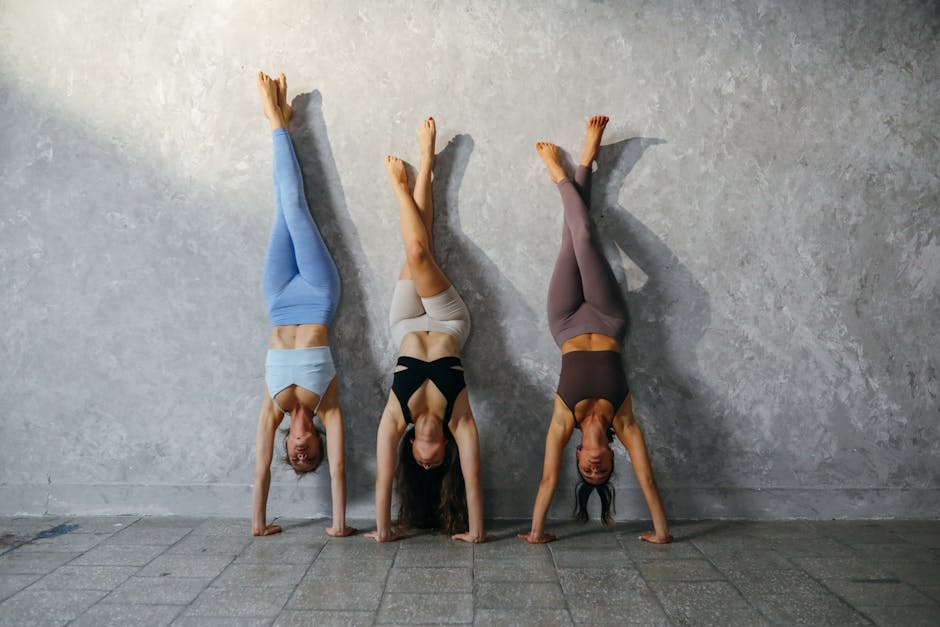
You can hold a handstand. Maybe a wobbly ten seconds, maybe a clean thirty. The wall has been your training partner for months, and now you're standing in the middle of your mat wondering how to take your feet off the ground, drop your head back, and find Vrschikasana — handstand scorpion — without a vertical surface catching you when things go sideways.
Here's the truth nobody puts in the slick Instagram reels: practicing handstand scorpion without a wall isn't about courage. It's about sequencing. The wall taught you the shape. Now your nervous system, your spine, and your shoulders need a different kind of conversation.
This is Day 1 through 7 of a slow, honest progression. No hustle. No "just kick up and trust." Just the work that actually builds the pose.
Why the Wall Stops Helping (and What You Need Instead)
The wall is brilliant for learning the inverted shape. It lets your shoulders stack, your core engage, and your fear quiet down. But the wall also lets you cheat in ways you don't notice — banana back, ribs flaring, a death grip in the front body that masks weakness in the posterior chain.
Handstand scorpion without wall demands something different. It asks for true balance through movement. Your spine has to extend while your shoulders stay open. Your gaze shifts. Your weight redistributes. The wall can't teach you that, because the wall removes the variable you most need to feel.
What you actually need: a strong overhead press, a mobile thoracic spine, hip flexors that release on cue, and a nervous system that doesn't panic when the horizon disappears. Mind is the master here. The body follows what the mind has rehearsed.
If you're still building handstand endurance itself, slow down. Spend a few weeks with steady inversions before chasing the backbend. A solid home yoga practice gives you the daily reps this kind of progression needs.
Day 1–2: Shoulder Opening and Thoracic Prep
Don't go upside down yet. The first two days are entirely about creating space in the upper back and shoulders, because that's where most people compensate when they finally try the pose.
Tight thoracic spines become flared lower backs. Tight shoulders become collapsed chests. Either way, the lumbar spine takes a beating it shouldn't.
The Day 1–2 sequence (20 minutes):
- Puppy pose — 2 minutes. Forehead and forearms down, hips stacked over knees, chest melting toward the floor.
- Thread the needle — 1 minute each side. Open the upper back and rotator cuff.
- Heart bench / supported fish with a block under thoracic spine and another under the head — 3 minutes.
- Cobra to up dog flow — 8 slow rounds, breathing into the front of the chest.
- Wall chest opener — palm flat on a wall behind you, slowly walk away. 1 minute each side.
- Dolphin pose holds — 30 seconds, rest, repeat 4 times.
This is unsexy work. It's also the work. If your shoulders feel cranky, the principles in this shoulder mobility sequence apply here too — slow tissue change beats forceful stretching every time.
Day 3–4: Hip Flexors, Quads, and Spinal Articulation
Here's the part nobody talks about: handstand scorpion is a quad stretch. When your feet drop toward your head, your hip flexors and quads have to lengthen dramatically while your glutes fire to control the descent.
If your psoas is locked from sitting all day, your low back will hinge instead of your spine articulating. That's how people hurt themselves in this pose.
Day 3–4 focus areas:
- Low lunge with quad stretch — back foot lifted into your hand. 90 seconds each side. Breathe into the front of the hip.
- Saddle pose / supta virasana — work toward 3 minutes. Use bolsters under the spine if needed.
- Camel pose — 3 rounds of 30 seconds. Hands on heels only when the front body is open.
- Bow pose — 4 rounds of 20 seconds. This is your scorpion shape upside down.
- Wheel pose — 5 rounds of 30 seconds, walking hands closer to feet each round.
Add five minutes of segmental cat-cow at the end. Move one vertebra at a time. The spine you're asking to bend in scorpion isn't a single hinge — it's twenty-four joints that need to share the load.
Desk workers especially: pay attention to hip flexor release before any inversion practice. Tight hips will sabotage the pose every time.
Day 5: Forearm Stand with Feet-to-Head Drills
Day 5 is the bridge. You're not doing scorpion on hands yet. You're doing it on forearms, where the base is wider and the fall radius is smaller.
Pincha mayurasana (forearm stand) is the kinder cousin of handstand scorpion, and it's the smartest place to learn the shape away from the wall.
The drill:
- Set up in dolphin pose. Forearms parallel, shoulder-width.
- Kick up to forearm stand in the middle of the room. Not against the wall.
- Once balanced, slowly bend your knees. Just bend them. Don't drop the spine yet.
- Bring your gaze forward, then slightly down toward the floor in front of your forearms.
- Allow the chest to open as the knees bend. Feet stay neutral — don't reach yet.
- Hold for 3 breaths. Come down with control.
Repeat this 5 to 8 times. If you fall, you fall toward your back — practice cartwheeling out so falling becomes a non-event. A nervous system that's rehearsed the exit doesn't panic on the way up.
Most practitioners need a week or two on this drill alone before progressing. There's no rush. The same patience that builds a 30-day practice builds this pose.
Day 6: The Full Scorpion Shape on Forearms
Once Day 5's drill feels stable, you bring the feet toward the head. This is technically pincha scorpion, and it's a legitimate destination on its own — many practitioners stay here for years before moving to hands.
The cues that matter:
- Press the forearms down hard. The more you press, the more you lift. Sinking into the shoulders is how people lose the pose.
- Lead with the chest, not the feet. The chest moves forward, then the feet drop. Reverse the order and you'll collapse.
- Gaze beyond your fingertips. Wherever the eyes go, the spine follows.
- Engage the glutes. Yes, in a backbend. Glutes stabilize the pelvis so the lumbar doesn't dump.
- Breathe. Holding your breath turns a 5-second pose into a 2-second pose.
Aim for 3 to 5 second holds. Build to 10 over time. Don't chase feet-to-head contact — that comes later, and forcing it is how injuries happen. The shape is the goal, not the photo.
Day 7: Handstand Scorpion Attempts and Active Recovery
Day 7 is where you try the full pose — and where most people overdo it.
The transition from forearm scorpion to hand scorpion is significant. Your base shrinks. Your shoulders take more load. Your wrists need to be warm, mobile, and strong.
The progression sequence:
- 10 minutes of wrist prep. Circles, stretches, push-up holds, fingertip presses.
- 5 rounds of handstand holds in the open room. Just holds. Build endurance first.
- Tuck variations — kick up, tuck the knees toward the chest, slowly extend back to vertical. This builds the eccentric control you need.
- Soft scorpion attempts. Kick up, find your balance, then bend the knees gently. Don't reach for the head. Just feel the shape.
- Recovery. Child's pose, supported fish on a bolster, legs up the wall for 10 minutes.
If today is frustrating, that's information, not failure. Backbends in inversions are a multi-month skill, not a seven-day one. Day 7 marks the end of foundational prep. The real progression continues for weeks afterward.
For practitioners who feel something cranky in the lower back during this work, pause and revisit poses for back support before pushing further. The lumbar spine is not where this pose lives.
Common Mistakes That Keep the Pose Out of Reach
A few patterns show up again and again in students attempting this pose without a wall:
Sinking into the shoulders. The deeper you go into a backbend, the more you have to press. Active arms = stable pose.
Lumbar dumping. If your bend lives entirely in the low back, your thoracic spine isn't doing its job. Spend more time on Days 1 and 2.
Holding the breath. Inverted backbends compress the diaphragm. Practicing conscious breath work outside the pose makes breathing inside it possible.
Skipping the warm-up. Cold-attempting handstand scorpion is how people pull intercostals, strain shoulders, or worse. The warm-up isn't optional.
Comparing your timeline to someone else's. Some bodies arrive at this pose in three months. Others in three years. Both timelines are valid. Older practitioners especially benefit from longer ramps — and the pose is still absolutely available.
What to Do When the Pose Still Feels Far Away
If you've completed the seven days and the full expression still feels distant, you're exactly where most people are. This isn't a one-week pose. The seven-day structure is the foundation — the actual fluency takes months of repetition.
What helps now:
- Practice 4–5 days per week, not daily. Backbends and inversions need recovery. The nervous system consolidates the skill during rest.
- Film yourself. What you feel and what you're doing are often two different things. Phone on a tripod, three attempts, watch them back.
- Find a teacher. A skilled set of eyes for even one session can shift the pose dramatically. The OYP directory tracks 2,389 yoga teacher training schools globally — including 1,617 Yoga Alliance accredited programs across countries like the United States (1,280 schools), India (181), and Canada (152). Many graduates teach advanced asana clinics that focus specifically on inversions and backbends.
- Consider a focused immersion. Inversion-heavy practices in dedicated settings often unlock progress that home practice can't. Retreat settings in India or Thailand sometimes offer week-long arm balance and inversion intensives.
- Keep your accessory work going. Wrist strength, scapular control, hip flexor mobility — these never stop being useful.
Related Reading
- Scorpion Pose Progression for Practitioners Over 40
- Firefly Pose Prep for Tight Hamstrings: 12-Week Approach
- Astavakrasana for Women with Narrow Shoulders: Alignment Tricks
If this progression speaks to where you are, take it slow. Seven days isn't a deadline — it's a doorway. The pose will arrive when your body, your breath, and your attention align. Until then, the practice itself is the gift.
Subscribe to the newsletter
Subscribe to my newsletter to get the latest updates and news