Firefly Pose Prep for Tight Hamstrings: 12-Week Approach

Firefly pose (Tittibhasana) is one of yoga's most exhilarating arm balances, but it's also one of the most humbling. If you've ever attempted it and felt your hamstrings screaming in protest, you're not alone. Tight hamstrings are arguably the biggest obstacle standing between you and this pose—and the good news is that dedicated, intelligent preparation can change that.
Related: see our deeper guide on Extended Side Angle for Yogis With Tight Groin Muscles for a focused walkthrough on extended side angle tight groin.
Related: see our deeper guide on Compass Pose Modifications for Tight Inner Thighs for a focused walkthrough on compass pose tight inner thighs.
This article outlines a realistic 12-week approach to preparing your body for firefly pose, with special attention to the hamstring flexibility that makes this pose accessible. Rather than rushing into the full expression, we'll build systematically through progressions that address the root cause of most people's struggles: chronically tight hamstrings.
Understanding Firefly Pose and Why Hamstrings Matter
Firefly pose requires several things from your body simultaneously: hip flexibility, hamstring length, core strength, shoulder stability, and arm balance coordination. But if we're being honest, the hamstrings are often the limiting factor. In this pose, your legs wrap around your upper arms while your torso folds forward—a combination that demands serious hamstring flexibility.
Your hamstrings are a group of three muscles running along the back of your thigh: the biceps femoris, semitendinosus, and semimembranosus. These muscles connect your sitting bones to your lower leg bones, and they're responsible for knee flexion and hip extension. Many of us develop tight hamstrings from sitting too much, running, cycling, or simply not stretching consistently. Without addressing this tightness, firefly pose remains frustratingly out of reach.
The scientific reality is encouraging: research in the Journal of Sports Science & Medicine shows that consistent, progressive stretching can increase muscle flexibility by 15–25% over 8–12 weeks. That's exactly the timeframe we're working with here.
Weeks 1–2: Assessment and Foundation Building
Before diving into specific hamstring work, establish where you actually are. Spend the first two weeks taking an honest inventory of your flexibility.
Perform these basic tests:
- Standing forward fold: Can you touch your toes? How far from your toes are your fingertips?
- Seated forward fold: Sit with legs extended and fold forward. Measure the distance between your nose and your knees.
- Reclined hand-to-big-toe pose: Lying on your back, extend one leg and hold the other leg's foot or calf, straightening it as much as possible. Note the angle of the extended leg.
Write these down. You'll use them to track progress.
During weeks 1–2, build your foundation with gentle, consistent practice. Include Pigeon Pose three times weekly to begin opening your hips, and incorporate basic hamstring stretches like lying-down hamstring stretches and supported forward folds. The goal isn't intensity—it's consistency and establishing a daily practice rhythm.
Weeks 3–6: Progressive Hamstring Lengthening
Now you're ready to intensify your hamstring work. During this phase, commit to hamstring-focused stretching 4–5 days per week, and continue your hip openers as well.
Key Poses for This Phase
- Reclined hand-to-big-toe pose (Supta Padangusthasana): Hold each side for 1–2 minutes. Use a strap if needed. This targets the hamstring directly while allowing your lower back to stay neutral.
- Pyramid pose (Parsvottanasana): Hold forward folds 30–60 seconds per side. Keep your hips square and your front leg straight for maximum hamstring engagement.
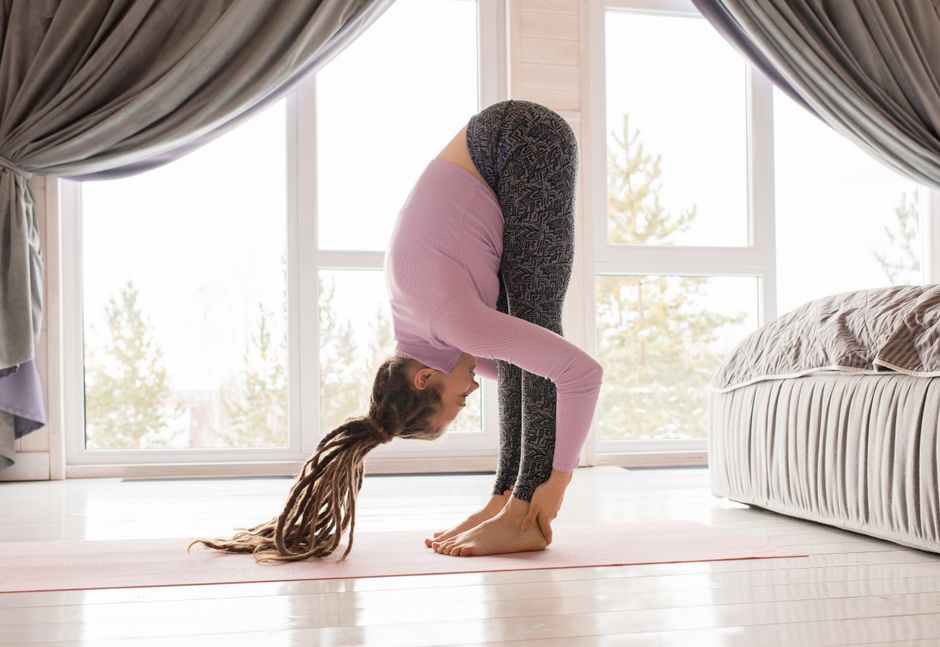
- Standing forward fold with bent knees: Fold forward, then gradually straighten your legs as flexibility improves. This pose allows gradual progression without forcing.
- Uttanasana (full forward fold): Spend 2–3 minutes here at least twice weekly. Your hamstrings will gradually lengthen with patient, consistent time under stretch.
During this phase, also incorporate restorative yoga and meditation to support recovery and body awareness. Stretching works best when your nervous system is calm.
Pro tip: Never bounce or force stretches. Research shows that static stretching held for 30–60 seconds is most effective for increasing flexibility. Push to mild discomfort, never sharp pain.
Weeks 7–9: Building Firefly-Specific Strength
While hamstring flexibility is essential, firefly pose also requires significant arm and core strength. During this phase, maintain your hamstring stretching but add arm balance preparation.
Begin with these progressions:
- Shoulder stands and inversions: Practice Downward Dog consistently. It builds shoulder stability and wrist strength necessary for firefly.
- Chaturanga practice: Strong arms mean better arm balance control. Practice low planks and flowing chaturangas in your vinyasas.
- Core work: Boat pose, hollow-body holds, and leg lifts build the abdominal strength firefly demands.
- Wrist conditioning: Wrist circles, wrist stretches, and downward-facing dog variations prepare your wrists for weight-bearing.
It's easy to neglect strength when you're focused on flexibility, but firefly requires both. Your hamstrings can be perfectly flexible, but without arm and core strength, you won't access the pose safely.
Weeks 10–12: Firefly Progressions and Integration
By now, your hamstrings should have lengthened noticeably. Your arms and core are stronger. Now it's time to practice firefly-specific progressions leading toward the full pose.
Progression One: Firefly Preparation Pose
Start seated. Fold forward with bent knees. Press your arms under your thighs and slowly straighten your legs. Feel how your hamstrings elongate while your arms support weight. Hold for 3–5 breaths. This mimics firefly's fundamental position without the balance challenge.
Progression Two: Half Firefly
From a seated position, place your right arm under your right thigh. Keep your right leg as straight as possible while gently folding forward with your left leg bent. Hold 30 seconds per side. This single-leg version is far more manageable than the full pose.
Progression Three: Firefly with Modifications
From a squat, place your hands flat on the ground inside your feet. Wrap one leg around your upper arm, then the other. Rather than hopping into a full arm balance, simply shift weight gently from side to side. Let your feet touch the ground. Build here for 3–5 breaths before coming down.
Progression Four: Full Firefly Pose
Only attempt this once the progressions feel manageable. From a squat, place hands flat on the ground. Wrap both legs around your upper arms. Shift weight into your hands, keeping your head in a neutral position. Your feet may leave the ground, or they may stay lightly planted—both are fine. Hold for 3–5 breaths initially, building duration over time.
Important safety note: Practice firefly progressions only after a thorough warm-up. Never jump straight into the pose cold. The risk of hamstring injury increases dramatically when muscles are unprepared.
Beyond 12 Weeks: Maintaining Progress
Once you've reached week 12, firefly may feel accessible, or you may still be working toward it—and that's completely okay. Progress isn't linear, and yoga isn't a race. The real victory is the flexibility and strength you've built, regardless of whether you've "conquered" the pose.
Moving forward, maintain your hamstring flexibility with consistent practice. Practice yoga at least 4–5 times weekly to retain flexibility gains. Even two minutes of hamstring stretching daily is better than sporadic longer sessions.
Common Mistakes to Avoid
- Forcing progress: Tight hamstrings didn't develop overnight, and they won't lengthen overnight either. Respect the timeline.
- Neglecting other poses: Don't practice only stretching. Include strengthening and balance work to avoid imbalances.
- Skipping warm-up: Never stretch cold muscles. A 5–10 minute warm-up (walking, gentle movement, sun salutations) is non-negotiable.
- Comparing your timeline to others: Everyone's body is different. Your 12 weeks might look different from someone else's, and that's perfect.
- Ignoring pain signals: There's a difference between the mild discomfort of stretching and sharp pain. Sharp pain is a stop signal. Mild discomfort is where you're working.
Props and Support Tools
Several tools make this journey easier. Yoga blocks can modify poses to make them more accessible during the early weeks. Straps allow you to maintain proper alignment in hamstring stretches without forcing your flexibility. A yoga mat with good cush
Subscribe to the newsletter
Subscribe to my newsletter to get the latest updates and news