Yoga Nidra for Emotional Healing — How Yogic Sleep Processes What You've Been Carrying

Yoga Nidra for Emotional Healing — How Yogic Sleep Processes What You've Been Carrying

Yoga Nidra for Emotional Healing — How Yogic Sleep Processes What You've Been Carrying

There are things you know you're carrying. And there are things you don't know you're carrying until something small — a song, a scent, a particular quality of afternoon light — suddenly makes your chest tight and you don't entirely understand why.

Talk therapy can name what you're carrying. Exercise can move it through the body. Sleep sorts and files it. But certain emotional patterns — the ones held in the nervous system, not just the mind — need something different.

Yoga nidra works at that layer.

Why Emotional Patterns Live in the Body

When something happens that overwhelms us — grief, shock, sustained stress, violation — the nervous system responds before the mind does. The body braces. The breath shortens. Cortisol and adrenaline flood the system.

Sometimes this charge discharges fully — we cry, we shake, we sleep it off, and integration happens naturally. But often it doesn't. The emotion gets interrupted, suppressed, or simply not processed — and the charge remains in the body as a kind of held tension. Not a memory exactly, but a pattern. A way the nervous system learned to organize itself around that experience.

This is why you can understand something completely and still feel it. Insight doesn't always move what's stored in the body. Yoga nidra works where insight doesn't.

How Yoga Nidra Reaches Emotional Patterns

During yoga nidra, brain wave activity shifts into theta — the same state we move through in the hypnagogic zone just before sleep (Datta et al., 2022). Theta is where emotional memory consolidation happens. It's where the nervous system processes and integrates experience.

This is why yoga nidra often produces unexpected emotional responses — a sudden welling of grief, a release of tension you didn't know you were holding, laughter that comes from nowhere. You haven't done anything to provoke it. The practice simply created the conditions for what was held to move.

Three specific elements of yoga nidra are particularly relevant to emotional healing:

1. Pairs of Opposites

The guide presents contrasting sensations and emotions — heaviness and lightness, warmth and coolness, joy and sadness, contraction and expansion. You're asked to feel each briefly, without dwelling, and let it go.

This isn't about re-experiencing difficult emotions in a therapeutic sense. It's more like touching and releasing — a way of acknowledging what's stored and allowing the nervous system to discharge it without being overwhelmed by it. The lightness that follows the weight. The ease that follows the heaviness.

2. The Sankalpa

A short, positive resolve — stated at the beginning and end of practice when the subconscious is most receptive. Not an affirmation of what you want, but a declaration of what you're moving toward: "I am at peace." "I trust myself." "I am whole."

Planted consistently in theta states, the sankalpa can gradually shift the emotional baseline — the default orientation the nervous system returns to when it's not actively managing something else.

3. Pratyahara

The withdrawal of senses that yoga nidra induces creates space between stimulus and response. Over time, this trains the nervous system to pause before reacting — a quality that has direct implications for emotional regulation in daily life.

What Yoga Nidra Can Help With

Yoga nidra is not psychotherapy. It doesn't process trauma in the way that EMDR, somatic experiencing, or trauma-focused therapy does. If you're working with significant trauma, yoga nidra is best used as a complement to professional support, not a replacement for it.

Within those limits, it has meaningful applications for:

  • Grief processing — creating space to feel what's present without being overwhelmed by it
  • Anxiety and chronic worry — regulating the nervous system's baseline, reducing the ambient hum of stress
  • Emotional numbness — for people who have shut down feeling as a protective response, yoga nidra can gently reopen access to the emotional body
  • Emotional reactivity — the pratyahara effect creating more space between trigger and response
  • Burnout — when you've been giving so long that you've lost touch with what you actually feel
  • Highly sensitive people — who need deep rest after absorbing so much environmental and emotional input

What a Session Focused on Emotional Healing Looks Like

Not all yoga nidra sessions are structured the same way. A session oriented toward emotional healing might:

  • Spend more time in the pairs of opposites, moving slowly through emotional contrasts
  • Use a sankalpa that speaks directly to emotional safety or self-compassion
  • Include longer pauses to allow whatever arises to complete its arc
  • Use specific visualization imagery associated with safety, light, or openness
  • Include longer externalization (the return to waking) to allow full integration before moving

If you're using yoga nidra specifically for emotional support, look for teachers who have training in this application — not all yoga nidra instruction is equivalent, and the approach matters.

The Practice Looks Simple From the Outside

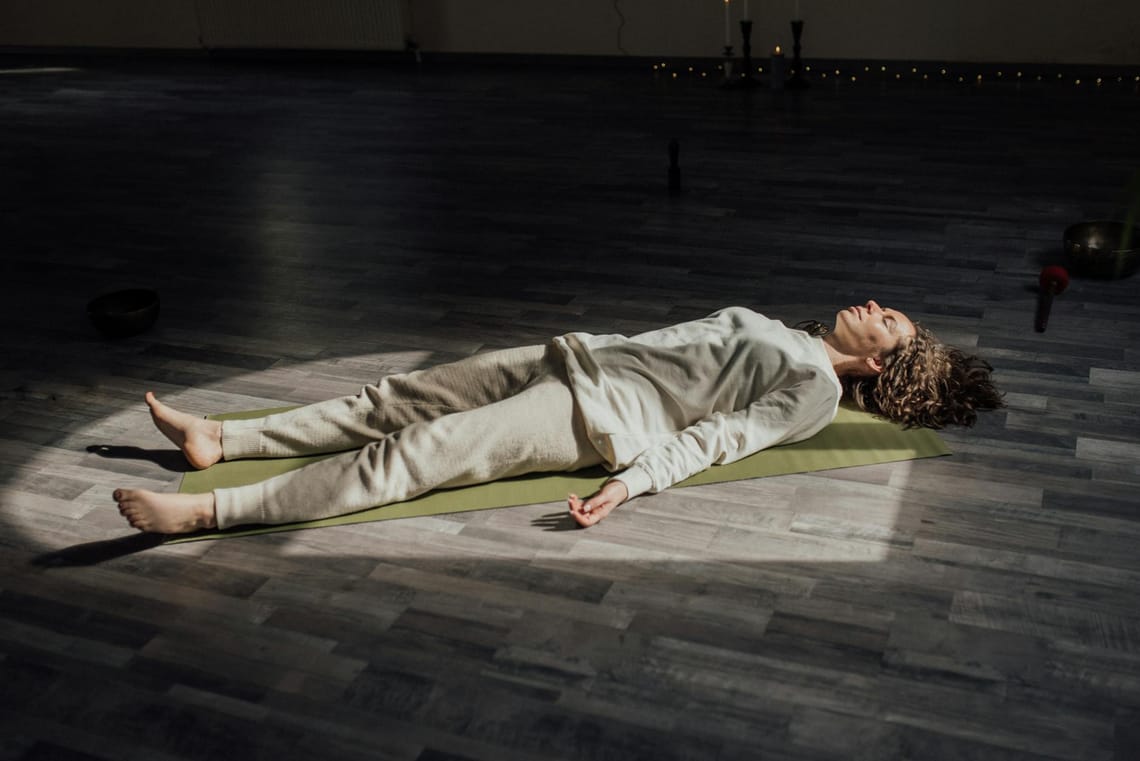
Someone watching you do yoga nidra would see a person lying still with their eyes closed. It looks like rest, or possibly sleep. The shift happening inside — in the nervous system, in the emotional body, in the layers of awareness — is invisible from the outside.

This is one of the reasons yoga nidra is underestimated. Its results can be profound, and its delivery is lying down. We're not accustomed to associating stillness with deep work.

But the body knows. After even a single session, many people report feeling lighter, softer, more themselves. Not because they did anything, but because they stopped doing long enough for something to move.

Going Deeper: Yoga Nidra for Emotional Intelligence

Colynn Vosburgh's course Yoga Nidra for Emotional Intelligence at Be Well Academy takes this further — combining traditional nidra practice with emotional intelligence frameworks to help you not just release what you're holding, but understand it, integrate it, and develop greater capacity to be with your full emotional experience.

It's not about becoming less sensitive. It's about having more room for what you feel.

Explore Yoga Nidra for Emotional Intelligence →

Start Where You Are

You don't need to be in crisis to benefit from yoga nidra. You don't need to know exactly what you're carrying or why. The practice doesn't require you to understand your emotional patterns to work on them.

You lie down. You follow the guide. You let what's ready to move, move.

That's enough to start.


Frequently Asked Questions

Can yoga nidra help with anxiety?

Yes. Yoga nidra directly activates the parasympathetic nervous system and shifts brain waves from the beta (active/anxious) state toward alpha and theta — states associated with calm, receptivity, and integration. Studies have shown significant reductions in anxiety measures after consistent yoga nidra practice (Gunjiganvi et al., 2023). It's particularly effective for people whose anxiety lives in the body as physical tension, rather than primarily as thought patterns.

Is yoga nidra safe for trauma?

Yoga nidra can be a valuable complement to trauma recovery, but should be approached thoughtfully if you're working with significant trauma history. The practice can create access to material held in the nervous system, which is generally beneficial — but without professional support, this can occasionally feel overwhelming. If you're in active trauma processing, practice with a trauma-informed teacher and ideally in consultation with your therapist.

How often should I practice yoga nidra for emotional benefits?

Daily practice produces the most consistent results. Even 15–20 minutes per day, over several weeks, creates measurable shifts in emotional baseline and nervous system regulation. The sankalpa deepens with repetition — the same resolve planted across many sessions builds stronger neural pathways than a single intense session.

What if I cry during yoga nidra?

This is normal and generally a positive sign — it means the practice reached something that was ready to move. Let it happen without trying to stop or understand it. The release is the point. After the session, take some time before returning to activity — journal, walk, or simply sit quietly.

Yoga nidra and lunar astrology work beautifully together. For the astrology angle on rest and lunar rhythms, explore Online Astrology Planet.

Go Deeper

Compare real programs in the OYP YTT Database:

Medical disclaimer: This content is for informational purposes only and is not a substitute for professional medical advice, diagnosis, or treatment. Always consult a qualified healthcare provider before beginning any new exercise program, especially if you have injuries, chronic conditions, or are pregnant. Listen to your body and stop any practice that causes pain.

Related programs in our directory:

Subscribe to the newsletter

Subscribe to my newsletter to get the latest updates and news