
Yoga for Restless Leg Syndrome at Night: Legs-Up-the-Wall Extended Practice
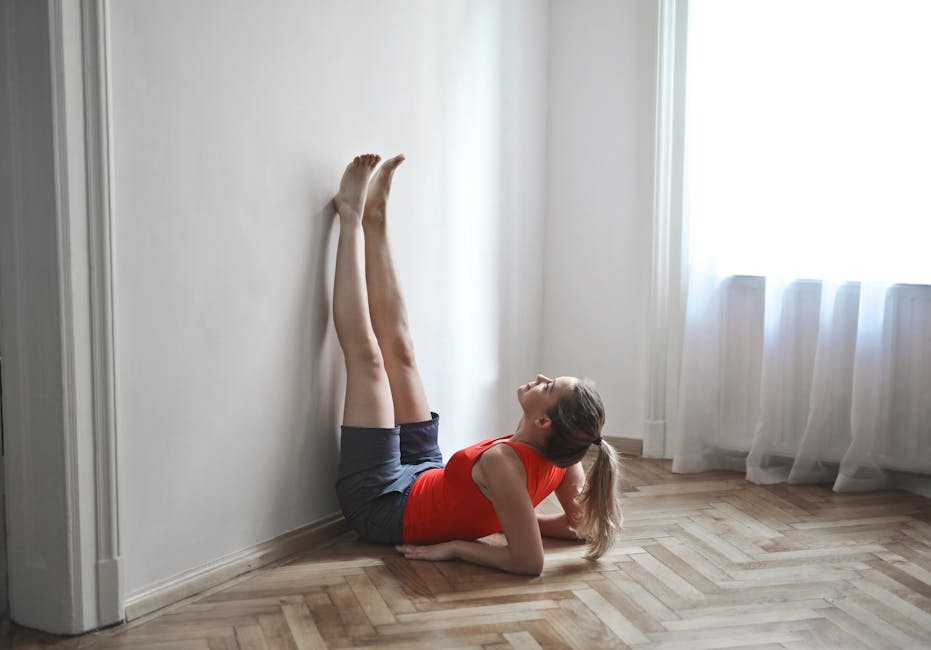
It's 11:47 PM. You finally got into bed an hour ago. Your body's exhausted, your mind's done with the day, but your legs? Your legs have other plans. That crawling, tugging, electric urge to move them just won't quit. You shift. You stretch. You get up and pace the hallway. You lie back down. And the whole thing starts again.
If you live with restless leg syndrome, you already know how lonely 2 AM can feel. The clock blinks. Everyone else is asleep. And your nervous system's running a marathon you didn't sign up for.
This piece isn't a cure. RLS is a real neurological condition, and what works for one person may not work for another. But there's an old, almost embarrassingly simple yoga posture that a lot of people with nighttime RLS keep coming back to: Viparita Karani, or Legs-Up-the-Wall pose. Done with a few tweaks and held a little longer than you'd think, it can take the edge off enough to actually fall asleep.
Let's walk through why it works, how to set it up, and what an extended version looks like when the usual five-minute hold isn't cutting it.
Why Restless Legs Spike at Night
RLS isn't laziness, anxiety, or "all in your head." It's a sensorimotor condition tied to dopamine signaling, iron metabolism in the brain, and circadian rhythm. Symptoms almost always worsen in the evening and at rest. That's the cruel part — the moment you stop moving, your legs demand that you start again.
A few things tend to make nighttime episodes louder:
- Sitting for long stretches earlier in the day
- Caffeine after noon
- Alcohol, especially red wine
- Low ferritin levels (worth getting checked)
- Certain antihistamines and SSRIs
- A nervous system that hasn't downshifted from sympathetic to parasympathetic before bed
That last one is where yoga has something specific to offer. You can't fix dopamine pathways with a pose. But you can coax your autonomic nervous system out of fight-or-flight, drain venous blood pooling in the legs, and give your sensory cortex a different signal than "MOVE NOW."
Mind is the master. When the mind settles, the body often follows — not always, not perfectly, but enough.
Why Legs-Up-the-Wall, Specifically
Viparita Karani translates loosely to "inverted action." It's a mild inversion — your legs are higher than your heart, your heart is higher than your head — and that geometry alone changes a few things:
- Venous return improves. Blood and lymph that's been pooling in your calves and feet drains back toward your core. For people with RLS, this often reduces the heavy, prickly, "buzzing" sensation.
- The baroreceptors in your neck get stimulated. This triggers a vagal response — heart rate drops, breath slows, parasympathetic tone rises.
- Proprioception shifts. Your legs are doing something completely different than they do all day. The novelty alone gives your nervous system a new signal to chew on.
- Gravity does the work. You don't have to hold anything. You don't have to "try." For a condition that flares when you're trying to be still, this matters.
It's the same logic behind a good calming evening yoga sequence — meet the nervous system where it is, then guide it down.
The Setup That Actually Matters
Most people do this pose wrong the first few times — not in a dangerous way, but in a way that makes it less effective. Here's what to gather before you start. Do this before you brush your teeth, while you still have the energy to fuss.
What you'll need
- A wall (or the side of your bed frame, or a closed door)
- A folded blanket or firm pillow for under your hips
- A small pillow or rolled towel for under your head
- An eye pillow or soft cloth to cover your eyes
- Optional: a yoga strap or belt to loosely loop around your thighs
- Optional: a hot water bottle for your low belly
If you don't own a bolster yet, a couch cushion works. If you're curious about props for the long haul, there's a roundup of solid yoga bolsters worth owning.
The setup, step by step
- Place your folded blanket about six inches from the wall, parallel to it. The height should be roughly two to four inches — enough to tilt your pelvis slightly toward your head, not so much that your low back arches.
- Sit sideways on the blanket with one hip touching the wall.
- Swing your legs up the wall as you lower your back to the floor. Your sit bones should land softly on or just off the edge of the blanket, with your low back supported.
- Scoot your hips close enough that your legs feel held by the wall, not strained. If your hamstrings are tight, move a few inches away from the wall and let your knees bend slightly. That's fine. Better than fine.
- Place the small pillow under your head so your chin tilts very slightly toward your chest.
- Let your arms rest at your sides, palms up, or one hand on your belly and one on your heart.
- Cover your eyes.
If your legs feel like they want to flop open or grip together, loop the strap loosely around your mid-thighs. It tells your adductors they can stop working. Tiny detail, big difference.
The Extended Practice: 20 to 40 Minutes
Most yoga teachers cue Legs-Up-the-Wall for five to ten minutes. For garden-variety stress, that's plenty. For RLS that's been building all evening, it's often not enough. Your nervous system needs more runway.
Here's a structure you can follow. You don't need a timer if you don't want one — but knowing the phases helps you not check the clock.
Minutes 0–5: Arrive
Don't try to relax yet. Just let your body register that it's in a new shape. Notice the weight of your back on the floor. Notice your heels against the wall. Your legs may still be restless. That's expected. Let them be.
Breathe in for four counts. Breathe out for six. Do this for about twenty rounds. The longer exhale is the signal your vagus nerve is waiting for. This is borrowed from basic pranayama practice — nothing fancy, just deliberate.
Minutes 5–15: Soften
Let the breath return to its own pace. Start a body scan from your scalp down to your toes — slow, unhurried. When you find tension (jaw, shoulders, hip flexors, arches of your feet), don't try to fix it. Just notice. Naming a sensation often loosens it more than effort does.
This is where RLS sensations sometimes spike before they settle. The body's protesting the stillness one last time. If the urge to move is strong, let your ankles circle slowly a few times, then return to stillness. Don't shame yourself for moving.
Minutes 15–30: Drop
By now, the venous return has done its work. Your legs may feel lighter, or weirdly heavy, or just neutral for the first time all night. Neutral is the goal. Not bliss — just the absence of buzzing.
If your mind keeps replaying conversations, let it. Don't fight thoughts. Imagine each one as a leaf floating past on water. Some teachers borrow this from iRest-style yoga nidra, which uses similar techniques for nervous system regulation.
Minutes 30–40: Optional Deepening
If you've got the bandwidth, stay longer. Place the hot water bottle on your lower belly. The warmth on your abdomen tends to deepen the parasympathetic response — your gut and your vagus nerve are intimately wired.
Some people fall asleep in the pose. That's fine. Just be careful getting out if you do.
Coming Out and Transitioning to Sleep
How you exit matters almost as much as the hold. Rushing out undoes some of the calm you just built.
- Bend your knees and bring the soles of your feet to the wall.
- Push gently and roll to your right side. Stay there for a full minute, head resting on your arm.
- Slowly press yourself up to sit. Don't stand fast — your blood pressure dropped during the inversion, and standing too quickly can make you lightheaded.
- If your bed is right there, crawl directly in. Don't check your phone. Don't turn on a bright light.
One of the underrated benefits of doing this practice in your bedroom is that the transition to sleep is short. No re-engaging with the household. No "one more email." You're already in the room where sleep happens.
What to Do When the Pose Isn't Enough
Let's be honest: some nights it won't work. RLS is stubborn, and a single posture is one tool among many. If you're not getting relief after two or three weeks of consistent practice, here are other things worth trying alongside.
Stack with other small practices
- A 10-minute walk after dinner. Movement earlier in the evening often reduces nighttime symptoms.
- Magnesium glycinate before bed. Talk to your doctor, but many people with RLS find it helps.
- A warm bath with Epsom salts. Magnesium absorbed transdermally plus the heat-then-cool effect on body temperature signals sleep.
- Self-massage on the calves. Firm, slow strokes from ankle toward knee, mimicking venous flow.
- A short bedtime yoga sequence earlier in the evening to extend the wind-down.
Rule out the obvious
If you haven't had your ferritin checked, do it. Low brain iron is one of the most documented physiological correlates of RLS, and serum ferritin under 75 ng/mL is associated with worse symptoms. It's a simple blood test, and the fix — if needed — is straightforward.
Also worth examining: any new medications, your caffeine timing, and whether you sit for eight or more hours a day. There's a reason yoga for desk-bound bodies overlaps so much with practices that help RLS — the underlying mechanisms aren't identical, but a sedentary nervous system tends to misfire in similar ways.
Building This Into a Real Routine
The pose works best when it's not an emergency intervention. Doing it nightly for 20 minutes — even on nights your legs feel fine — builds a baseline of nervous system regulation that pays off when symptoms flare.
Think of it like brushing your teeth. You don't wait until you have a cavity. You build the habit so the cavity's less likely.
A few ideas for consistency:
- Pick the same time every night — say, 30 minutes before lights-out.
- Leave your blanket and bolster set up by the wall during the day. Less friction, more follow-through.
- Pair it with a short meditation or audio if silence feels too loud at first.
- If you're working on a 30-day yoga habit, count this as your practice. It absolutely is.
If you've been curious about going deeper into restorative work, the world of restorative yoga is built around exactly this kind of held, supported posture. And for teachers and therapists interested in the clinical side, OYP's directory tracks 2,389 teacher training schools globally — 1,617 of them Yoga Alliance accredited — and many now offer modules in trauma-informed and therapeutic applications where conditions like RLS get real attention.
A Quiet Word on Expectations
RLS is frustrating because the body's not behaving the way we want. The temptation is to bring more force, more striving, more fix it energy to the problem. But the nervous system doesn't respond to force. It responds to safety.
Legs-Up-the-Wall asks almost nothing of you. No flexibility, no strength, no skill. You lie down. You let gravity work. You breathe. That's it. The practice is in not trying. For a condition that punishes effort and stillness in equal measure, that paradox is the medicine.
Some nights will be better than others. Track it loosely if you want — not obsessively. Notice when symptoms are quieter, and over weeks, you'll start to see patterns: what helped, what didn't, what you ate, what you skipped. That data is yours.
If you've been carrying this for years, you've already tried a lot. Adding one more thing can feel like just more work. So don't think of this as another task. Think of it as twenty minutes against a wall, with your eyes closed, where nothing's required of you. That alone might be worth showing up for.
Related reading
Subscribe to the newsletter
Subscribe to my newsletter to get the latest updates and news