
Yoga for Lupus SLE in Active Flare: 5-Minute Bed Practice
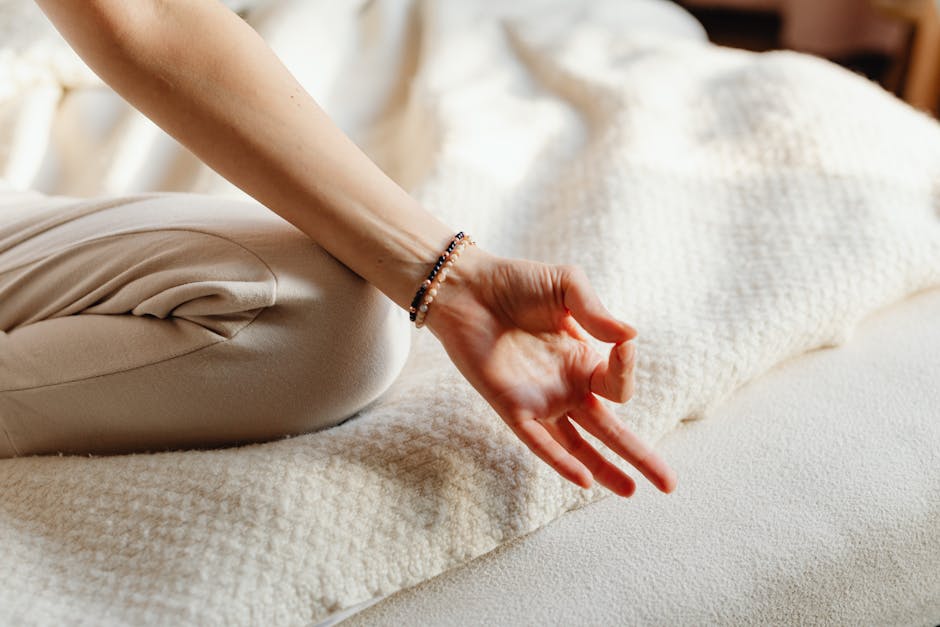
Your joints feel like they're full of broken glass. The fatigue isn't tiredness — it's a weight that pulls you horizontal before you've even decided to lie down. Maybe there's a butterfly rash, maybe a low-grade fever, maybe the kind of brain fog that makes finishing a sentence feel ambitious. You're in a lupus flare, and the last thing you need is someone telling you to push through.
So we won't.
This is a five-minute practice you can do entirely in bed, on a flare day, without sitting up. No props required (though a pillow helps). No flow. No striving. Just enough movement and breath to remind your nervous system that you're still here, still tending to yourself, still the one in charge of your own care.
Why bed yoga during an SLE flare isn't a compromise
There's a quiet shame that comes with chronic illness — the feeling that the "real" practice is happening somewhere else, on a mat, in a studio, with people whose bodies cooperate. Let's set that down right now.
Lupus is an autoimmune condition where your immune system attacks your own tissues. During an active flare, inflammation spikes, joints swell, and energy reserves collapse. Doing a sun salutation isn't just hard — it's contraindicated. Heat, exertion, and inversions can worsen symptoms, especially if you're dealing with photosensitivity, pleuritis, or kidney involvement.
Horizontal practice isn't lesser yoga. It's appropriate yoga. The eight-limb path doesn't require you to stand up. Asana is one limb of eight, and during a flare, breath and stillness carry the weight that movement usually does.
Pacing matters here. If you're also navigating chronic fatigue or POTS-related symptoms, the horizontal-first approach overlaps significantly. Your job isn't to "do yoga." Your job is to spend energy with intention.
Before you begin: a few honest notes
A few things to know before you start.
- This isn't medical advice. Lupus is highly individual. Talk to your rheumatologist about movement during flares, especially if you have cardiac, pulmonary, or renal involvement.
- Skip anything that hurts. A flare is not the time to "work into" a sensation. Sharp pain, joint swelling that worsens with movement, or chest discomfort means stop.
- Five minutes is the ceiling, not the floor. If two minutes is all you have today, two minutes is the whole practice.
- Temperature regulation. Lupus can mess with thermostat function. Have a blanket nearby. Cool the room if you're flushing.
- Hydrate first. Even a few sips before you start helps if you're prone to lightheadedness when shifting positions.
One pillow under your knees, one under your head if you want it. That's the whole setup.
The five-minute bed practice, minute by minute
Set a soft timer if you find it grounding. Otherwise, let the breath count for you.
Minute 1: Arrival and breath awareness
Lie on your back. Let your legs fall open or rest a pillow under your knees if your lower back is tender. Arms wherever they're comfortable — palms up, palms down, hands on belly, hands on chest.
Don't try to breathe deeply yet. Just notice the breath you already have. Where does it move? Belly? Ribs? Collarbones? Is it shallow today? That's information, not a problem.
For three or four breath cycles, let the exhale be slightly longer than the inhale. Not forced — just a soft release. This nudges your parasympathetic nervous system toward "safe enough to rest."
Minute 2: Gentle joint check-in
This isn't a warm-up. It's a survey. You're asking each joint, "How are you today?"
- Slow ankle circles, three each direction. If your ankles are swollen or painful, just flex and point gently — or skip.
- Open and close your hands three times. Spread the fingers, then soften them.
- Slow wrist circles, both directions. Lupus often shows up in small joints first — this is intelligence, not exercise.
- Roll your shoulders up toward your ears once on the inhale, down and back on the exhale. Three rounds.
If any joint says "no" today, listen. Move on. There's no completion required here.
Minute 3: Knees-to-chest, one leg at a time
Slide one knee toward your chest. You don't have to pull it in. If your hands are sore, let your forearms cradle the shin or the back of the thigh.
Hold for three breaths. Then switch.
This gentle hip and low-back release is one of the few movements that tends to feel good across a wide range of flare presentations. If even one-leg knee-to-chest feels like too much, just bend both knees with feet on the bed and let them rest there.
Minute 4: Supported supine twist (optional)
If your spine is asking for it — and only if — bring both knees to one side. Use a pillow between or under the top knee for support. Let your gaze stay forward or follow the knees. Don't crank.
Stay for four slow breaths. Come back through center. Repeat on the other side if it feels right.
If twisting feels like too much today, skip this entirely and stay in savasana with awareness for the full minute. That's not a downgrade. That's discernment.
Minute 5: Rest with intention
Return to your starting position. Arms and legs wherever they feel held.
For this final minute, drop the technique. Drop the counting. Just be a person resting in a bed with the knowledge that you tended to yourself today.
If a thought arises like "I should be doing more" — notice it. You don't have to argue with it. You also don't have to obey it.
Breath modifications when everything hurts
Some flare days, even gentle movement is too much. Joint pain in the wrists or shoulders, pleurisy that makes deep breathing uncomfortable, or a fatigue that turns lifting an arm into a project — these days call for breath alone.
Three breath options for the worst days:
- Soft belly breath. One hand on the belly (if reachable). Inhale, belly rises slightly. Exhale, belly softens. Don't force expansion.
- Extended exhale. Inhale for a count of four, exhale for a count of six. If counting feels like work, just lengthen the exhale without numbers.
- Sighing breath. Inhale through the nose. Exhale through an open mouth with a soft audible sigh. Repeat five times. This works the vagus nerve directly.
If you have pleural involvement, deep breathing may be painful or counterproductive. Stay shallow and easy. Diaphragm breathing in conditions that affect the lungs requires similar caution.
What to skip during an active flare
It's worth being specific about what's not appropriate right now, because well-meaning advice online often blurs this.
- Hot yoga, heated rooms, saunas. Heat can trigger flares. Skip them entirely during active inflammation.
- Inversions. Headstand, shoulderstand, and even legs-up-the-wall if you have cardiac or renal complications. Check with your doctor before reintroducing.
- Sun salutations and any flow-based vinyasa. The cumulative load is too much for an inflamed system.
- Deep backbends. They light up the nervous system in ways that can feel activating rather than restful.
- Long holds in weight-bearing poses. Plank, chaturanga, warrior holds — these stress joints already under attack.
- Pranayama with breath retention. Skip kumbhaka practices during flares. The cardiovascular stress isn't worth it.
When you're in remission and your rheumatologist gives the green light, gentle hatha, restorative, and yin can return. The bed practice can stay too — it doesn't expire when you feel better.
The mental piece of flare-day practice
Lupus often comes with a particular grief. The grief of unpredictability. The grief of canceled plans. The grief of a body that won't follow the schedule your mind made.
Five minutes in bed isn't going to fix that. But it can do something quieter: it can shift the relationship from "my body betrayed me" to "my body and I are figuring this out together."
That shift is the actual yoga. It's svadhyaya, self-study — watching your own response to limitation without flinching from it. It's sauca as gentleness, not perfection. It's noticing the inner critic without obeying it.
If you're managing other autoimmune-adjacent or chronic conditions, the through-line is similar. The protocol for fibromyalgia flare days and early-stage Lyme disease shares this same horizontal-first, energy-first philosophy. The mind is the master here, and the master's job during a flare is to protect the system, not push it.
Building a flare-day routine you can actually count on
One of the strange gifts of chronic illness is that it teaches you what consistency really means. Not "every day at 6 a.m." but "when I can, in the form I can."
A few practical anchors:
- Keep your setup ready. A pillow that lives near your bed for under-knee support. A blanket within reach. A water bottle on the nightstand.
- Decide on a minimum, not a maximum. "One minute of breath awareness" is a sustainable promise. "Twenty minutes of yoga" on a flare day sets you up to break the promise.
- Track your energy, not your output. A simple note — "did three minutes, felt held" — is more useful than counting poses.
- Notice what makes flares worse. Stress, sun, certain foods, sleep disruption. Yoga supports the management, but it doesn't replace the rest of the puzzle.
If sleep is part of the puzzle — and for most people with SLE, it is — a short bedtime sequence for better rest can pair with this flare practice as the same horizontal, low-demand approach.
When to call your doctor, not your yoga mat
Yoga is a companion to medical care, not a substitute. Reach out to your rheumatology team or seek urgent care if you experience:
- Chest pain, especially with breathing
- Sudden severe headache or vision changes
- Shortness of breath at rest
- Significant new joint swelling or warmth
- Foamy urine, swelling in legs or face (possible kidney involvement)
- Fever you can't explain
- Worsening fatigue that doesn't respond to rest
These are signals to call, not breathe through.
A note for teachers reading this
If you're a yoga teacher looking to support students with lupus or other autoimmune conditions, this is worth real study. Among the 2,389 yoga teacher training schools in our directory, only a fraction offer dedicated training in chronic illness support. The deeper work often happens in continuing education, yoga therapy, or specialized advanced trainings.
If this kind of work calls to you, exploring certified yoga therapist pathways or credentialing through IAYT opens doors to working with clinically complex students. Trauma-informed training matters here too — chronic illness and trauma overlap more than the wellness industry tends to admit.
Whatever your role — student, teacher, caregiver — the principle is the same. Meet the body where it is. Offer what supports. Withhold what harms. Trust the person inside the body more than the protocol on the page.
Related reading
- Yoga for Chronic Fatigue with POTS: Pacing and Horizontal Sequences
- Yoga for Fibromyalgia Flares: 10-Minute Flare Day Practice
- Vagus Nerve Toning for Recovery: Medical-Grade Yoga
Mind is the master. On flare days, the master's quietest work is the most important. If five minutes in bed is what today held, that's the practice — whole and enough.
Subscribe to the newsletter
Subscribe to my newsletter to get the latest updates and news