
Yoga for Early-Stage Lyme Disease: Week 1-4 Gentle Protocol
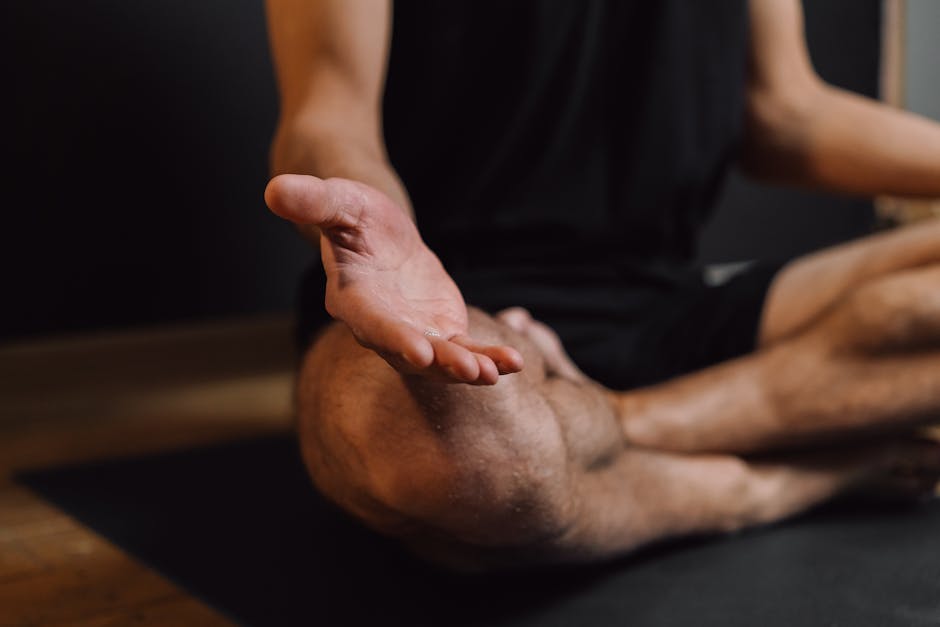
The bullseye rash showed up two weeks ago. You started doxycycline. Your doctor said "rest," which sounded simple until you tried to actually do it. Your body feels foreign — heavy one hour, electric the next. Your joints ache in places you didn't know could ache. And somewhere underneath the fatigue, there's a quiet panic about what comes next.
If you've practiced yoga before, the urge to "get back on the mat" is probably loud. Don't listen to it yet. Early-stage Lyme is not a moment for vinyasa, hot yoga, or anything that asks your nervous system to push through. The first four weeks set the tone for how your body responds to treatment. Done wrong, asana can worsen Herxheimer reactions and stall recovery. Done with care, it can support lymphatic flow, calm the vagus nerve, and give you back a small sense of agency.
This protocol is built for weeks 1 through 4 of early Lyme — after diagnosis, during or just after antibiotic treatment, before any chronic symptoms have set in. Mind is the master here. The body follows, gently.
What Actually Changes in Your Body in Early-Stage Lyme
Borrelia burgdorferi triggers an immune cascade. Inflammation rises. Your autonomic nervous system shifts toward sympathetic dominance — that wired-but-tired feeling. Joint capsules swell. Lymph slows down. Sleep architecture fragments.
Antibiotics kill the spirochetes, but the die-off itself causes Herxheimer reactions: temporary flares of fatigue, headache, body aches, brain fog. Yoga done at the wrong intensity can amplify this. Yoga done well can help your body process the inflammatory load.
The goal for these four weeks isn't strength, flexibility, or progress. It's downregulation. You're teaching your nervous system that it's safe to rest while your immune system does the heavy lifting.
Red flags — skip practice and call your doctor
- New neurological symptoms (facial drooping, numbness, tingling)
- Heart palpitations, chest tightness, fainting
- Fever above 101°F
- Joint swelling that's hot to the touch
Lyme can affect the heart and nervous system. Yoga is supportive, not diagnostic. Your medical team comes first.
Week 1: Horizontal Only (Days 1–7)
This week, your mat is your bed or the floor. No standing poses. No sun salutations. Nothing that asks your cardiovascular system to work.
The principle: gravity does the work, you do the breath. Horizontal practice supports venous return, reduces orthostatic stress, and gives your immune system metabolic real estate it desperately needs. If you've ever read about pacing and horizontal sequences for chronic fatigue with POTS, the same principles apply during acute Lyme — minus the chronic timeline.
Daily sequence (15–20 minutes max)
- Constructive rest — 5 minutes. Knees bent, feet on floor, hip-width apart. Hands on belly and chest. Just breathe.
- Supported supine bound angle — 5 minutes. Soles of feet together, blocks or pillows under each thigh. Eyes closed.
- Legs up the wall (or up a chair) — 8 minutes. Use a folded blanket under the sacrum if your low back protests.
- Savasana with weighted blanket — 5 minutes. The weight calms the vagus nerve. A folded throw works.
Breath: only nasal. Inhale for 4 counts, exhale for 6. Longer exhales activate the parasympathetic branch. No retention, no kapalabhati, no breath of fire. Your body is already working harder than you realize.
Week 2: Adding Gentle Mobility (Days 8–14)
By the start of week 2, you'll have a clearer sense of your baseline. Some days will feel almost normal. Others will be Herx days. The protocol shifts based on the day, not the calendar.
On easier days, you can introduce slow, supported movement. On harder days, return to week 1. This is non-negotiable. Pushing through a Herx flare is not yogic discipline — it's bypass.
Easier-day sequence (20–25 minutes)
- Constructive rest — 3 minutes
- Cat-cow on hands and knees — 8 slow rounds. Move with breath, not against it. If wrists hurt, do this on forearms.
- Supported child's pose — 3 minutes. Bolster or pillows lengthwise under torso.
- Side-lying twist — 2 minutes each side. Knees stacked, top arm sweeps open. No force.
- Supine figure-four stretch — 2 minutes each side. For hip joints carrying inflammation.
- Legs up the wall — 8 minutes
- Savasana — 5 minutes
Joint pain in Lyme is migratory and unpredictable. If a pose hurts a joint, skip it. The simple act of resting in child's pose can do more for your body right now than any flow you've ever taken.
Why no standing poses yet
Lyme can cause subclinical autonomic dysregulation. Standing up too fast — much less holding warrior poses — can trigger dizziness, palpitations, or worsening fatigue. Save vertical work for week 3 at the earliest, and only if symptoms are clearly improving.
Week 3: Reintroducing Vertical, With Caution (Days 15–21)
If you've made it through week 2 without major setbacks, week 3 introduces a small amount of vertical practice. Small. Think of it as testing whether your nervous system is ready, not training for anything.
Before any standing pose, sit upright on the floor for 2 minutes. Notice your heart rate, breath, any lightheadedness. If you feel buzzy or wired, stay horizontal another day.
Sample week 3 sequence (25–30 minutes)
- Seated breath — 3 minutes (4-count inhale, 6-count exhale)
- Cat-cow — 6 rounds
- Tabletop balance — opposite arm and leg, 4 reps each side, slow
- Child's pose — 1 minute
- Mountain pose against a wall — 2 minutes. Wall behind sacrum, shoulder blades, head. Just stand and breathe.
- Wall-supported standing forward fold — 1 minute. Hinge from hips, hands on a chair or blocks. Don't go deep.
- Wall-supported tree pose — 30 seconds per side. Toes of lifted foot stay on floor. This is balance practice, not flexibility.
- Seated forward fold (supported) — 2 minutes
- Legs up the wall — 6 minutes
- Savasana — 5 minutes
Notice the wall. Walls are your friend during early Lyme recovery. They take the proprioceptive load off your nervous system and let you focus on breath and alignment without the constant micro-adjustments balance requires.
Week 4: Day 22–28 — Building Your Long-Term Baseline
Week 4 is where most people make a critical mistake. They feel better. They jump back into a 60-minute flow class. They Herx hard. They lose ten days.
The principle for week 4: add one element per practice, not three. If you've added a standing pose, don't also extend your practice time. If you've extended time, don't also try a new pose. One variable at a time tells you what your body is responding to.
What week 4 might look like
This is a sample. Your version may be slower or different. There's no gold star for following it exactly.
- Day 22: Repeat week 3 sequence, add one minute to mountain pose.
- Day 23: Rest day, or week 1 horizontal only.
- Day 24: Week 3 sequence + add wall-supported warrior II (30 seconds per side, no deep bend).
- Day 25: Restorative practice only. Bolster, blanket, soft.
- Day 26: Week 3 sequence + 5-minute seated meditation.
- Day 27: Gentle walk outside instead of practice. Sunlight, air, slow pace.
- Day 28: Reflect. Journal. What's better? What's still flaring? The santosha journaling prompts work well here — contentment with where you actually are, not where you wish you were.
The pacing principle that matters most
Borrowed from the chronic illness community: do 50% of what you think you can do. If you feel like you could practice for 30 minutes, do 15. If a standing pose feels easy at 30 seconds, don't push to 60. Save reserves. Build a buffer. Lyme is patient. So are you.
Breath, Vagal Tone, and the Nervous System Piece
Asana is maybe 30% of this protocol. The rest is breath and rest. Here's why that matters in early Lyme:
The vagus nerve regulates inflammation through what's called the cholinergic anti-inflammatory pathway. When vagal tone is high, inflammatory cytokines decrease. When you're stuck in sympathetic dominance — which Lyme practically guarantees — inflammation runs hotter than it needs to.
Long, slow exhales are the single most accessible way to raise vagal tone. The science here is robust, and it's similar to what's used in vagus nerve toning for post-surgery recovery. Slow nasal breath, gentle humming on exhale, and supported supine positions all stack the deck in your favor.
Three breath practices safe for week 1–4
- 4-6 breath: Inhale 4 counts, exhale 6. 5 minutes, any time.
- Bhramari (humming bee breath): Soft hum on the exhale. 6–8 rounds. Vibrates the vagus nerve at the throat.
- Coherent breathing: 5-second inhale, 5-second exhale, for 10 minutes. Best done lying down.
Avoid: kapalabhati, bhastrika, breath retention, ujjayi at high intensity. These are stimulating, and stimulation isn't what your body needs right now.
What Comes After Week 4
If you're symptom-free at day 28, congratulations — you caught it early, and you treated it kindly. Most people in this category can begin reintroducing more typical yoga over weeks 5–8: longer holds, gentle vinyasa, restorative classes online. Home practice tips for online learning can help you ease back without the social pressure of a studio.
If you're still having symptoms at week 4, this is a conversation with your doctor — not a sign to push harder. Sometimes Lyme requires extended treatment. Sometimes co-infections complicate the picture. Yoga supports recovery; it doesn't replace medicine.
A note on anxiety: post-Lyme anxiety is real, even after the infection clears. Your nervous system has been through something. If that's part of your experience, the framework in yoga for anxiety vs panic disorder draws useful distinctions between general anxiety and panic, which call for different approaches.
The Bigger Frame: Rest as Practice
Modern yoga culture struggles with rest. We've inherited a strange hybrid of fitness culture and spiritual achievement that makes "doing less" feel like failure. It isn't. The yamas and niyamas have always pointed toward right relationship with effort — neither indulgence nor force.
This is brahmacharya in its real meaning. Not celibacy, but energy management for householders: spending your reserves where they'll actually serve you. During early Lyme, that means antibiotics, sleep, hydration, gentle movement, and breath. Anything more is theft from your own healing.
Your practice in these four weeks might look unimpressive from the outside. Five minutes of legs up the wall. Three minutes of breath. A short walk. From the inside, it's the most attuned listening you may have ever done with your own body.
Mind is the master. The body, right now, is asking the mind to lead with restraint. That's the whole practice.
Related Reading
- Psoas-Diaphragm Link for Yogis with Anxiety (Evidence-Based Sequence)
- Yoga for Fibromyalgia Flares: 10-Minute Flare Day Practice
- Diaphragm Breathing for Yogis with Asthma or Long COVID
This article is educational and not a substitute for medical care. Work with your physician throughout Lyme treatment, and let them know what movement practices you're doing.
Subscribe to the newsletter
Subscribe to my newsletter to get the latest updates and news