Yoga for Anxiety vs Panic Disorder: Different Treatments, Different Sequences

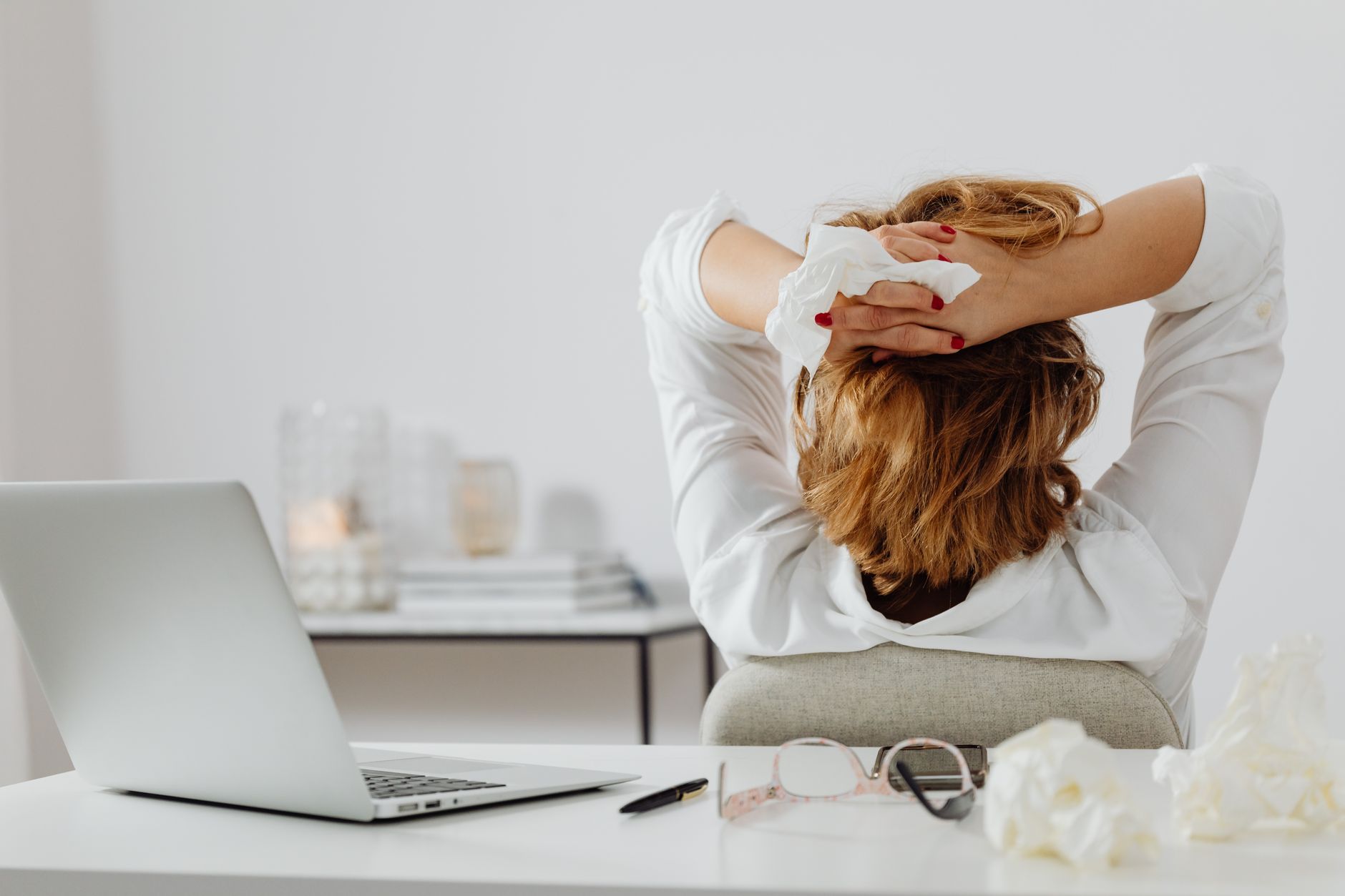
Your chest tightens at 2 p.m. on a Tuesday. Your shoulders climb toward your ears. Thoughts loop: the email you haven't answered, the bill you forgot, the thing you said in 2017. This is anxiety — a persistent hum that colors your day but lets you keep moving through it.
Now imagine something different. You're in a grocery store and suddenly your heart pounds like you've sprinted up six flights. Your hands tingle. The floor feels wrong. You're certain — certain — you're dying or losing your mind, and it lasts ten minutes that feel like an hour. That's a panic attack, and it follows a completely different nervous-system script.
Yoga can help with both. But the sequences that soothe generalized anxiety can actually trigger panic attacks in people with panic disorder. Knowing the difference matters — for your own practice, and especially if you teach.
Two Different Nervous Systems, Two Different Practices
Generalized anxiety lives in chronic low-grade sympathetic activation. The fight-or-flight switch is stuck partly on. Cortisol stays elevated. Sleep gets shallow. Muscles brace without your permission.
Panic disorder is different. The nervous system has learned to misread internal sensations — a fast heartbeat, a flushed face, a shift in breath — as catastrophic threat. The technical term is interoceptive hypervigilance. Bodies with panic disorder become afraid of their own bodies.
This matters enormously for yoga. A long savasana with eyes closed and slow breath can feel like sanctuary to someone with anxiety. To someone with panic disorder, that same stillness can amplify every heartbeat into a threat signal — and trigger an attack on the mat.
If you've experienced this and assumed yoga "wasn't for you," it might not be yoga. It might be sequencing that didn't account for your nervous system. The psoas-diaphragm connection is one place to start understanding why some shapes calm you and others spike you.
Sequencing for Generalized Anxiety: Downshift the Engine
For chronic anxiety, the goal is parasympathetic activation. We want to coax the vagus nerve into doing its job — slowing heart rate, deepening breath, signaling safety to the brain.
A practice that tends to work:
- Long exhales. Inhale four counts, exhale six to eight. Do this for three minutes before moving.
- Forward folds, gently held. Uttanasana, paschimottanasana, supported child's pose. Two to three minutes each.
- Legs-up-the-wall. Five to ten minutes. Eyes can close or stay soft.
- Supported bridge with a block. Opens the front body without strain.
- Long savasana. Eight to twelve minutes, with a blanket and eye covering if welcome.
Slow is the medicine. The whole sequence might run forty-five minutes and contain only six or seven shapes. That's the point. Anxiety responds to less, held longer, with predictable transitions.
If you want a fuller version of this kind of practice, our calming practice for anxiety walks through it in detail. The stress-relief poses piece covers the daily-life variant.
Sequencing for Panic Disorder: Build Interoceptive Tolerance
Here's where conventional "calming yoga" can backfire. Long stillness, deep breath holds, eyes closed, and heat-building backbends can all mimic the early sensations of a panic attack — and in a body that's learned to fear those sensations, the practice itself becomes the trigger.
Panic disorder responds better to a paradoxical approach: gentle, controlled exposure to mild physical activation, with eyes open and a clear sense of agency. The goal isn't to avoid sensation. It's to teach the nervous system that a faster heartbeat or a flushed face is information, not catastrophe.
A panic-informed sequence usually includes:
- Eyes open throughout. Soft gaze on a fixed point. No closed-eye savasana until interoceptive tolerance is stable.
- Standing poses first, not last. Warrior II, tree, mountain. Grounding through the feet anchors the body in present, observable reality.
- Short holds, frequent transitions. Thirty seconds to a minute. Movement provides distraction from sensation-monitoring.
- Even breath, not extended exhale. Four-count in, four-count out. Long exhales can feel like air hunger to a panic-prone body.
- No breath retention (kumbhaka). Holds at the top or bottom of breath are a common panic trigger.
- Optional mild activation. Sun salutation A at moderate pace, with explicit naming: "Your heart rate is going up. That's the practice working. You're safe."
- Savasana short and propped. Three to five minutes, eyes open or covered with permission, often with one knee bent or feet on the floor for a feeling of readiness.
This sequencing shares roots with cognitive-behavioral therapy's interoceptive exposure work. It's not a replacement for therapy — it's a complement. The most powerful results happen when yoga and a licensed clinician work in parallel.
Breath: The Fork in the Road
Breath is where these two practices diverge most sharply.
For anxiety, slow extended exhales are gold. They directly stimulate the vagus nerve. Practices like 4-7-8 breath or bhramari (humming bee breath) tend to work beautifully. The body learns: I can downshift.
For panic disorder, those same techniques can feel like suffocation. Telling someone with panic disorder to "hold the breath out for seven counts" is asking them to sit inside the exact sensation they're afraid of. Many will dissociate, leave the room, or have an attack.
What works for panic-prone breath:
- Equal-count breathing (sama vritti). Four in, four out. Predictable. No air hunger.
- Hand on belly, hand on chest. Tactile feedback. The point isn't to deepen breath — it's to notice breath without trying to change it.
- Audible breath. Quiet ujjayi can help, because the sound itself becomes the anchor instead of the sensation.
If you have asthma, long COVID, or any breath-related condition on top of panic, the diaphragm breathing guide covers the overlap more carefully. And for nervous-system work post-medical-event, the vagus nerve toning piece goes deeper into the physiology.
What to Avoid (and Why)
Some commonly recommended "calming" practices that can actually destabilize panic-prone students:
- Hot yoga. Elevated heart rate plus flushing plus group setting plus difficulty leaving — a perfect storm for panic.
- Kapalabhati (skull-shining breath). Rapid forceful exhales mimic hyperventilation. Frequently triggers attacks.
- Long breath retentions. See above.
- Deep prone backbends without preparation. Compress the diaphragm, can spike adrenaline.
- Long closed-eye meditations early in practice. Removes the visual anchor that keeps the panic-prone nervous system oriented.
- Crowded studios with no exit visibility. Many panic-disorder students need to see the door.
None of these are "bad." They're contraindicated for a specific population. The same goes for any sequencing — context is everything.
Finding a Teacher Who Actually Understands the Difference
Most yoga teachers receive maybe two hours of mental-health training in a 200-hour program. That's not a knock — it's a structural reality. If you have panic disorder, finding a teacher with additional training matters.
Specifically, look for:
- Trauma-informed certification. Our piece on trauma-informed yoga certification explains what real training looks like.
- iRest or Yoga Nidra training — but vetted for panic-safety, since some nidra scripts can trigger attacks.
- IAYT credentialing. Yoga therapists go through 800+ additional hours. The IAYT vs IYT comparison breaks down which credentials carry weight.
For context on scale: OYP's directory tracks 2,389 yoga teacher training schools globally, with 1,617 carrying Yoga Alliance accreditation. Of those, 2,220 offer the foundational RYS-200, but only 110 are full RYS-500 schools — meaning advanced mental-health and therapeutic training is still relatively rare. The United States leads with 1,280 schools, followed by India (181), Canada (152), Germany (75), and the United Kingdom (66).
That's a lot of options, but quantity isn't quality. Ask any prospective teacher directly: "Have you trained in working with panic disorder specifically?" If they conflate it with general anxiety, that's your answer.
Building Your Own Practice at Home
You don't have to wait for the perfect teacher. A home practice — especially for panic disorder — gives you control over pace, exit, and environment in a way no studio can match.
A starting framework for anxiety:
- Five minutes of long-exhale breath, seated.
- Three to five gentle standing poses, held one to two minutes each.
- Two forward folds, supported.
- Legs up the wall, ten minutes.
- Savasana, ten minutes.
A starting framework for panic disorder:
- Two minutes of equal-count breath, eyes open, hand on belly.
- Mountain pose, tree pose, warrior II — short holds, eyes open.
- One round of slow sun salutation A.
- Seated twist, seated forward fold — brief, never forcing breath.
- Short savasana, three to five minutes, eyes open or covered by choice.
If building a home practice feels overwhelming, the home practice guide walks through the logistics — space, time, props, sustainability.
When Yoga Isn't Enough (and That's Okay)
Panic disorder is a clinical diagnosis. So is generalized anxiety disorder. Yoga can be a meaningful part of treatment, but it isn't a replacement for one.
If panic attacks are happening weekly, or if anxiety is interfering with work, sleep, or relationships, please reach out to a licensed mental health provider. Cognitive-behavioral therapy has strong evidence for panic disorder specifically. Medication helps some people enormously. Yoga sits alongside these tools, not in competition with them.
Mind is the master — and part of mastery is knowing when to ask for help. The strongest practitioners we know aren't the ones who white-knuckle their way through symptoms. They're the ones who build a team.
A Soft Invitation
If you've been practicing yoga and it's been making your panic worse, you're not broken. You've probably been handed sequences designed for a different nervous system than yours. The good news is that the right practice exists, and it's gentler than you might expect.
Start with one short, eyes-open, predictable sequence. Notice what happens. Adjust. The body learns slowly, and that slowness is part of the medicine.
Related reading
Subscribe to the newsletter
Subscribe to my newsletter to get the latest updates and news