5 Tips for Using Yoga Blocks for Beginners: Build Better Alignment and Confidence
You're on your mat, reaching for a pose, and something feels off. Your hands don't touch the ground. Your hips won't square. Your shoulders creep toward your ears. This is where most beginners either force themselves into misalignment or give up on the pose altogether. A yoga block—a simple foam, cork, or wood prop—changes that equation. It's not a crutch. It's a tool that meets you where your body actually is, not where you think it should be. The block closes the distance between your hands and the earth, lifts your hips where they need support, and teaches your muscles what proper alignment feels like. If you're new to yoga or returning after time away, understanding how to use blocks will accelerate your progress, reduce injury risk, and make your practice feel less like fighting your body and more like working with it.
1. Choose the Right Block Material and Height
Not all blocks are equal. The most common materials are foam, cork, and wood. Foam blocks are lightweight, affordable (typically $10–20), and best for beginners because they're forgiving and easy to handle. Manduka and Gaiam make durable foam options. Cork blocks are denser, more stable, and better if you plan to use blocks regularly long-term; expect to spend $25–45. Jade, Manduka, and Hugger Mugger all make quality cork blocks. Wood blocks are the densest and least common for home practice, but they're what you'll find in some studios.
Height matters too. Standard blocks are 3 inches, 4 inches, or 6 inches tall. As a beginner, start with a 4-inch block—it's the sweet spot. It's not so high that it feels unstable, and it's tall enough to genuinely help you reach the ground in forward folds or support your hips in low lunges. Many blocks are reversible or have beveled edges so you can adjust the height by flipping or rotating them. Test a few in a studio class if you can before buying. You want something that feels stable underfoot and light enough to move around easily.
2. Use Blocks Under Your Hands to Ease Forward Folds and Downward Dog
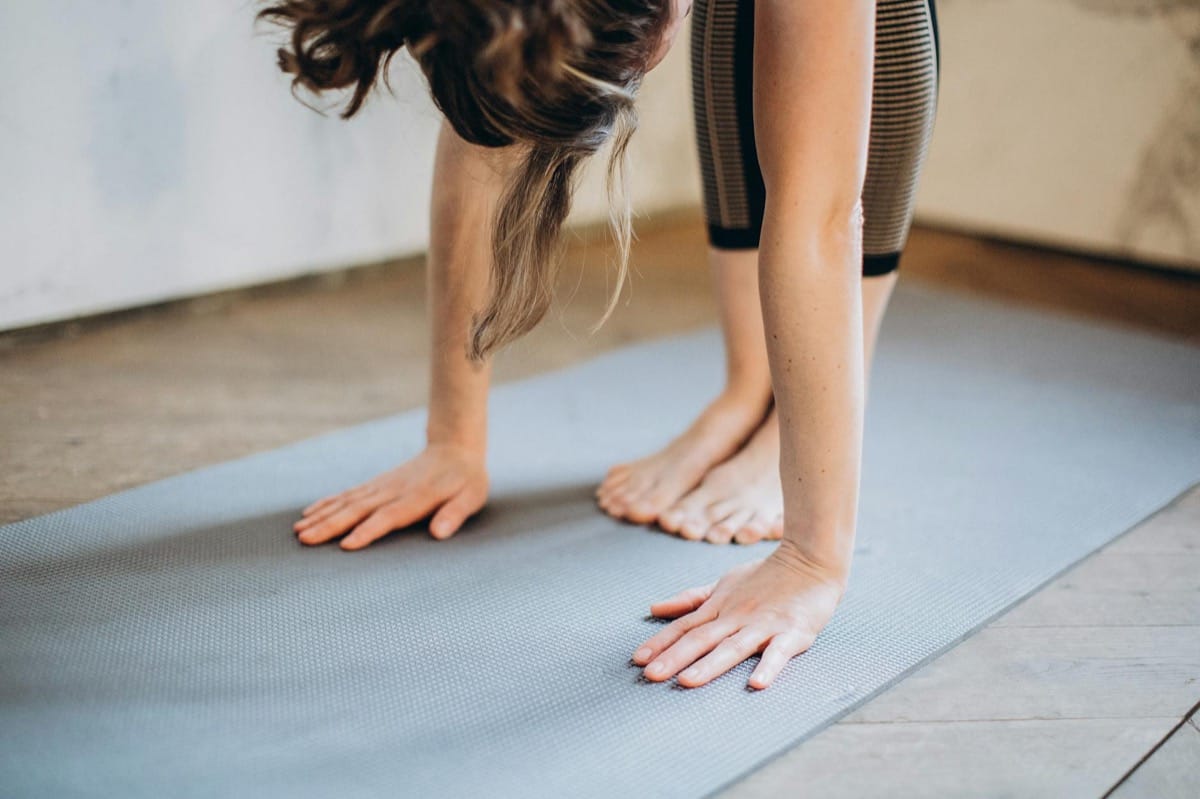
This is the most intuitive use and the best place to start. In Uttanasana (forward fold), instead of rounding your spine to force your hands to the floor, place a block under each hand. This lengthens your spine, reduces hamstring strain, and lets you feel a real forward fold rather than a backache. Your hands rest on the blocks at whatever height you need—usually 4 or 6 inches—and your spine stays neutral.
In Adho Mukha Svanasana (downward-facing dog), placing your hands on blocks (with the beveled side down for stability) shifts weight off your wrists and shoulders. This is especially useful if you have wrist pain or tight shoulders. The blocks also allow you to lengthen your spine and feel the pose's full benefit instead of collapsing into compression. Once your hamstrings warm up over weeks of practice, you can lower to blocks with less height, then eventually the floor. This progression prevents you from injuring yourself while chasing a visual ideal.
3. Place Blocks Under Your Hips in Low Lunges and Supported Squats
Hip openers demand support, especially for beginners with tight hips. In Anjaneyasana (low lunge), kneeling on one leg while the other leg steps forward, place a block under your back hip. This lifts your hips higher, reduces the depth of the lunge, and allows you to maintain a neutral spine instead of tilting forward. Your quads don't scream. Your knee joint stays happy.
In Malasana (yogic squat), beginners often find their heels lift off the ground or their torso folds forward too much. Place a block under your sitting bones—either upright (4 inches) or laying flat (3 inches). This reduces how deep you squat, keeps your feet grounded, and lets you sit upright with a straight spine. Your hips open gradually rather than straining. The same principle applies to Utkatasana (chair pose): placing a block between your thighs engages the right muscles and prevents your knees from caving inward.
4. Use Blocks to Deepen Stretches and Passive Poses
Blocks also work in the opposite direction—they can intensify a stretch once you're stable. In Baddha Konasana (bound angle pose, a seated hip opener), sit on the edge of a block rather than the floor. This tilts your pelvis forward and allows your knees to drop lower without forcing the movement. The block works with gravity instead of against your anatomy.
In Supta Baddha Konasana (reclined bound angle), place a block vertically lengthwise under your spine for a gentle backbend that opens your chest and hips simultaneously. Start with the lowest position (3 inches height) as a beginner. Your shoulders relax. Your breathing deepens. This is passive work—you're not muscling into the pose. The block does the lifting; you just breathe. Restorative yoga relies heavily on this principle of using props to support deep relaxation.
5. Match Block Height to Your Flexibility, Not Your Ego
The most common beginner mistake is choosing a block that's too low out of shame. Your neighbor doesn't need her hands on blocks; you do. That's not weakness. That's honest assessment. Your hamstrings, hip flexors, and shoulders have their own timeline. Respect it.
Start each pose at the highest block height that feels stable. In forward folds, that might be a 6-inch block for the first few weeks. As your hamstrings gradually lengthen, move to 4 inches, then 3 inches, then the floor. This progression takes weeks or months, and that's normal. You're training your nervous system to recognize good alignment, not sprinting toward a pose shape. The Yoga Sutras teach that practice (abhyasa) requires steadiness and willingness to show up consistently. Using the right height consistently is more valuable than forcing yourself lower and collapsing into poor form. Your alignment improves faster when you're not fighting gravity.
Common Beginner Block Mistakes to Avoid
Don't stack blocks without a clear reason. Two blocks under your hands in a forward fold is sometimes necessary if you're very tight, but it's rarely the long-term solution. Stacking suggests you need a different pose entirely, not a higher prop.
Don't assume blocks are only for beginners. Every yoga teacher uses blocks. Yin yoga teachers use them for deep, passive stretches. Vinyasa teachers use them for alignment refinement. A block isn't graduation away from—it's deepening into—your practice.
Don't skip the Yamas and Niyamas because you're focused on props. The ethical foundation of yoga (ahimsa—non-harming, and satya—truthfulness) applies to your practice too. Using a block is truthful. Forcing yourself without one is harmful. Props align your body *and* your integrity.
Building Your Block Practice
Start with one 4-inch block in whatever material fits your budget. Foam is fine. As you settle into regular practice, many teachers recommend getting two blocks so you have options in bilateral poses (lunges, seated forward folds). Cork lasts longer and feels better if you practice 3+ times weekly.
In your early weeks, use blocks in every class. Let your body adapt to good alignment under load. Once alignment becomes familiar—usually 4–8 weeks of consistent practice—you can experiment with removing blocks in specific poses and adding them back when you need them. This awareness is the real work. The block is the teacher; your sensing body is the student. Over time, you internalize the alignment the block taught you, and you move through poses with more ease, stability, and confidence. That's not dependent on a prop. That's integration. Blocks aren't forever. They're a bridge to the body you're building.
Related Reading
Yoga for Beginners: Everything You Need to Start a Home Practice — A comprehensive guide to building a sustainable home yoga practice with proper foundation, props, and realistic expectations.
What Is Restorative Yoga? A Guide to Deep Rest and Healing — Discover how props like blocks are central to restorative practice, supporting your body in passive poses for deep relaxation.
7 Yoga Poses to Help You Get More Flexible for Beginners — Essential beginner poses with modifications and prop support to safely improve flexibility over time.
Yoga Alliance Certification Explained: Requirements, Programs, and Standards — Learn how yoga teacher training programs, including block usage and alignment principles, prepare certified instructors to guide students safely.
Subscribe to my newsletter to get the latest updates and news