Yin vs Hatha Yoga: Key Differences and Which Practice Suits You
You're standing in front of two yoga classes at your local studio. One promises deep stretches held in silence. The other focuses on standing poses and breath-body connection. Both feel right, but you're not sure which one fits where you are right now. This question—Yin or Hatha—stops many people at the threshold of their practice.

The yoga world contains genuine diversity. Yin and Hatha aren't just different names for similar things. They're built on different philosophies, move at different paces, and serve different needs in your body and mind. Understanding these differences matters, not because one is better, but because the right match changes everything about how you experience yoga.
The Core Philosophy Behind Each Style
Hatha yoga, as a formal style, draws directly from classical yoga texts. The term itself comes from "ha" (sun) and "tha" (moon), representing the balance of opposing energies. Traditional Hatha emphasizes asana (posture) and pranayama (breath control) as preparation for meditation. When you take a Hatha class today, you're learning poses with attention to alignment, holding them for several breaths, then moving mindfully to the next one. The pace allows you to feel your muscles engage and your breath support the work.
Yin yoga emerged much more recently, developed in the 1970s by martial artist and yogi Paul Grilley. It draws on Traditional Chinese Medicine principles, particularly the concept of chi (energy) flowing through meridians and the yin-yang balance. Yin targets the deeper connective tissues—fascia, ligaments, joints—rather than muscles. Poses are held passively for three to five minutes or longer, allowing gravity and time to do the work. There's minimal muscular engagement; instead, you're learning to be still and observe what arises.
Pace and Duration: How They Move Differently
A typical Hatha class runs 60 to 90 minutes and covers 15 to 20 poses. You move through Sun Salutations (Surya Namaskar), standing sequences like Warrior poses, and seated forward folds. Each pose is held for five to eight breaths—roughly 20 to 40 seconds. The transitions matter. You're building heat, finding your edge, and engaging your bandhas (energy locks). Classes usually end with a brief savasana (corpse pose for rest).
Yin classes are slower and deeper. A 60-minute Yin session might include only five to eight poses. You settle into Child's Pose or a supported reclined twist and stay there for three to five minutes, sometimes longer. The goal isn't to work harder or go deeper into the stretch. You're accessing a different layer of the body and a different state of mind. The long holds allow your nervous system to shift toward rest-and-digest mode.
Alignment and Body Engagement
Hatha's Structural Approach
Hatha teachers spend time on alignment cues. Stack your shoulders over wrists in Downward Dog. Press four corners of your feet into the ground in Mountain Pose. Draw your lower ribs in. These micro-adjustments protect your joints and help you build strength and awareness simultaneously. Your muscles work throughout the pose. In Warrior II, your front thigh works toward parallel, your back foot roots, and your core stabilizes your spine. The practice is active.
Yin's Passive Approach
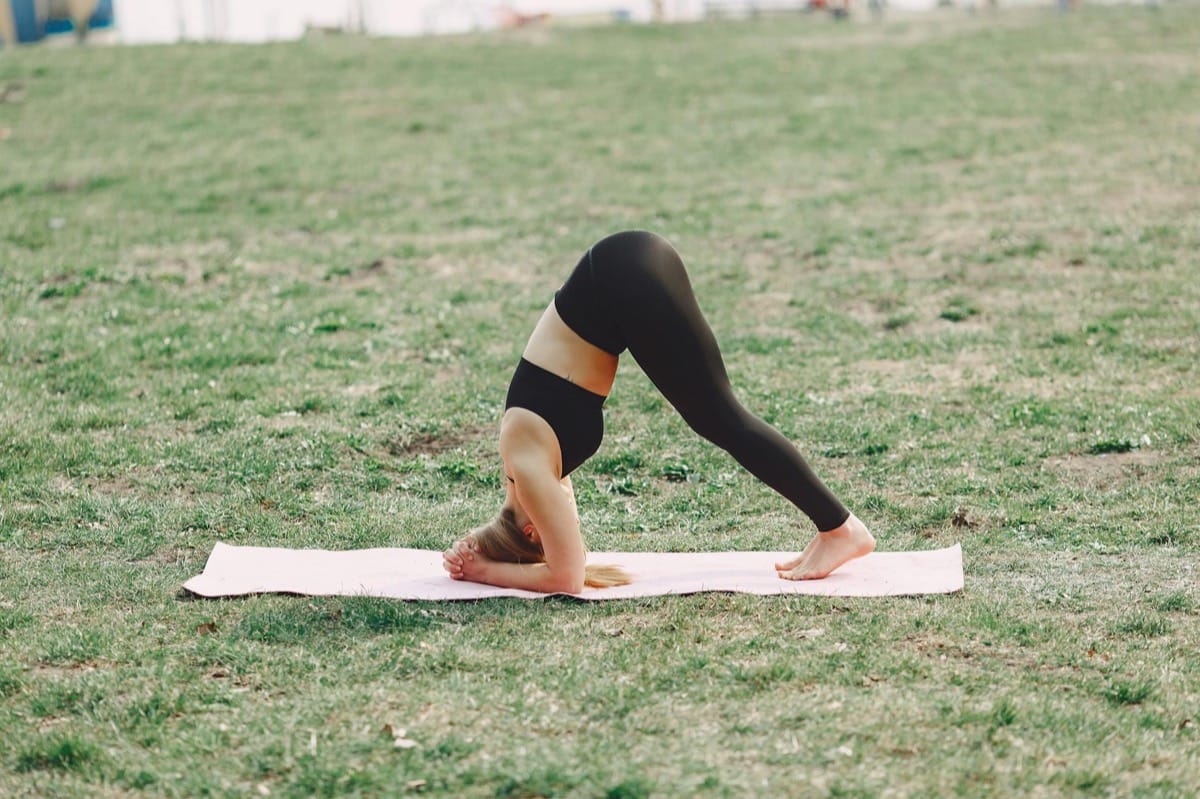
Yin abandons the pursuit of perfect alignment. You're not trying to straighten your spine or engage your thighs. In Yin, you use props—blocks, blankets, bolsters—to support your body so muscles can completely relax. A Yin teacher might say, "Let your body be heavy. Let gravity do the work." You're not holding yourself up. You're receiving the stretch. This passivity is the point. When muscles relax, the load transfers to fascia and ligaments, where the real opening happens.
Benefits and What Each Practice Builds
Why Choose Hatha
Hatha builds functional strength and stability. You develop better posture, stronger legs, and a more resilient spine. The dynamic nature keeps your cardiovascular system engaged. You're also building body awareness through focused attention on alignment and breath. Many people feel energized after Hatha class. If you're looking to become stronger, more mobile, and more capable in daily life, Hatha delivers that. It's also excellent for beginners because the slower pace gives you time to understand each pose.
Why Choose Yin
Yin works on connective tissue that rarely gets attention in daily movement. Your hips, shoulders, and spine often hold chronic tension. Yin's long holds allow that tissue to release and rehydrate. Many practitioners report feeling calmer, more grounded, and more emotionally regulated after Yin. It trains your nervous system to rest. If you sit at a desk, spend hours in your car, or carry stress in your body, Yin addresses what Hatha doesn't. It's also meditative. The stillness creates space for introspection and mental clarity.

Who These Styles Suit Best
If you're new to yoga, both styles work, but they serve different needs. A beginner who wants to build strength, learn proper alignment, and feel more energized usually thrives in Hatha. You'll understand how to use your muscles and breathe deliberately. You'll build a foundation for other practices.
A beginner drawn to stillness, meditation, or someone recovering from injury might prefer Yin. It's gentler on joints and doesn't require as much strength. You can focus on breath and sensation without worrying about form.
Many experienced practitioners eventually do both. Hatha provides the dynamic work and heat. Yin balances it with restoration and depth. They complement each other beautifully in a weekly practice.
Finding Your Practice: Real Considerations
Consider your body right now. If you feel stiff, tight, or chronically tense, start with Yin once or twice weekly to release held patterns. If you feel weak, sluggish, or need more cardiovascular engagement, Hatha is your answer. If you're injured, ask your teacher which is safer. Most physical therapists recommend Yin for joint issues and Hatha for rebuilding strength.
Also consider your mind. Hatha's pace and focus suit people who like structure and measurable progress. Yin suits those who need permission to slow down, sit still, and stop optimizing. Neither is objectively better. The right choice is the one you'll actually do and the one that addresses what you need right now.
How to Experience Them
Most yoga studios offer both. Before committing to a series, try one Hatha class and one Yin class. Notice how you feel during and after. Do you prefer moving through poses or resting in them? Does your mind settle easier in stillness or action? Does your body feel better stretched passively or actively strengthened? Your body knows. Listen to what it tells you.
If you're practicing at home, YouTube offers legitimate Hatha and Yin instructors. Yoga with Adriene teaches accessible Hatha. Bernie Clark and Kassandra Reinhardt both teach genuine Yin. A single class costs nothing. Your studio's intro offer usually includes several classes for $20 to $30.
The Wisdom in Both
Both Hatha and Yin honor the foundational yogic principle of balance. Hatha activates and strengthens. Yin settles and releases. Together, they reflect the Taoist principle embedded in yoga's oldest texts: opposing forces sustaining each other. A life lived well usually requires both—effort and surrender, strength and flexibility, movement and stillness. Your yoga practice can reflect that wisdom by exploring both.
Start with whichever calls to you. You don't need to choose one forever. Your practice can evolve as your needs shift. The best style is the one you're actually doing.
Go Deeper
Compare real programs in the OYP YTT Database:
Related programs in our directory:
Subscribe to my newsletter to get the latest updates and news