Pigeon Pose: Hip Opening, Benefits, and How to Modify

If you've ever sat in pigeon pose and felt that deep, almost sacred release across your hips and glutes, you already know why this pose has become a yoga staple. Pigeon pose, or Eka Pada Rajakapotasana in Sanskrit, is one of the most transformative hip openers in yoga—and honestly, one of the most humbling. Whether you're dealing with tight hips from sitting all day or you're simply looking to deepen your flexibility, pigeon pose delivers real results. In this guide, we'll walk through the anatomy, benefits, alignment cues, and modifications so you can practice this pose safely and effectively.
Why Your Hips Are So Tight (And Why Pigeon Pose Matters)
Before we dive into the pose itself, let's talk about why hip tightness is such a common complaint among yoga students. Our hips are complex joints—they're where the femur (thighbone) meets the pelvis, and they're surrounded by multiple layers of muscles, including the piriformis, gluteus medius, tensor fasciae latae, and deep external rotators. When we sit for hours at a desk or in a car, these muscles tighten and shorten. Over time, this leads to restricted range of motion, lower back pain, and that persistent feeling of being "stuck" in your hips.
Pigeon pose specifically targets the external hip rotators and the gluteus maximus—two areas where tension accumulates fastest in modern life. Unlike some hip openers that work passively, pigeon pose creates deep, direct pressure on these muscle groups, which is why it can feel intense even for experienced yogis. This intensity is actually a sign that the pose is doing its job.
If you're a runner or athlete, pigeon pose is essential. Hip mobility directly impacts your stride length, power generation, and injury prevention. Regular practice can improve performance while reducing the risk of knee and lower back injuries.
Understanding the Anatomy of Pigeon Pose
Let's break down what's happening in your body when you're in pigeon pose. Your front leg is externally rotated (turned outward) at the hip, while your back leg is internally rotated and extended. This opposition creates what yoga teachers call a "complementary stretch"—both sides of your hip get attention simultaneously.
The main muscles being stretched include:
- Piriformis: A small but mighty muscle deep in the glute that often compresses the sciatic nerve when tight
- Gluteus maximus and medius: The large muscles of your buttocks
- Tensor fasciae latae (TFL): Located on the outer hip, this muscle is chronically tight in many people
- Hip flexors: The muscles on the front of your hip that shorten from prolonged sitting
Your lower back and sacroiliac joint are also engaged in pigeon pose, so alignment matters enormously. Poor alignment can lead to strain rather than relief.
How to Practice Pigeon Pose: Step-by-Step Alignment
Starting Position: Begin on your hands and knees in a tabletop position. Make sure your wrists are under your shoulders and your knees are under your hips.
Step 1 — Bring Your Knee Forward: Inhale, then exhale as you bring your right knee forward toward your right wrist. Your shin should angle across your mat—the more perpendicular your shin is to your hips, the deeper the stretch. If your right ankle is near your left wrist, you've got a deeper variation.
Step 2 — Square Your Hips: This is crucial. Your hips should be parallel to the front of your mat. If your front hip is rotating open (lifting toward the ceiling), you're losing the benefits of the pose and potentially straining your lower back. Use your hands to gently draw your back hip forward until both hip points are level.
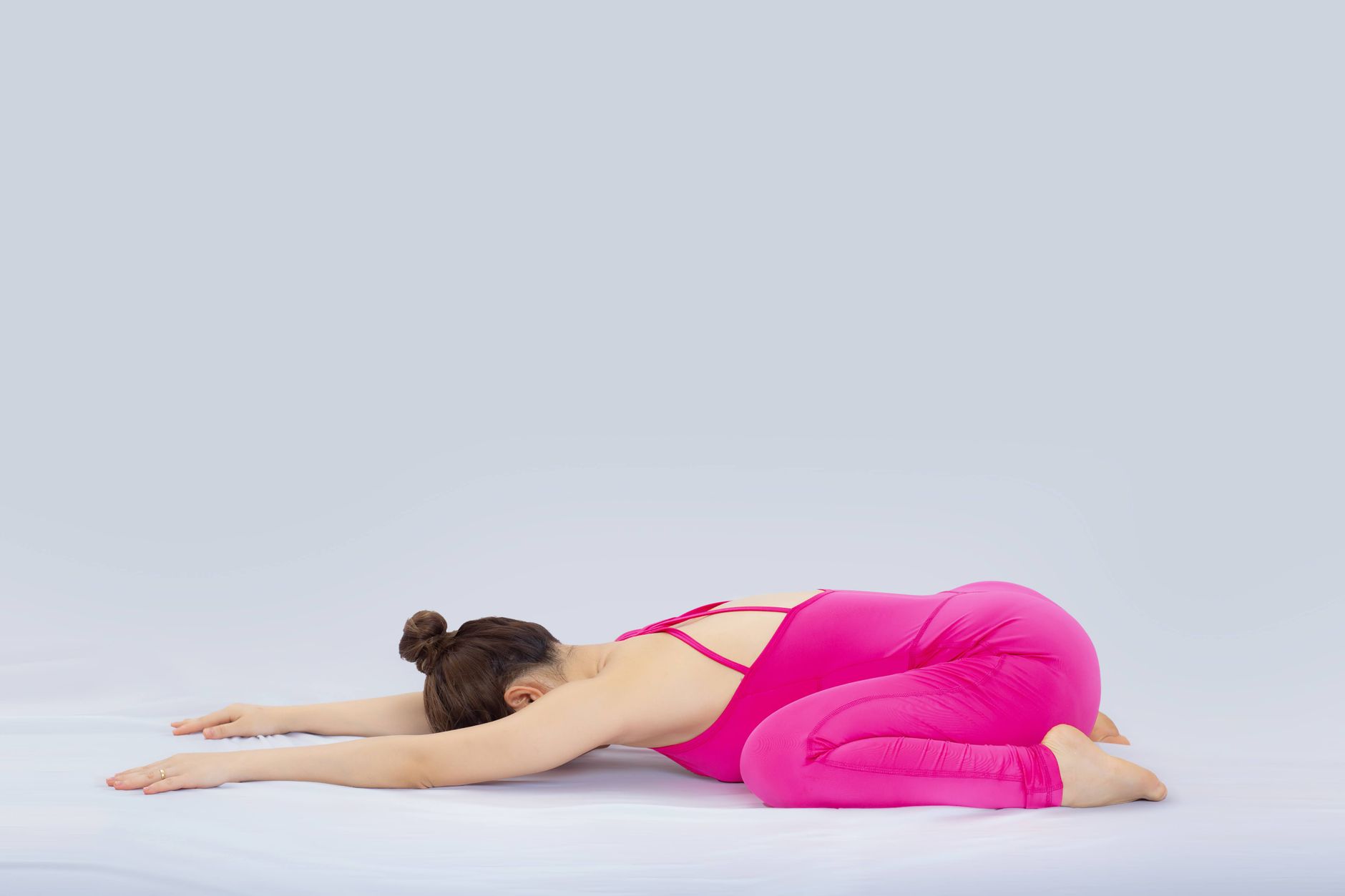
Step 3 — Lower Your Torso: With your hips squared, begin to lower your torso forward. You can rest on your forearms for a gentler version, or fold all the way down, extending your arms in front of you for a deeper stretch. Move slowly and never force the fold.
Step 4 — Breathe: Stay in the pose for 5-10 breaths on each side. Pigeon pose works best with patience. Your nervous system needs time to relax into the stretch, and rushing will only create tension.
Common Alignment Mistakes to Avoid
Even experienced yogis make alignment mistakes in pigeon pose. Here are the most common ones:
- Rotating your front hip open: This feels good in the moment but reduces the effectiveness of the pose and can strain your sacroiliac joint. Keep both hip points square to the mat.
- Hyperextending your lower back: If your front hip is high or your hips aren't square, your lower back compensates by overarching. This creates pain rather than relief.
- Crunching your front ankle: Your front foot should be relaxed. If your ankle is tensing or cramping, you may need to adjust the angle of your shin or use additional props.
- Forcing a deep fold too quickly: Pigeon pose takes time to open. Aggressive folding can trigger a protective reflex in your nervous system, causing muscles to tighten rather than release.
Modifications for Different Flexibility Levels
Not everyone's body is built for a full pigeon pose fold, and that's completely okay. Your anatomy is unique, and honoring your body's limits is a sign of wisdom, not weakness.
Supported Pigeon (Beginner-Friendly): Place a yoga block or bolster under your front hip to reduce the depth of the hip flexion. This allows you to stay in the pose longer without muscle cramping and gives your nervous system permission to relax. Many teachers recommend this variation even for advanced students because it creates a more sustainable, long-term benefit.
Reclined Pigeon: If sitting pigeon feels uncomfortable, try this supine version. Lie on your back with both knees bent. Cross your right ankle over your left thigh, creating a "figure four" shape. Gently draw your left thigh toward your chest. This variation gives you excellent hip opening with minimal strain on your lower back.
Half Pigeon with Quad Stretch: From your forward fold in pigeon pose, you can add a quad stretch to your back leg. Bend your back knee and reach back to hold your foot, gently drawing your heel toward your glute. This creates a full hip and thigh opening.
Thread the Needle (Lying Down): This is the most accessible variation. Lying on your back, cross your right ankle over your left thigh and thread your hands through your legs to clasp behind your left thigh. This gives you all the benefits of pigeon without the structural demands.
The Science-Backed Benefits of Regular Practice
Beyond the immediate sense of release, regular pigeon pose practice offers measurable benefits. Research on hip flexibility and yoga shows that consistent practice improves range of motion, which correlates with reduced lower back pain and improved mobility in everyday activities.
Hip mobility is also linked to better posture and spinal alignment. Tight hips force your pelvis to rotate anteriorly or posteriorly, throwing off your entire kinetic chain. By opening your hips, you're essentially resetting your foundation, which benefits your entire body.
Pigeon pose also activates your parasympathetic nervous system—your "rest and digest" mode. The deep, sustained stretching combined with conscious breathing signals safety to your brain, which reduces cortisol and promotes relaxation. This is why many students feel emotionally released after a good pigeon pose session. Tears during pigeon aren't a sign you're doing something wrong; they're actually a sign your nervous system is releasing stored tension.
When to Practice Pigeon Pose in Your Sequence
Timing matters in yoga. Pigeon pose is most effective when your hips are already warm. Never dive into pigeon cold. Instead, build up to it with active hip openers like Warrior I, Warrior II, or hip flexor stretches. A typical sequence might look like this:
- Sun salutations or gentle warm-up (3-5 rounds)
- Standing postures like Warriors and lunges (5-10 minutes)
- Low lunge or lizard pose (1-2 minutes per side)
- Pigeon pose (2-3 minutes per side)
- Supine stretches like reclined pigeon or happy baby
- Savasana (final relaxation)
Placing pigeon near the end of your practice means your muscles are warm and pliable, and you have time to relax into it without rushing.
Props That Make Pigeon Pose Accessible
Using props isn't "cheating"—it's intelligent practice. Yoga blocks are invaluable for pigeon pose. Place a block under your front hip to reduce the depth, or use a bolster or cushion to support your torso as you fold forward. A yoga blanket can also go under your back knee for padding if you have sensitive knees.
Related programs in our directory:
Subscribe to the newsletter
Subscribe to my newsletter to get the latest updates and news