
Yoga for Runners: IT Band, Hip Flexors, and the 4 Poses That Help Most
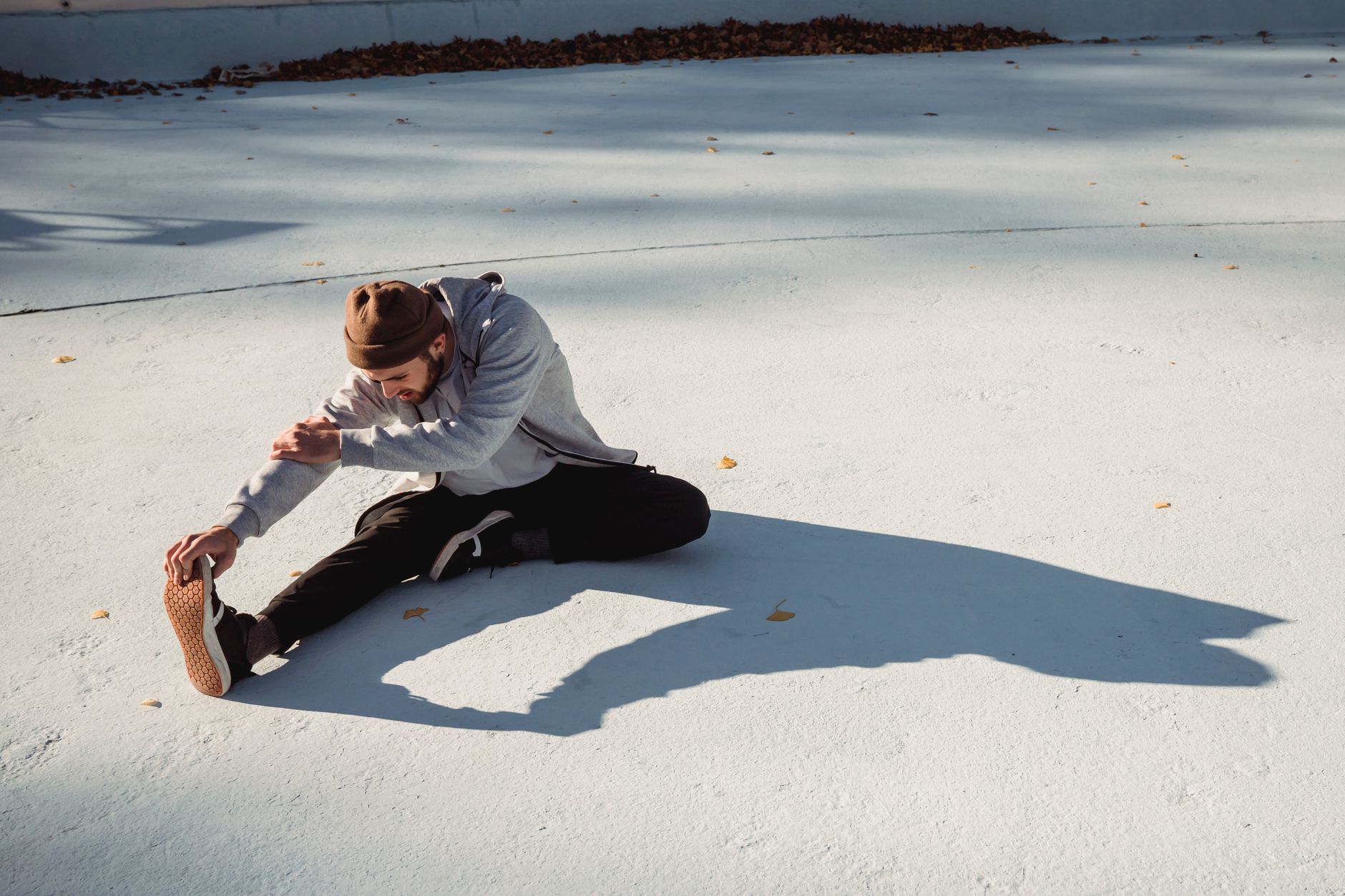
You run. Your IT band is your nemesis. Your hip flexors feel like tightened guitar strings by mile five. You've tried foam rolling, you've tried rest, you've tried switching shoes. You're considering yoga but you're not sure if you need a whole practice or just a few specific things to do after a run.
The honest answer: runners need a few specific things, done consistently, more than they need a complete yoga practice. Here are the four poses that address the actual biomechanical issues that running creates — and the reasoning behind each one so you understand what you're actually fixing.
What running does to the body (the short version)
Running is a repetitive sagittal-plane activity — most movement happens in forward-backward direction, with the same muscles contracting and lengthening in the same pattern, thousands of times. The hip flexors (primarily the iliopsoas and rectus femoris) are under constant load. The IT band is under repeated lateral tension through the knee as it flexes and extends. The glutes — particularly glute med — are the stabilizers that prevent hip drop with each stride; if they're not firing efficiently, the IT band compensates.
Yoga's contribution to running: lengthening the hip flexors, restoring lateral hip mobility, building glute med engagement, and decompressing the lumbar spine that sits on top of all of this.
Pose 1: Low lunge with quad stretch — the hip flexor fix
Step one foot forward, lower the back knee to the floor. This alone gets into iliopsoas. Add the quad stretch — reach back for the back foot — to address rectus femoris (the hip flexor that also crosses the knee). Stay 90 seconds each side, minimum. Breathe into the front of the hip on every exhale. This is the single most important pose for runners. Do it every time you run.
The key form cue: keep the front knee stacked over the ankle, not driving forward. Tuck the pelvis slightly to deepen the iliopsoas stretch rather than letting the low back arch into compensation.
Pose 2: Supine figure-four — the IT band and glute med approach
Lie on your back, cross one ankle over the opposite thigh, flex the foot. Draw both legs toward the chest. You'll feel this in the outer hip — the piriformis, the gluteus medius, and the tissue that feeds into the IT band. This is more effective than foam-rolling the IT band directly, because you're reaching the muscles whose tension is creating the IT band tightness, rather than pressing on the band itself (which doesn't release the way muscle does).
Hold two minutes each side after long runs. The longer you hold (within comfort), the more the nervous system allows the tissue to release.
Pose 3: Pigeon pose — the hip capsule
From downward dog, bring one knee forward toward the wrist with the shin as horizontal as your hip allows. Extend the back leg straight. Fold forward over the front shin. This pose reaches the hip rotators and the hip capsule in a way that supine figure-four doesn't — it's deeper, and it requires more warm-up before attempting. Do this after a run or after a warm-up, never cold.
If pigeon creates knee discomfort, back off the shin angle or return to supine figure-four. The knee should feel nothing; the sensation should live in the outer hip. Use a blanket under the hip for support if there's significant height difference between hip and floor.
Pose 4: Half-split (Ardha Hanumanasana) — hamstrings without overload
From low lunge, shift the hips back and extend the front leg, flexing the foot. Stay with a neutral spine rather than rounding into the hamstrings. Use blocks under the hands for height if needed. Runners often have chronically shortened hamstrings — not from running itself, but from the combination of running, sitting, and insufficient recovery. Half-split addresses the hamstrings without the risk of overstretching that comes with full splits or deep forward folds.
Hold 90 seconds each side. Focus on the sensation at the belly of the hamstring, not at the attachment points near the knee or sit-bone. If you feel anything sharp near the knee, reduce the range immediately.
When to do these poses
The best time is five to ten minutes after a run, while the muscles are warm. You can also do the full sequence as a standalone 20-minute practice on rest days. Cold tissue before these poses is not ideal — never stretch a completely cold IT band complex.
Frequently asked questions
How often should runners do yoga?
The four poses above: after every run. A fuller practice: two to three times per week is ideal. This doesn't need to be a 60-minute class — 20 minutes of targeted work done consistently beats a weekend warrior yoga session.
Can yoga replace strength training for runners?
No — and it shouldn't try to. Runners need progressive load through the glutes, hamstrings, and single-leg stability. Yoga addresses range of motion and body awareness. Both are necessary; they serve different functions.
Where can I find more athlete-specific yoga resources?
Browse the OYP blog for athlete-specific yoga therapy posts. Our YTT directory includes programs with sports yoga and anatomy specializations for teachers who want to work specifically with athletic populations.
Subscribe to the newsletter
Subscribe to my newsletter to get the latest updates and news


