Yin Yoga vs Restorative Yoga: The Difference Actually Matters
You're tired and you want something slow. You look at the class schedule and see both yin yoga and restorative yoga. They're both on the floor, both involve long holds, and both seem like they'd serve a body that needs a break from vinyasa. So you pick the one with the better time slot and assume they're roughly the same thing.
They're not. The difference matters for how your body responds — and knowing it helps you choose the right practice for what your body actually needs on a given day.
What yin yoga is targeting
Yin yoga targets the connective tissue — fascia, ligaments, joint capsules — rather than the muscles. The long holds (typically three to five minutes, sometimes longer) are designed to create a sustained, moderate stress on dense connective tissue, which is relatively avascular (low blood flow) and adapts slowly to load. By holding poses in an area of mild discomfort for extended time, yin practice gradually increases fascial length and joint mobility.
Yin is specifically not about muscle relaxation. You'll often feel a sensation — sometimes significant — in the target area. That sensation is the connective tissue being stressed, and it's intentional. If you're completely comfortable in every yin pose, you're likely not getting the connective tissue stimulus the practice is designed to provide.
The target tissues are primarily the hips, lower back, and inner thighs — areas rich in connective tissue and relatively neglected by muscle-focused practices. Dragon (low lunge), sleeping swan (pigeon variation), butterfly, and deer pose are classic yin shapes.
What restorative yoga is targeting
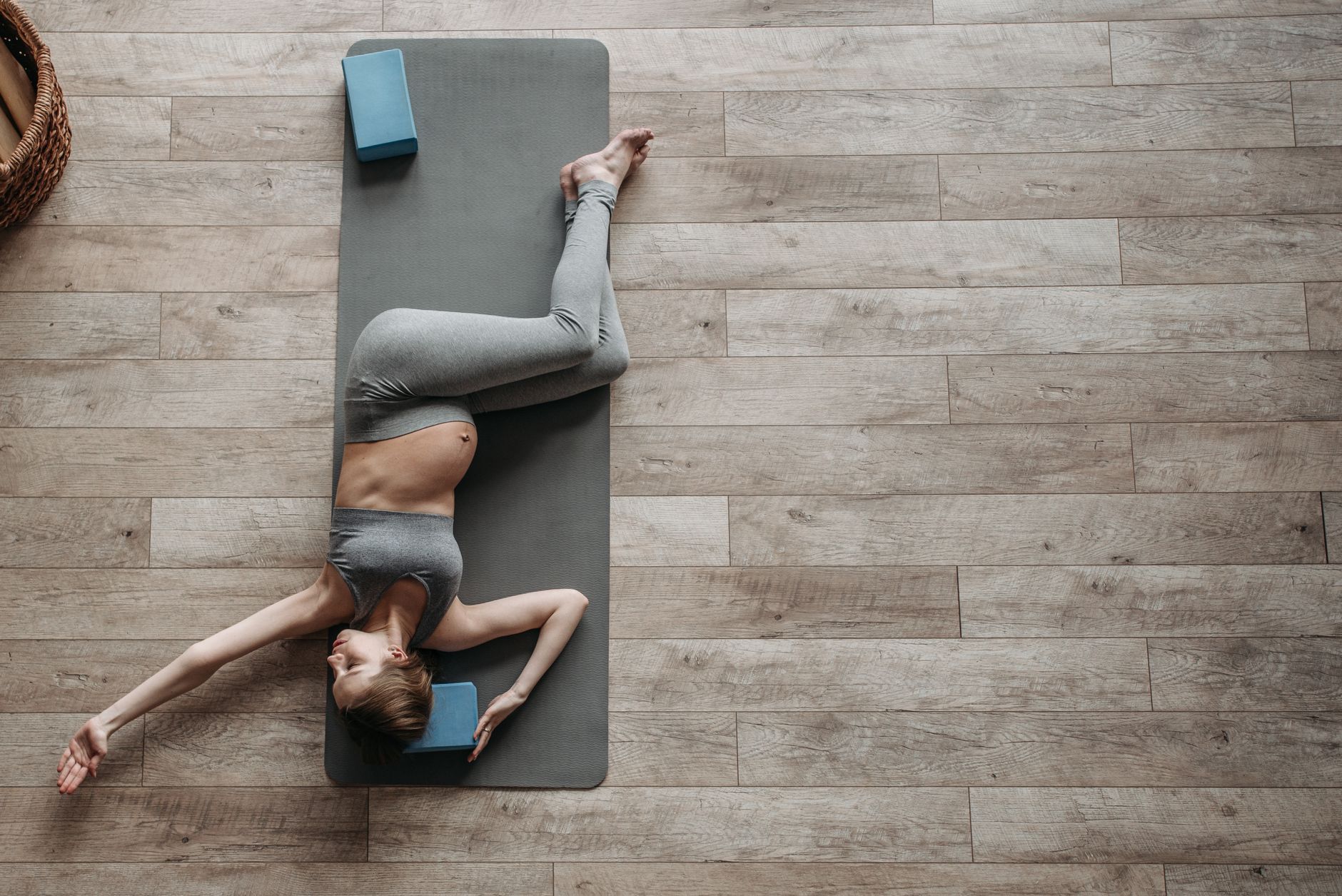
Restorative yoga targets the nervous system — specifically, it's designed to activate the parasympathetic branch and produce deep physiological rest. The goal is the absence of effort. Every pose is fully supported with props (bolsters, blankets, blocks, straps) so that no muscle is working to maintain the position. You're not stretching. You're resting.
The physiological mechanism is vagus nerve activation through stillness, supported breath, and the absence of threat signal. Heart rate slows, cortisol drops, the visceral nervous system settles. A well-practiced restorative session leaves you feeling as rested as sleep — sometimes more, because you're conscious and can't be disrupted by a dream or a noise.
Key restorative poses: supported child's pose (bolster under the belly), viparita karani (legs up the wall with a folded blanket under the pelvis), supta baddha konasana (reclined bound angle with a bolster under the spine and blocks supporting the thighs), and supported savasana. All of these require more props than most yoga classes carry — if you're building a home restorative practice, invest in a bolster and four or five blankets.
The overlap — and why it matters
Both practices involve floor-based postures, long holds, and a slower pace. Both produce some degree of nervous system calming. In practice, the categories blur — some yin poses feel restorative, and some restorative poses create mild connective tissue sensation.
The question is: what is the practice asking of you? Yin asks you to be present with sensation. Restorative asks you to release into support. These are different internal orientations, and different bodies will respond better to one or the other depending on the day.
How to choose
Choose yin when: you have specific areas of stiffness or restricted mobility (hips, lower back), you want to address connective tissue specifically, or you're looking for a practice that includes some challenge alongside the slowing down.
Choose restorative when: you're depleted, ill, recovering from something intense, dealing with high stress or anxiety, or when any sensation in the body feels like too much. Restorative is the complete rest option. It asks nothing of you except presence.
If you're not sure: restorative is the safer default when you're uncertain. You can't go wrong with asking the nervous system to rest.
Frequently asked questions
Can I do yin and restorative in the same session?
Yes — and it's a useful combination. Yin practice first (to create sensation and begin the connective tissue work), followed by restorative poses (to settle the nervous system and consolidate the opening). Twenty minutes of yin followed by twenty minutes of restorative is a complete and effective practice.
Is yin yoga safe for hypermobile practitioners?
With modification, yes. Hypermobile joints are already lax in connective tissue; loading them further with deep yin holds can cause instability. Hypermobile practitioners should use less range of motion in yin poses and focus more on the restorative component. Working with a teacher who understands hypermobility is strongly recommended.
Where can I learn yin and restorative yoga more deeply?
Browse our YTT directory for teacher training programs with yin and restorative specializations — both have their own dedicated training tracks. The OYP blog also has more on slow practice styles and their specific applications.
Subscribe to the newsletter
Subscribe to my newsletter to get the latest updates and news


