Winter Yoga Practice in New England: Unheated Studio Survival

You walk into the studio and can see your breath. The teacher apologizes, mentions something about the heating system and the landlord. You unroll your mat on a floor that's honestly just cold concrete with a thin layer of flooring over it and wonder if today's practice is going to feel like anything other than shivering through pigeon pose.
Yoga in an unheated New England studio in January is a specific experience. This post is about making it work — actually warming the body, sequencing for cold tissue, and coming out of class feeling practiced rather than just survived.
What cold does to the body during yoga
Cold tissue is stiffer tissue. The synovial fluid in joints is more viscous at low temperatures, reducing joint mobility. Muscles contract and shorten in cold — a protective mechanism against heat loss. The nervous system's sensitivity to pain can be altered in cold environments. All of which means your practice in January in an unheated studio needs more warm-up time, more conservative ranges of motion, and more attention to how the body is actually responding rather than where it "should" be.
This is not a limitation to work around. It's important information. Cold practice done well builds awareness and patience. Cold practice done poorly produces the injuries that sideline people for months.
The extended warm-up: not negotiable in cold
In a warm room, a five-minute warm-up might be adequate before moving into deeper work. In a cold unheated studio, double that minimum. Fifteen to twenty minutes of genuine warm-up — not just a few cat-cows — before asking cold tissue to do anything demanding.
Start with breath. Three minutes of deep belly breathing generates internal heat and tells the nervous system you're safe. Ujjayi breath in cold practice is particularly useful — the slight restriction at the throat increases the warmth of the exhale and builds heat internally.
Then: joint mobilization.** Ankle circles, wrist circles, gentle neck rolls, shoulder rolls, hip circles. This lubricates synovial joints before you load them. Three to five minutes. Don't skip this.
Then: dynamic movement.** Sun salutations at a moderate pace — not rushed, but moving. Eight to ten rounds before you ask your hips to open or your hamstrings to lengthen. The goal is to generate enough internal heat that you're actually warm before you try to stretch anything.
What to wear and bring
Layers you can remove. A warm top over your practice clothes for the first fifteen minutes, removed as the body heats. Warm socks for savasana — cold feet during final rest is the enemy of actual rest. A blanket or two if the studio has them; use one under you for insulation from the cold floor and one over you for savasana. Wool props hold heat better than cotton; if you have a wool blanket, bring it.
Sequencing adjustments for cold practice
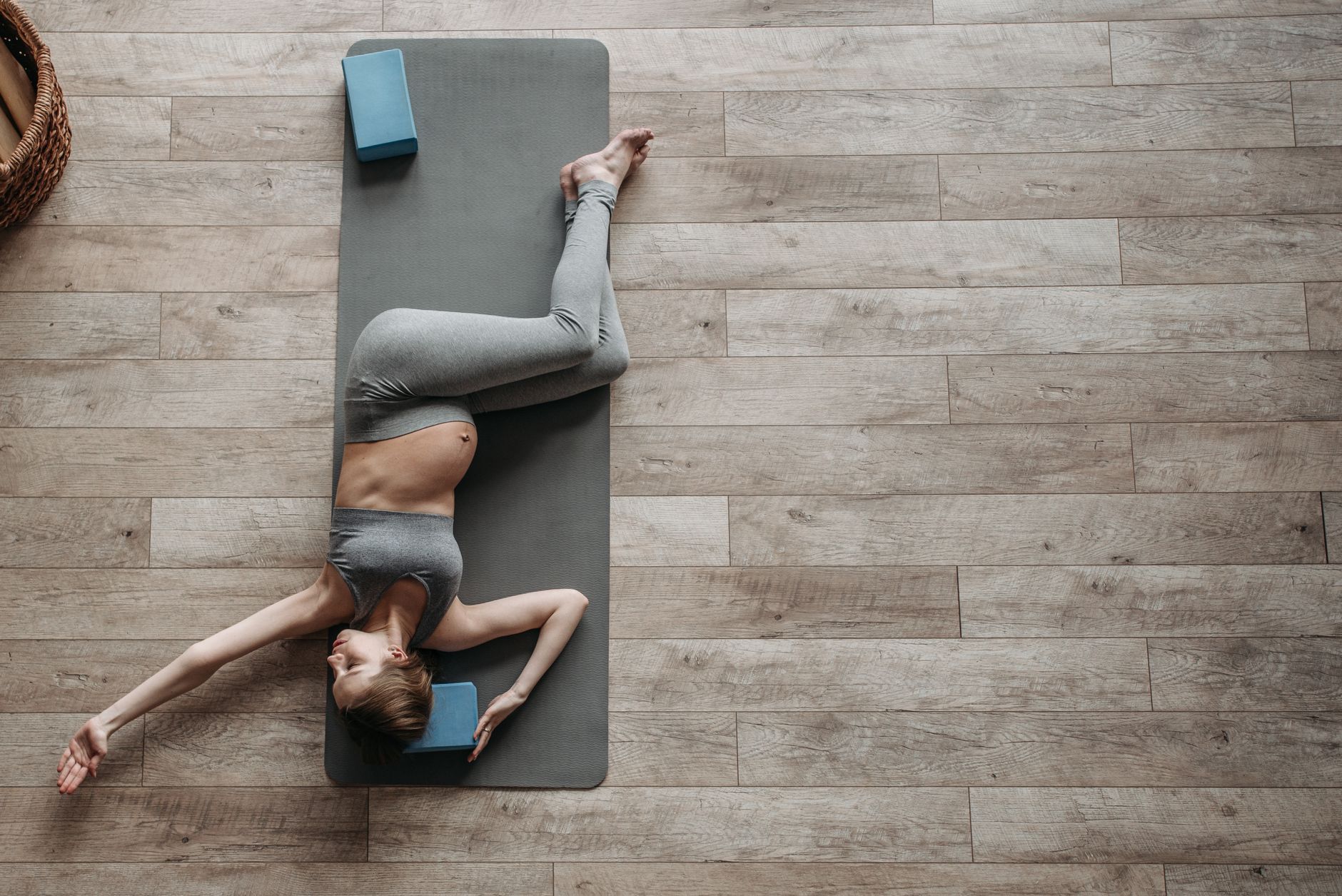
In cold conditions: more active, weight-bearing poses before passive floor work. Your back body won't be ready for deep forward folds until the hamstrings are genuinely warm — don't rush there. Hip openers like pigeon need more preparation time; the hip capsule is stiff in cold and needs more rounds of dynamic work before settling into a long hold. Twists work well because they generate internal heat through the core.
Peak pose comes later in the sequence than in a warm room. The last ten minutes before savasana is when deeper work is available, not the first thirty.
The Vata perspective
Ayurveda considers winter a Vata season — dry, cold, airy, mobile. Vata in excess produces anxiety, spaciness, cold extremities, and instability. A cold winter yoga practice has the potential to increase Vata. The counterbalance: grounding, warming, slow and steady movement. Roots poses — tree, warrior series, seated hip openers — are your friends. Fast-paced flow in a cold room can leave Vata types feeling ungrounded and jittery rather than settled.
Frequently asked questions
Is it safe to do hot poses like backbends in a cold studio?
Yes — after adequate warm-up. The issue isn't the pose category, it's tissue readiness. A wheel or camel after a thorough twenty-minute warm-up in a cold room is safer than the same pose after a five-minute warm-up in a warm room. Warm-up time is the variable, not the pose.
What about savasana in a cold studio?
Cover up completely. Every warm layer you removed, put back on. Place a blanket directly under you for floor insulation. Warm socks, an eye pillow if available. Reduce savasana length slightly compared to a warm-room practice — five to seven minutes rather than ten — if you can't get warm enough to actually rest.
Where can I find more seasonal practice resources?
The OYP blog covers seasonal practice approaches throughout the year. Our YTT directory includes programs that cover Ayurvedic and seasonal yoga if you want to deepen this knowledge as a teacher.
Subscribe to the newsletter
Subscribe to my newsletter to get the latest updates and news