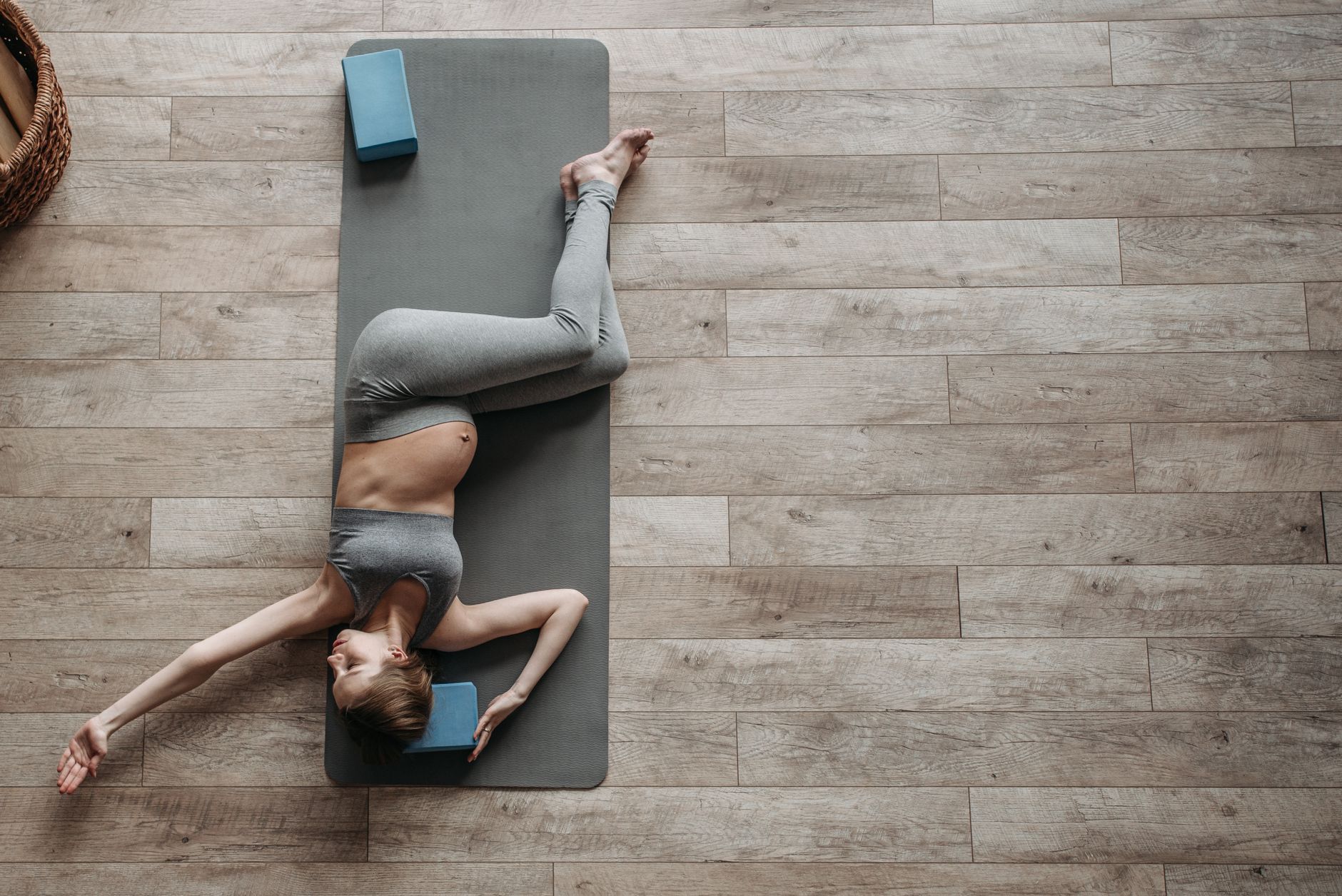
What Is Yoga Nidra? The Science Behind Yogic Sleep

You've seen it on the schedule: yoga nidra, sometimes called yogic sleep. You might have tried it and fallen asleep partway through. You might have assumed it's basically a long savasana — a nice rest but not a serious practice. Both of those experiences are common. Neither quite captures what yoga nidra actually is or why it's worth understanding.
This post covers the practice, the science, and what makes it distinct from both meditation and regular sleep.
What yoga nidra is
Yoga nidra is a systematic practice of guided relaxation that moves awareness through different layers of experience — body, breath, sensation, emotion, imagery, and belief — while the practitioner lies completely still. The goal is to maintain awareness at the threshold between waking and sleep: conscious but not engaged in thought, present but not active.
This state — called the hypnagogic state in sleep science — is characterized by specific brainwave patterns distinct from both ordinary waking (beta waves) and sleep (delta waves). In yoga nidra, practitioners sustain awareness in alpha and theta wave states, which are associated with deep relaxation, integrative processing, and receptivity.
The structure of a yoga nidra session
A complete yoga nidra session typically includes: physical settling (coming to stillness in savasana or another supported position), a sankalpa (a short positive intention or resolve), rotation of awareness through the body (yoga nidra's signature element), attention to sensation pairs (heavy/light, warm/cool), visualization, and a return to waking awareness.
The rotation of awareness — moving attention systematically through each part of the body in a specific sequence — is what distinguishes yoga nidra from guided relaxation or body scan meditation. The sequence (typically: right thumb, first finger, second finger... moving through the whole body) is designed to activate the motor cortex systematically, which produces a specific neurological effect distinct from random body scanning.
What the research shows
Yoga nidra research is growing. Published studies have shown effects including: reduction in anxiety and cortisol levels, improvement in sleep quality and quantity, reduction in PTSD symptom severity (particularly in veteran populations), improved regulation of blood glucose in type 2 diabetes, and reduction in chronic pain intensity. A 2009 study in the Indian Journal of Physiology and Pharmacology showed significant changes in dopamine levels during yoga nidra practice — a finding that may explain the practice's effects on mood, motivation, and craving.
The military uses yoga nidra (under the name iRest) as a complementary treatment for PTSD and traumatic brain injury. That's not marginal wellness territory — it's mainstream clinical application.
Yoga nidra vs. regular sleep
Many practitioners report that 45 minutes of yoga nidra feels equivalent to several hours of sleep in terms of physical restoration. This is anecdotal but physiologically plausible: the deep parasympathetic activation and reduction in cortisol that yoga nidra produces are similar to what happens in sleep stage N3 (deep slow-wave sleep), which is the most restorative sleep phase. The difference is that you're conscious throughout yoga nidra, which means you can direct awareness in ways that aren't possible during sleep.
How to start a yoga nidra practice
You need a comfortable place to lie down, a recording (or a teacher), and 20–45 minutes. Props matter here: a blanket under the knees, an eye pillow, a light blanket over the body. The practice works in proportion to how comfortable the body is — any remaining postural tension keeps part of the nervous system engaged in holding, which limits how deep the relaxation goes.
Start with shorter practices (20–30 minutes) and work toward longer ones as you get familiar with staying at the threshold. Falling asleep is common at first and doesn't mean the practice isn't working — but staying conscious at the threshold is the actual skill to develop.
Frequently asked questions
Is yoga nidra a form of hypnosis?
The brainwave states are similar, and both involve heightened receptivity to suggestion — hence the sankalpa in yoga nidra. The distinction is that yoga nidra maintains the practitioner's agency and awareness throughout, while clinical hypnosis typically involves a deeper trance with an external therapist directing the process. They're related but distinct practices.
Can I do yoga nidra every day?
Yes — daily practice is ideal. Even 20 minutes before sleep is a well-researched approach to insomnia and anxiety. There's no known ceiling on yoga nidra frequency.
Where can I learn to teach yoga nidra?
Our teacher training directory includes programs with yoga nidra specialization — look for trainings rooted in the Satyananda tradition or iRest protocol for the most clinically grounded approaches. The OYP blog also has more on yoga nidra practice and applications.
Subscribe to the newsletter
Subscribe to my newsletter to get the latest updates and news