What Is Aerial Yoga? Poses, Benefits, and Getting Started
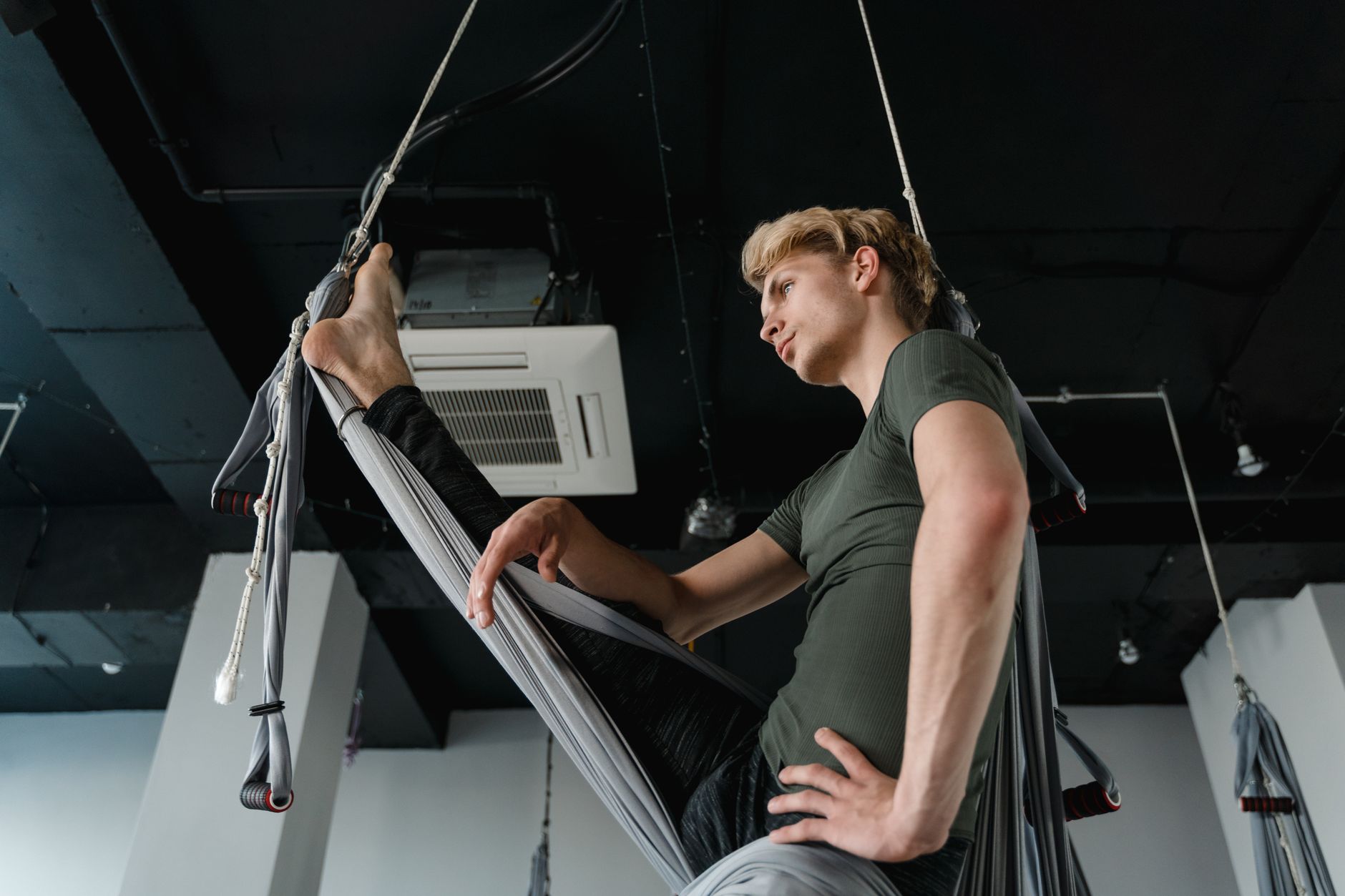
If you've scrolled through social media and seen someone suspended in the air, held by colorful fabric, you've probably wondered: what exactly is aerial yoga, and is it something you could actually try?
Aerial yoga might look intimidating at first—honestly, it did for me when I first encountered it. But after practicing and teaching it for years, I can tell you it's one of the most accessible, playful, and transformative styles of yoga I've experienced. It's not about being acrobatic or fearless. It's about discovering what your body can do when you release the weight you've been carrying—literally and figuratively.
In this guide, I'll walk you through what aerial yoga actually is, which poses are perfect for beginners, the science-backed benefits, and exactly how to get started safely and confidently.
What Is Aerial Yoga?
Aerial yoga is a modern form of yoga that uses a fabric hammock (also called an aerial sling or suspension fabric) to support your body through traditional and modified yoga poses. The hammock is suspended from the ceiling at about waist height, and you use it to invert, decompress your spine, deepen stretches, and build strength—all while having genuine fun.
Think of it as a fusion between traditional yoga, Pilates, dance, and acrobatics. You're not training to become a circus performer. You're using the fabric as a tool to enhance alignment, reduce joint compression, and explore poses in new ways.
The practice became popular in the early 2000s and has grown exponentially since. What started as a niche offering in boutique studios is now available in yoga centers, fitness gyms, and dedicated aerial yoga studios worldwide. And for good reason—the benefits are real, and the learning curve is gentler than most people expect.
How Aerial Yoga Differs from Traditional Yoga
While aerial yoga draws heavily from traditional yoga philosophy and many pose names are the same, the experience is distinctly different.
Support and decompression: The fabric bears some or all of your body weight, which reduces stress on your joints and allows your spine to decompress naturally. In traditional yoga, gravity works against you. In aerial yoga, the hammock partners with gravity to create traction.
Inversion made accessible: Headstands and shoulder stands can take years to master safely, and they're not suitable for everyone. Aerial yoga offers supported inversions that are gentler on the neck and shoulders while giving you many of the same benefits.
Deeper stretches: The fabric acts as a prop that helps you sink deeper into poses without forcing yourself. Your body naturally releases tension more quickly when partially supported.
A playful element: Aerial yoga has a lightness (no pun intended) that traditional yoga sometimes lacks. There's room for experimentation, laughter, and yes—even a little bit of hanging upside down just because it feels good.
Beginner-Friendly Aerial Yoga Poses
You don't need to be strong, flexible, or experienced to start aerial yoga. Most beginner classes progress through poses in this order:
1. Floating Savasana (Corpse Pose)
This is often how classes begin. You lie on your back in the hammock, and the fabric cradles your entire body like a cocoon. Your legs and head are fully supported, and gravity pulls gently downward, creating natural spinal traction. It's instantly calming and shows you immediately how the fabric will support you.
2. Assisted Backbends
The fabric supports your back as you lean backward, opening your chest and shoulders. This is wonderful for counteracting the forward-hunched posture most of us hold from sitting and screen time. You control the depth entirely.
3. Inverted Twist
You sit in the fabric with one leg extended through, creating a gentle twist along your spine. This pose is accessible, feels amazing, and doesn't require the strength of a traditional bound twist.
4. Supported Forward Fold
The hammock takes some of your upper body weight as you fold forward, allowing your hamstrings and lower back to open more comfortably than they might in a standing forward fold. You can adjust how much support you need by holding the fabric higher or lower.
5. Gentle Inversion (Legs-Up Pose)
You lie on your back and thread your legs through the fabric, which supports your thighs and lower legs while your torso hangs slightly backward. This mild inversion reverses blood flow, calms your nervous system, and gives your spine decompression without any pressure on your head.
6. Supported Bridge
The hammock supports your pelvis as you press your feet into the ground, creating an easier bridge that isolates your glute activation while protecting your lower back.
As you progress, you'll move into poses that require more engagement and strength—but every single pose has modifications. You're always in control of how much challenge you take on.
The Science-Backed Benefits of Aerial Yoga
Aerial yoga isn't just enjoyable—research supports its benefits for your physical and mental health.
Spinal Decompression
When you invert or are partially suspended, gravity creates traction on your spine. Studies show this can relieve pressure on intervertebral discs, reduce back pain, and improve posture. For people with chronic back issues, this is genuinely life-changing.
Increased Flexibility and Range of Motion
The support of the fabric allows you to go deeper into stretches safely. Research published in the Journal of Sports Medicine shows that supported stretching activates relaxation responses more effectively than forced stretching, leading to better long-term flexibility gains.
Enhanced Core Strength
While the hammock supports you, it also requires your deep stabilizer muscles—your transverse abdominis, multifidus, and pelvic floor—to engage. This builds functional core strength without the repetitive strain of traditional core work.
Improved Circulation and Lymphatic Flow
Inversions naturally reverse blood flow and support your lymphatic system (which relies on gravity and muscle movement). This promotes better circulation, potentially reducing bloating and supporting immune function.
Nervous System Regulation
The gentle, supported nature of aerial yoga activates your parasympathetic nervous system—your "rest and digest" mode. Inversion poses particularly trigger the vagus nerve, promoting relaxation and reducing cortisol (stress hormone) levels.
Mental Health Benefits
Beyond the physical, there's something psychologically powerful about being suspended and supported. You literally learn to let go and trust. Many practitioners report reduced anxiety, improved mood, and a sense of playfulness they haven't felt since childhood.
Is Aerial Yoga Safe for Beginners?
Yes—when taught properly. Here's what makes it safe:
- Professional instruction is essential. Take your first classes with a certified aerial yoga instructor who understands modifications and can assess your individual needs.
- The fabric is load-tested. Commercial aerial hammocks are rated to hold hundreds of pounds and are rigorously tested for safety.
- You progress gradually. Beginner classes don't throw you into advanced inversions. You build confidence and strength progressively.
- Your body tells you the truth. Unlike some traditional yoga where ego pushes us too far, the simplicity of suspended poses makes it obvious when you need a modification.
That said, certain conditions require caution or modification: pregnancy, high blood pressure, detached retinas, or recent surgery. Always tell your instructor about injuries or health concerns before class.
Getting Started: A Practical Guide
Find a Certified Instructor
Look for
Go Deeper
Compare real programs in the OYP YTT Database:
Related programs in our directory:
- a specialty yoga studio in Chicago — 4.95★ · 177 reviews
- a specialty yoga academy in Seattle — 4.93★ · 177 reviews
Related Reading
Subscribe to the newsletter
Subscribe to my newsletter to get the latest updates and news