
SI Joint Injury Prevention in Ashtanga Primary Series
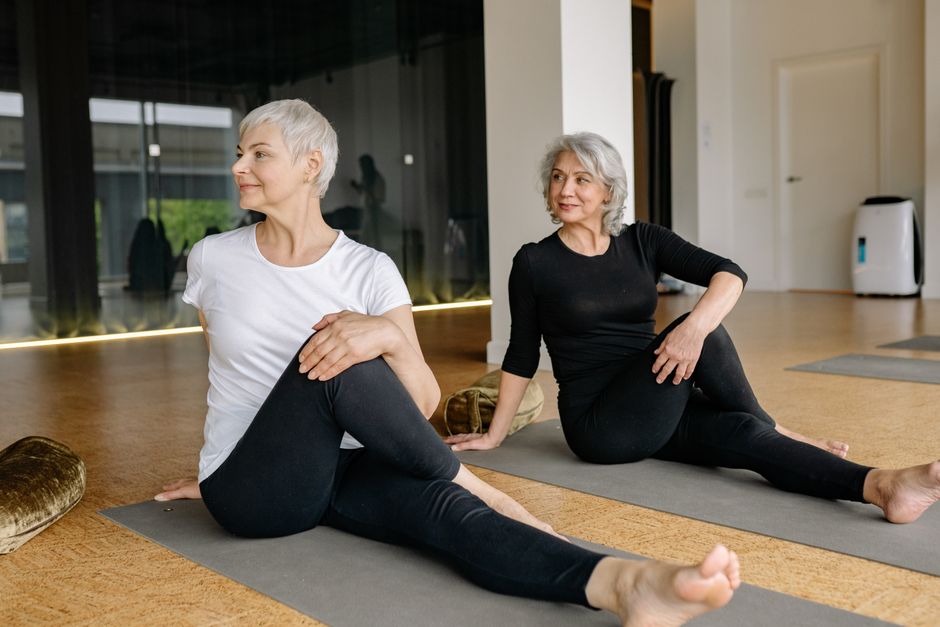
The first time your SI joint clicks in Marichyasana D, you know. There's a quiet pop near your right sacrum, then a dull ache that follows you off the mat and into the rest of your day. Sometimes it shows up in Janu Sirsasana A. Sometimes it's the jump-through. Sometimes you can't even name the pose — just the morning after, when rolling out of bed feels like negotiating with a stranger's pelvis.
If you practice Ashtanga Primary Series regularly, you're not imagining this. The sacroiliac joint sits at one of the busiest crossroads in the body, and Primary asks a lot of it — deep external rotation, asymmetric forward folds, twists that load one side while the other stays anchored. The good news: most SI irritation in Ashtanga isn't structural damage. It's a pattern. And patterns can be changed.
Let's walk through what's actually happening, where the risk concentrates, and how to keep practicing without sacrificing the integrity of your pelvis.
Why the SI Joint Gets Loud in Primary Series
The SI joint isn't really a "joint" in the way your knee is. It's a tight, almost-immovable surface where the sacrum meets the ilium — designed for stability, not range. It transfers force between your spine and legs. When it moves more than a few millimeters, the surrounding ligaments protest.
Primary Series creates two specific stressors for this joint:
- Asymmetrical loading. Most seated postures — Janu Sirsasana A/B/C, Marichyasana A through D, Ardha Baddha Padma Paschimottanasana — bend one hip deeply while the other extends. If you push past your hip's actual range, the sacrum rotates against the ilium to find the extra millimeters. That's where the click comes from.
- Repetitive forward folding with rounded sacrum. Pulling deeper into Paschimottanasana or Kurmasana by tucking the tailbone can nutate the sacrum into an end-range it doesn't love, especially when held for five long Ujjayi breaths.
Hypermobile practitioners feel this first and loudest. If you're naturally bendy, your ligaments aren't catching you the way bone-on-bone stability would in a less flexible body. That's worth knowing before you go deeper. A sacrum stability guide for hypermobile yogis can give you a clearer baseline if you suspect this is part of your picture.
The Five Poses That Cause the Most Trouble
Not every Primary pose threatens the SI joint equally. After years of teaching and watching, these are the repeat offenders. Knowing them lets you arrive at them with attention instead of momentum.
1. Janu Sirsasana C
The bent-knee position rotates the femur externally and presses the heel into the perineum. Many practitioners force the knee toward the floor while folding forward — that combination twists the pelvis hard. The sacrum gets pulled along for the ride.
Cue: Sit on a folded blanket. Let the bent knee float wherever it floats. Square your navel toward the extended leg before you fold. If your knee is six inches off the floor, that's your knee's answer for today.
2. Marichyasana D
The deepest twist of Primary, with a half-lotus base and a bind. The half-lotus pre-loads rotation into the pelvis; then you ask the spine to twist the opposite direction. Without controlled rotation through the thoracic spine, the lumbar and SI joint take over.
Cue: Lift up out of your hips before twisting. If the bind isn't available without crunching the pelvis, take the half-bind or a strap. The shape isn't the pose. The breath through the shape is.
3. Supta Kurmasana
Crossing the ankles behind the head while folded forward is a deep ask of the hips. When the hips run out of range, the sacrum becomes the next available hinge.
4. Baddha Konasana
Pressing forward with knees pinned to the floor can torque the SI joint, especially if your hip range is limited and you're chasing depth in the fold.
5. Setu Bandhasana (the Primary version, not the bridge)
The neck-bridge with crossed legs creates asymmetrical loading through the entire chain. If this one feels weird in your SI, skip it. There's no shame in it.
The Pelvic Stability Framework: Three Cues for Every Practice
Forget memorizing fixes for individual poses. Internalize three principles and you'll catch the trouble before it starts.
Cue 1: Square before you fold
In any asymmetric seated pose, the navel should face the same direction as your sternum and your front leg before you begin to fold forward. If your right hip is hiked because the right leg is bent in Janu A, sit on a blanket under the right sit bone until both sides land evenly. Then fold.
Cue 2: Engage the back leg
This is the one almost no one teaches. In Marichyasana A and C — and any seated forward fold with one leg extended — the extended leg is not passive. Press the heel away, lift the kneecap, draw the inner thigh down. That engagement stabilizes the pelvis from below. Without it, the sacrum floats freely and finds whatever weird angle it can.
Cue 3: Lengthen before you deepen
Inhale to lift the spine. Exhale to fold from the hip crease, not the lower back. If you can't lengthen any further on the inhale, you're at your edge for the day. Holding a posture at your edge with the breath flowing is far more useful than cranking another inch with a held breath.
These principles overlap with what serves anyone working with sciatica from prolonged sitting or a history of lumbar disc trouble. The pelvis doesn't care which diagnosis brought you here — it responds to the same support.
Warm-Up Additions That Prevent Flare-Ups
Traditional Ashtanga doesn't include much warm-up beyond Surya Namaskara A and B. For most bodies, that's enough. For an SI joint that's been talking to you, adding five minutes before you start changes the whole practice.
- Supine knee-to-chest, alternating (1 minute). Activates the deep hip flexors gently and signals the SI ligaments that movement is coming.
- Bridge with block between thighs (8 breaths). Squeezing the block engages the adductors, which co-stabilize the pelvis with the deep core. This is the muscle group most underused by Ashtanga practitioners.
- Bird-dog (6 each side, slow). Coordinates contralateral stability — the exact pattern your pelvis needs in Marichyasana.
- Half-kneeling psoas stretch (5 breaths each side). Tight psoas pulls the lumbar forward and destabilizes the sacrum. Releasing it before practice pays dividends. The psoas-diaphragm connection matters here too, especially if you carry tension in your breath.
If you sit at a desk most of the day, your hip flexors are likely a major contributor to SI irritation. An iliopsoas release routine for 9+ hour sitters is worth integrating into your week, not just your warm-up.
Modifications That Keep You in the Tradition
Some practitioners worry that modifying Primary means stepping outside the lineage. It doesn't. The teachers who shaped Ashtanga were emphatic that practice serves the practitioner, not the other way around. If you're curious about the roots, the story of who created Ashtanga yoga is worth reading — the system was always meant to adapt.
Here's what real, lineage-respecting modification looks like:
- Blanket under the sit bone in any asymmetric seated pose where the pelvis tilts.
- Strap for binds until shoulders and pelvis can meet without compensation.
- Block under the knee in Janu Sirsasana C if the knee hovers far off the floor.
- Skip Supta Kurmasana when your SI is reactive. Take Kurmasana and rest. The next pose will still be there next month.
- Half-vinyasa between sides instead of full vinyasa when fatigue is the trigger. Tired muscles let the SI joint do the work the muscles should be doing.
None of this is "giving up." It's the actual practice. Mind is the master — the body is the student we listen to.
When to Back Off and When to See Someone
There's a difference between an irritated SI joint and one that's signaling something more.
Back off practice but keep moving if:
- Pain is localized to one spot near the dimple of the sacrum
- It eases with walking
- Specific poses trigger it; others don't
- It resolves within 24-48 hours of modification
See a professional if:
- Pain radiates down the leg past the knee
- You feel numbness, tingling, or weakness
- Pain wakes you at night
- It doesn't respond to two weeks of modified practice and rest from triggers
A good physiotherapist or yoga therapist can assess whether your pelvis is fixated, hypermobile, or just irritated — and these need different responses. If you're considering yoga therapy long-term, understanding the difference between IAYT and IYT credentials helps you choose someone whose training matches your needs.
Building the Stability Your Pelvis Actually Needs
Ashtanga is mostly mobility work. Even the strong poses — Navasana, the jump-throughs — happen in patterns that favor practitioners who already have stability. If you're someone who came to Ashtanga already flexible, you may need to add what the practice doesn't naturally build.
Two add-ons make a real difference:
- Glute medius strengthening. Side-lying leg lifts, clamshells, single-leg bridges. Five minutes, three times a week. This is the muscle that prevents pelvic drop when you stand on one leg — and it's almost always weak in flexibility-dominant practitioners.
- Transverse abdominis activation. Not crunches. The deep abdominal wall that wraps the lumbar spine and supports the SI joint from the front. Diaphragmatic breathing trains this without you having to think about it — practiced consistently, it changes everything. The same principles in diaphragm breathing protocols apply here for pelvic stability.
For practitioners with fascial laxity — those with hypermobility patterns or EDS-like presentation — stability work matters more than mobility, full stop.
The Longer Arc: Practice That Keeps Practicing You
Ashtanga rewards consistency. Six days a week, same sequence, watching what shifts. The SI joint, more than most areas, responds to that consistency — if the consistency includes intelligence.
The practitioners who keep practicing into their 50s, 60s, and 70s aren't the ones who pushed hardest in their 30s. They're the ones who modified early, listened well, and treated their pelvis as a long-term collaborator. If you're teaching this practice to others, this is the through-line worth carrying forward — and something most teacher training programs don't cover deeply enough.
OYP's directory tracks 2,389 yoga teacher training schools globally, with 2,220 offering RYS-200 foundational programs. Plenty of options. Few of them spend real time on SI joint anatomy specific to Ashtanga. If you're a teacher, this is your continuing education — and it might be the single most important thing you study this year.
Your SI joint isn't a problem to solve. It's a teacher that gives feedback faster than almost any other part of the body. Listen to it, and your practice gets quieter, deeper, and more honest.
Related reading
- Sacrum Stability for Hypermobile Yogis (Low EDS-Score Guide)
- Yoga for Piriformis Syndrome in Cyclists: Post-Ride Protocol
- What Is Ashtanga Yoga? A Guide to the Eight-Limb Practice
If something here landed for you, let it land slowly. Take one cue into tomorrow's practice. See what the joint has to say after a week of listening differently. That's enough.
Subscribe to the newsletter
Subscribe to my newsletter to get the latest updates and news