Pranayama for Anxiety Before Sleep: 4 Techniques That Actually Work
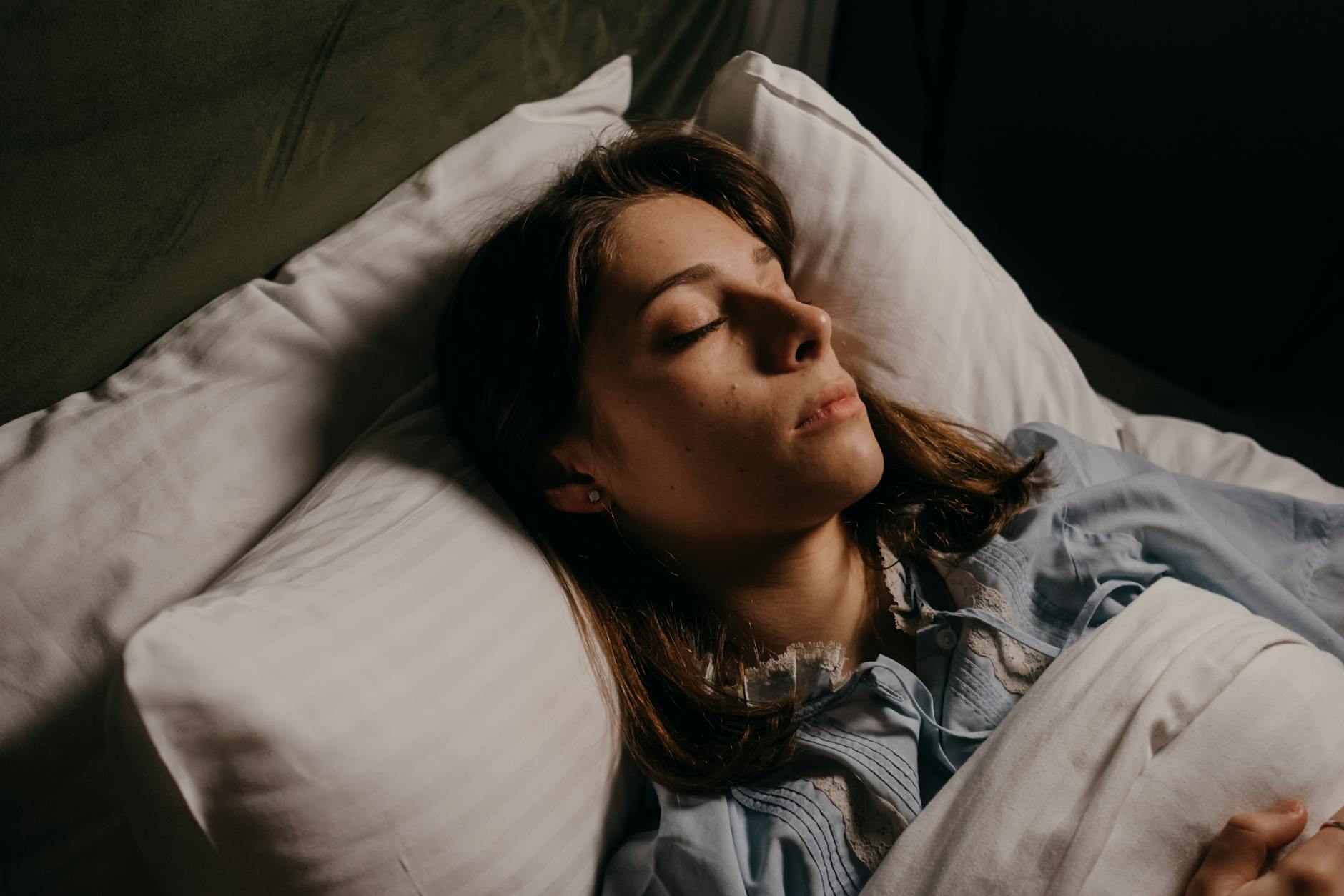
You're tired. You've been tired all day. You get into bed and your mind has decided this is the ideal time to review every decision you've made in the last decade and preview everything that could go wrong tomorrow. Sleep that felt close an hour ago is now somewhere far away. This is anxiety before sleep — and it's more common than you might think, and more manageable than it feels at midnight.
Pranayama — yogic breath practice — is one of the most evidence-supported tools for pre-sleep anxiety. But not all breath practices calm the system. Some activate it. This post is about the four techniques that genuinely work for nighttime anxiety, and the one you should definitely avoid before bed.
Why breath works for anxiety
The breath is the only autonomic function you can consciously control — and because it's connected to the vagus nerve and the autonomic nervous system, deliberate breathing changes the nervous system state in real time. Specifically: slow, extended exhales activate the parasympathetic branch (rest and digest), reducing heart rate, lowering cortisol, and creating the physiological conditions for sleep.
This isn't mysticism — it's measurable. Heart rate variability increases with slow, rhythmic breathing. Skin conductance (a marker of anxiety) decreases. Studies on box breathing, 4-7-8 breathing, and extended exhale practices consistently show significant reduction in self-reported anxiety and improvement in sleep onset.
Technique 1: Extended exhale breathing
The simplest and most reliably effective technique. Inhale for 4 counts, exhale for 6-8 counts. That's it. The longer exhale is the mechanism — it stimulates the vagus nerve more than any particular inhale pattern. You can do this lying in bed in the dark with no setup required. Practice for five to ten minutes. If you fall asleep mid-practice, that's fine — that's the point.
Technique 2: Box breathing (4-4-4-4)
Inhale for 4 counts, hold for 4, exhale for 4, hold for 4. The holds are what make this different from simple slow breathing — they interrupt the anxious thought loop by requiring complete attention on the count. Box breathing is particularly useful when anxiety is acute — when the mind is spinning and you need something that requires just enough cognitive attention to interrupt the rumination without demanding too much.
Use this for the first five minutes when anxiety is high, then transition to extended exhale breathing as the system settles.
Technique 3: 4-7-8 breathing
Made famous by Andrew Weil, but rooted in pranayama practice: inhale for 4 counts, hold for 7, exhale for 8. The extended hold and extended exhale both amplify the parasympathetic signal. Some people find the long hold uncomfortable at first — if so, reduce the ratio proportionally (3-5-6) until the pattern feels comfortable. The ratio matters more than the specific counts.
This technique works best lying down, eyes closed, in a darkened room. It's most effective when practiced at the same time each night — the nervous system learns to associate the pattern with sleep preparation.
Technique 4: Nadi Shodhana (alternate nostril breathing)
Use the right thumb to close the right nostril, inhale through the left. Close both nostrils briefly, then release the right and exhale through it. Inhale right, close both, exhale left. That's one round. Practice ten rounds before bed. Nadi Shodhana is associated with balancing the two hemispheres of the nervous system and reducing the activated, one-sided quality that anxiety often produces. It also requires enough hand coordination and attention to interrupt anxious thought loops effectively.
Sit up for this one rather than lying down — the hand position is easier to maintain and the upright posture supports the breath pattern. Then lie down for your extended exhale breathing afterward.
The one technique to avoid before bed
Kapalabhati — rapid exhale pumping. It's energizing, heating, and activating. Many yoga teachers practice it as a morning wake-up technique for exactly those qualities. Before sleep, it's counterproductive. Avoid it after 7pm if nighttime anxiety or insomnia is an issue.
Frequently asked questions
How quickly does pranayama work for sleep anxiety?
Most people feel a measurable shift within five to ten minutes of slow pranayama practice. For chronic anxiety, consistent nightly practice shows cumulative benefit over two to three weeks — the nervous system learns to down-regulate more quickly with repeated practice.
Can I combine pranayama with sleep medication?
Yes — pranayama is generally safe alongside sleep medications. Some people find that consistent breathwork practice reduces their need for sleep medication over time. Don't adjust medication without consulting your doctor, but adding breathwork alongside is fine.
Where can I learn more about pranayama?
The OYP blog has more pranayama posts covering different techniques and their applications. For teachers wanting to teach pranayama with depth and safety, our YTT directory includes programs with dedicated pranayama curriculum beyond the basics.
Subscribe to the newsletter
Subscribe to my newsletter to get the latest updates and news

