The 20-Minute Morning Yoga Sequence for People Who Hate Mornings

You are not a morning person. You've tried being one. You've read the articles about 5am routines and felt vaguely judged by them. The idea of doing anything resembling exercise before coffee feels like a personality disorder. And yet here you are, looking for a morning yoga sequence, which suggests that somewhere underneath the resistance, you've noticed that moving your body in the morning changes your day in ways that moving it at 6pm doesn't.
You're right about that. And this sequence was built for exactly the version of you that shows up in the morning: stiff, slow, not fully operational, and still willing to try.
Why morning yoga is different
Your body in the morning is genuinely different from your body at noon. Synovial fluid in the joints hasn't been warmed by movement. Fascia is stiffer after eight hours of stillness. The nervous system is still completing the transition from sleep physiology to waking physiology. This is not failure — it's normal biology.
It means: morning yoga needs to start slower than any other time-of-day practice. It needs more joint mobilization before any stretching. It should work with the morning body rather than demanding the afternoon body show up on the mat at 7am. This sequence does that.
The sequence (20 minutes total)
Minutes 1-3: Still in bed (or on the mat, supine). Before you do anything, lie on your back and breathe. Slow. Four counts in, six counts out. Let the body wake up through breath before movement. Slow ankle circles. Slow wrist circles. Gentle neck side-to-side. You're not doing yoga yet — you're warming the joints with tiny movements that don't ask anything of you.
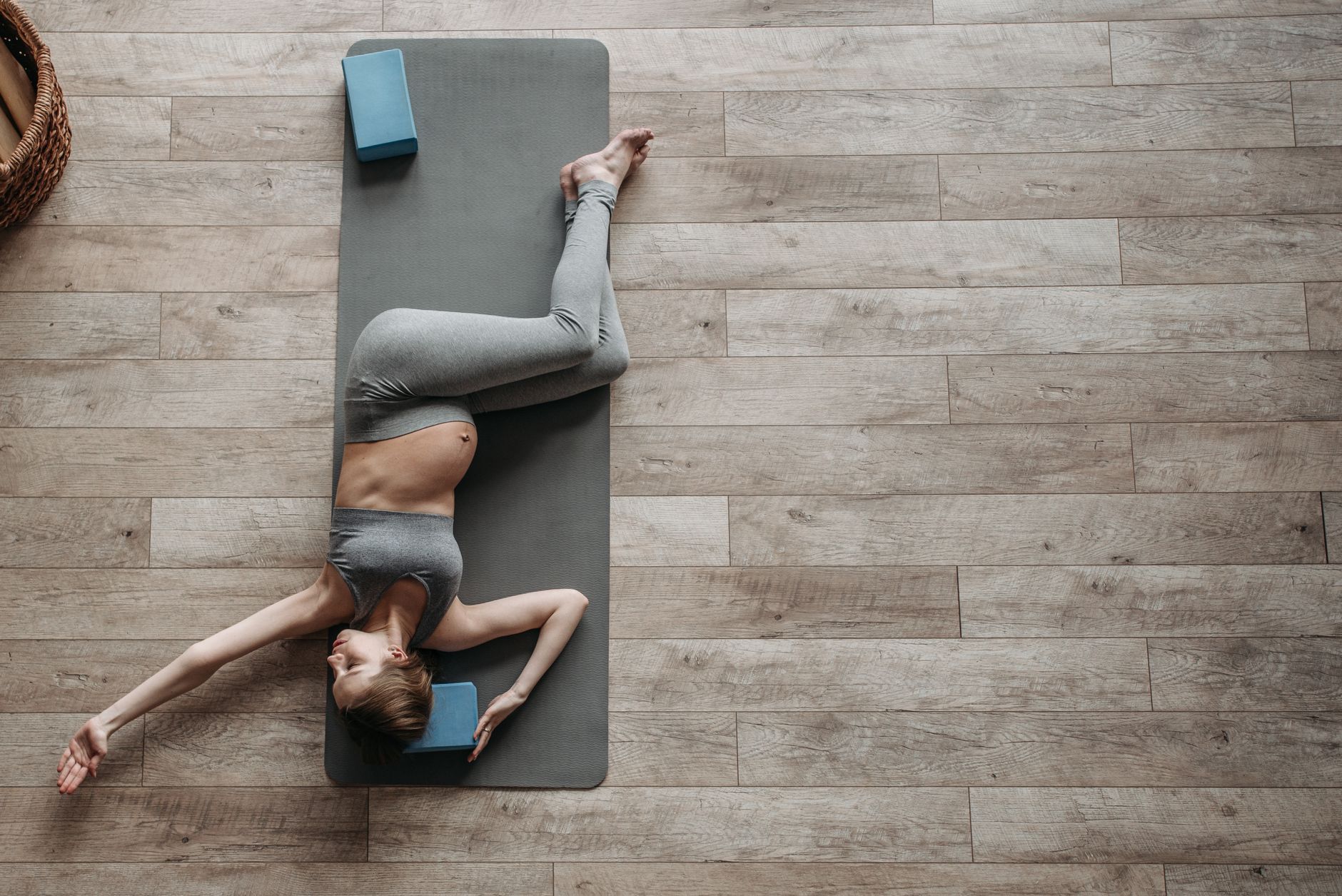
Minutes 3-6: Supine joint wake-up. Hug both knees to chest. Slow knee circles in both directions — you're lubricating the hip joints, which are stiff from the night. Extend one leg, hold the knee, make circles. Repeat the other side. This looks like nothing; it changes everything about how the rest of the practice feels. Finish this section with a gentle supine twist — knees to one side, arms wide, turn the head the other way. One minute each side.
Minutes 6-10: Come to standing — slowly. Roll to one side, press up to sitting, and pause there for a breath. Come to standing. Five slow cat-cows (yes, standing — hands on thighs, round and arch). Slow neck rolls. Shoulder rolls forward and back. Three slow half-sun salutations: stand, hinge forward with soft knees, look up halfway, fold back, stand. No rushing. No full vinyasa yet. The body is waking up.
Minutes 10-15: The actual practice. Now the body is warm enough for something more. Five rounds of sun salutation A — at your pace, not the teacher's pace, not the video's pace. If you need to step instead of jump, step. If you need to lower the knees in chaturanga, lower them. At the end of five rounds, spend one minute in downward dog breathing. Then walk the feet to the hands and stand. One warrior one each side (30 seconds). One warrior two each side (30 seconds).
Minutes 15-18: Floor work. Come down. One round of bridge pose (10 repetitions) to activate the glutes and open the hip flexors after the night. Supine figure-four stretch, 30 seconds each side. Seated forward fold, 90 seconds. Simple.
Minutes 18-20: Savasana — yes, even for 2 minutes. Two minutes of flat-back stillness with slow breath. This is not optional. It consolidates the practice and gives the nervous system a moment to integrate before you walk into the rest of your morning. It also trains the body to know that the practice has an ending — which matters for habit formation.
The honest truth about morning practice
The first two weeks will be hard. You'll feel stiff, your mind will resist, some mornings will be two minutes of supine breathing and nothing else. That counts. The habit is forming regardless of the quality of the individual practice. Around week three, something shifts — the morning body starts to recognize the sequence, and the resistance eases. You won't become a morning person, but you'll become someone who moves in the morning, which is different and more sustainable.
Frequently asked questions
Should I practice before or after coffee?
Either works physiologically. Many people find that starting even five minutes of the practice before coffee extends the morning calm longer into the day. Others find coffee is non-negotiable before any activity. Do what allows you to actually start. The practice wins over the timing.
What if I only have 10 minutes?
Do the first two sections (minutes 1-10 above) and finish with two minutes of stillness. That's a complete morning practice for a constrained day. Don't skip the joint mobilization and try to jump straight to sun salutations — your body will tell you the same thing in protest.
Where can I find guided morning sequences?
The OYP blog has sequences at various durations and levels. If you want personalized guidance or want to deepen your understanding of how to build a practice that's right for your body, look through our teacher training directory to find teachers who offer private sessions or beginner workshops.
Subscribe to the newsletter
Subscribe to my newsletter to get the latest updates and news