10 Tips for Beginners Learning Yoga Online: Start Your Practice With Confidence
You've decided to start yoga, but the thought of walking into a studio feels overwhelming. Maybe you're self-conscious about your flexibility, worried you'll look lost, or simply prefer learning at home first. Online yoga removes that barrier—but it also means you're navigating the practice alone, without a teacher watching your alignment or adjusting your shoulders in downward dog. That freedom comes with a responsibility: you need to be intentional about how you learn. The difference between beginners who stick with yoga and those who quit often comes down to a few early choices. These 10 tips will help you build a foundation that actually holds.
1. Claim a Dedicated Space, Even a Small One
Your practice doesn't need a fancy home yoga studio. It needs a space you can return to consistently. Ideally, this is a corner of your bedroom, a section of your living room, or even a cleared hallway—somewhere you can roll out a yoga mat and move for 20 to 60 minutes without moving furniture or tripping over the dog. Your brain registers this space as a container for practice. Over time, stepping into it becomes a signal to your nervous system that you're about to do something intentional. If you live in a tight space, a small area with a window and a mat is enough. The consistency matters more than the size.
2. Invest in a Non-Slip Mat and Know Why It Matters
A cheap, thin mat will slide beneath you in downward dog and won't give your knees any cushion in child's pose. Good news: you don't need to spend $100. Brands like Liforme, Manduka, and Jade offer quality options between $60 and $85. If you're testing the waters, Gaiam makes solid beginner mats around $40. What matters: a mat at least 4mm thick, a non-slip surface (especially on the bottom), and enough grip that your hands don't drift in plank pose. This isn't about luxury. It's about safety and focus. When your mat stays put, you can actually feel your alignment instead of fighting gravity.
3. Start With Slow, Foundational Classes—Not Vinyasa Flow
The urge to jump into fast-paced flows is real, especially if you're athletic or used to high-intensity workouts. Resist it. Beginner-focused hatha classes, yin yoga, or slow vinyasa are where you learn what poses actually feel like in your body. Rushing into intermediate flows before you understand basic alignment is how people strain their shoulders, wrench their lower backs, and decide yoga isn't for them. Platforms like Yoga with Adriene (free on YouTube), Alo Moves ($13/month), and Peloton Digital ($13.99/month) all have strong beginner sections. Spend at least 4 to 6 weeks in slower classes before mixing in anything faster. You're building a vocabulary, not training for a marathon.
4. Learn the Names and Purpose of Basic Poses
When an instructor says downward dog (Adho Mukha Svanasana) or warrior one (Virabhadrasana I), you need to know what that looks like. Online learning removes the safety net of watching neighbors. Spend 15 minutes browsing poses on sites like YogaAlliance.org or Yogapedia before your first class. Know the difference between child's pose and corpse pose. Understand that when you hear chair pose (Utkatasana), you're mimicking sitting in an imaginary chair—not collapsing. Knowing what's coming gives your brain time to translate the instruction into movement. It also means you won't waste class time figuring out which leg is supposed to be where.
5. Honor Your Body's Pace—Modifications Are Not Failures
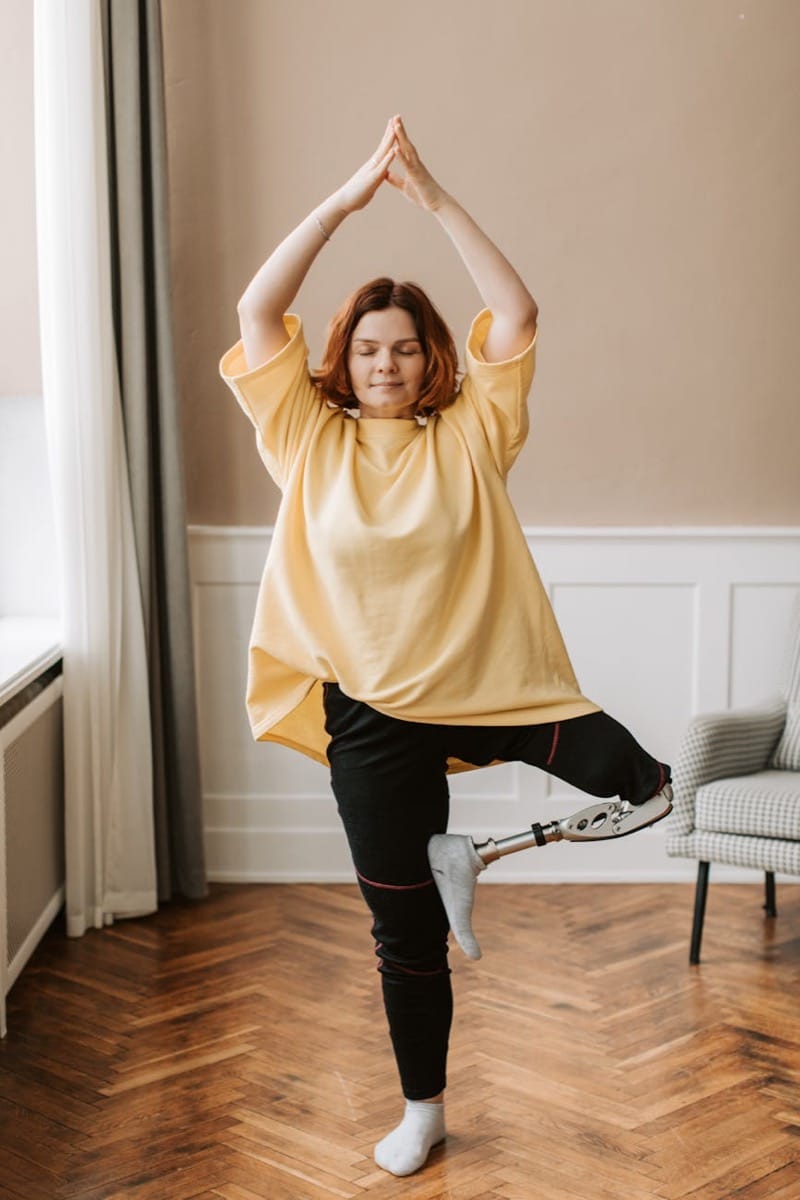
One of the biggest myths about yoga is that you should eventually look like the instructor. Online teachers often show modifications—easier versions of poses—at the beginning or end of videos. Use them. If full plank feels impossible, drop your knees. If your hamstrings are tight, bend your knees in forward folds instead of forcing flat legs. This isn't quitting. This is intelligent practice. The yoga sutras teach ahimsa (non-harm) as the first ethical principle. That starts with your own body. Pushing into pain isn't strength; it's arrogance. Choosing the version of a pose that challenges you while keeping you safe is where the real work happens. Your practice will evolve over months and years. There's no rush.
6. Practice With Your Phone or Tablet at Eye Level
Watching a video on a phone propped on the floor forces you to crane your neck downward for an hour. That neck strain will ache long after class ends and trains poor postural habits. Prop your phone or tablet on a shelf, dresser, or small stand at roughly eye level when you're standing. You want to glance at the screen, not bow your head. If you're lying down, angle the device so you can see it without twisting your neck. This small adjustment prevents unnecessary strain and keeps your attention on your body instead of your screen's position.
7. Don't Skip Savasana, Even in Short Sessions
Savasana—the final resting pose—is where integration happens. It's where your nervous system processes what you've done and your body absorbs the practice. Beginners often think savasana is optional or that they can skip it to save time. Don't. Even a 5-minute savasana at the end of a 20-minute session matters. Lie flat on your back, let your feet fall open, rest your arms by your sides with palms up, and simply be. No thinking about your grocery list. No checking your watch. Just breathing and letting your body settle. This is where yoga moves from physical exercise into actual practice. The poses prepare you for this stillness; the stillness is the point.
8. Create a Simple Routine and Stick With It Before Switching
The abundance of online classes is both a gift and a trap. With thousands of options on YouTube, Peloton, Apple Fitness+, and subscription platforms, it's easy to chase novelty instead of building depth. Pick one instructor or platform and commit to 10 to 15 classes before exploring others. Consistency builds muscle memory and confidence. You'll start recognizing cues, understanding the rhythm of classes, and developing trust with a particular teacher's style. That familiarity is where learning accelerates. After a month, you'll have a sense of what resonates with you and can branch out with intention instead of random browsing.
9. Tune In Before You Begin—Set an Intention
The first minute of many yoga classes includes a moment to notice your breath and set an intention. This isn't woo—it's neuroscience. Starting with attention activates the parasympathetic nervous system and shifts you from distraction into presence. Your intention can be simple: ease, strength, peace, or just noticing without judgment. This brief pause tells your mind and body that the next 20 or 45 minutes belong to this practice, not to work emails or worries. It's a small ritual that separates yoga from other workouts. Take it seriously even if it feels awkward the first few times.
10. Track Progress by How You Feel, Not How You Look
Yoga culture often emphasizes aesthetic goals—deep splits, handstands, Instagram-worthy backbends. These aren't the real markers of progress. Real progress is sleeping better, feeling less anxious, moving with less stiffness, breathing more deeply during stress, or simply wanting to practice again tomorrow. Keep a brief note after each session: How's my energy? Did my low back feel easier? Was I less distracted? These observations build over weeks and reveal patterns. You'll notice improvements that a mirror never shows. This approach prevents the comparison trap and keeps your practice rooted in your own body and life, not in an external image of what yoga should look like.
Building Your Online Practice Now
Learning yoga online is not about perfection or matching what you see on the screen. It's about showing up, moving with awareness, and gradually building a relationship with your own body. These 10 tips create the conditions for that to happen: a clear space, the right tools, realistic pacing, and a commitment to your own version of the practice. Online yoga works when you treat it with the same intentionality you'd bring to a studio class. The advantage of home practice is that you control the pace, the time, and the freedom to rest or modify without self-consciousness. Use that freedom wisely. Your practice will deepen.
Subscribe to my newsletter to get the latest updates and news