The Sacral Chakra in Yoga: Svadhisthana and Your Right to Feel

Your sacral chakra holds the right to feel, create, and desire. Here's how to work with svadhisthana when trauma has taught you to stay numb.
You're sitting in child's pose, and something shifts. Your hips release. Suddenly you're crying, or laughing, or both. This is your sacral chakra waking up—and if you're feeling confused, flooded, or numb in your body, you're not alone. Most of us come to the yoga mat carrying wounds from the time we learned it wasn't safe to feel, to desire, to move with our bodies as they wanted. This article is for anyone who senses there's a tightness in the pelvis, a flatness in creativity, or a disconnect between what you want and what you allow yourself to have.
What Is Svadhisthana? The Sacral Chakra Defined
Svadhisthana means one's own place or the dwelling place of the self. It's the second chakra in the traditional seven-chakra system, seated in the lower abdomen, just below the navel and above the pubic bone, spanning roughly the sacral vertebrae. In Tantra and Hatha yoga texts, this is the domain of water element—fluidity, movement, sensation, and the capacity to feel.
Unlike muladhara, the root chakra, which is about safety and survival, svadhisthana is about aliveness. It governs your sexuality (not just sex, but the life force moving through your body), your capacity for pleasure, your creative impulse, and your ability to accept change. The Yoga Upanishads describe this chakra as the seat of the subtle body's reproductive and urinary systems, but its reach goes far deeper—into the nervous system's capacity to register sensation without shutting down.
The color associated with svadhisthana is orange, the bija (seed) mantra is VAM, and the sense it rules is taste—the first quality that teaches us pleasure and aversion. When you taste something, you feel it immediately, without thinking. This is the energy of the sacral chakra: felt sense, authentic response, the wisdom of the body.
Why the Sacral Chakra Closes: Trauma, Conditioning, and the Body's Protective Logic
If your sacral chakra feels blocked or numb, there's a reason—and it's not a flaw in you. The nervous system closes down sensation when it's learned that feeling isn't safe. Whether through explicit messages (shame about your body, sexuality, or emotion), implicit ones (a parent who never cried, a family that didn't hug), or direct trauma, many of us developed a strategy: numb the pelvis, shrink desire, move only in ways that don't draw attention.
Bessel van der Kolk's research on trauma shows that the body keeps the score—unprocessed emotions and overwhelm literally calcify in the hips, the psoas, the pelvic floor. You might notice this as chronic tension, a feeling of heaviness, an inability to access pleasure, difficulty with creativity, or a sense of disconnection during sex. None of this means you're broken. It means your nervous system did its job. Now it's time to teach it something new: that it's safe to feel.
Signs of a Blocked or Underactive Sacral Chakra
When svadhisthana is restricted, you might experience: a persistent flatness in mood or creative output, difficulty setting boundaries around what you want versus what others expect, chronic tension or pain in the lower back, hips, or pelvic floor, numbness during intimate moments, a fear of change or resistance to the natural flow of life, difficulty accessing joy or pleasure, and a sense that your body doesn't belong to you.
An overactive sacral chakra, by contrast, can manifest as sexual obsession, emotional volatility, difficulty with boundaries, or a compulsive need for stimulation to feel alive. Balance is the goal—not intensity, but accessibility. You should be able to feel your body, trust your desires, and move through change without becoming untethered.
Yoga Practices That Open and Balance the Sacral Chakra
1. Hip-Opening Asanas: Pigeon, Baddha Konasana, and Malasana
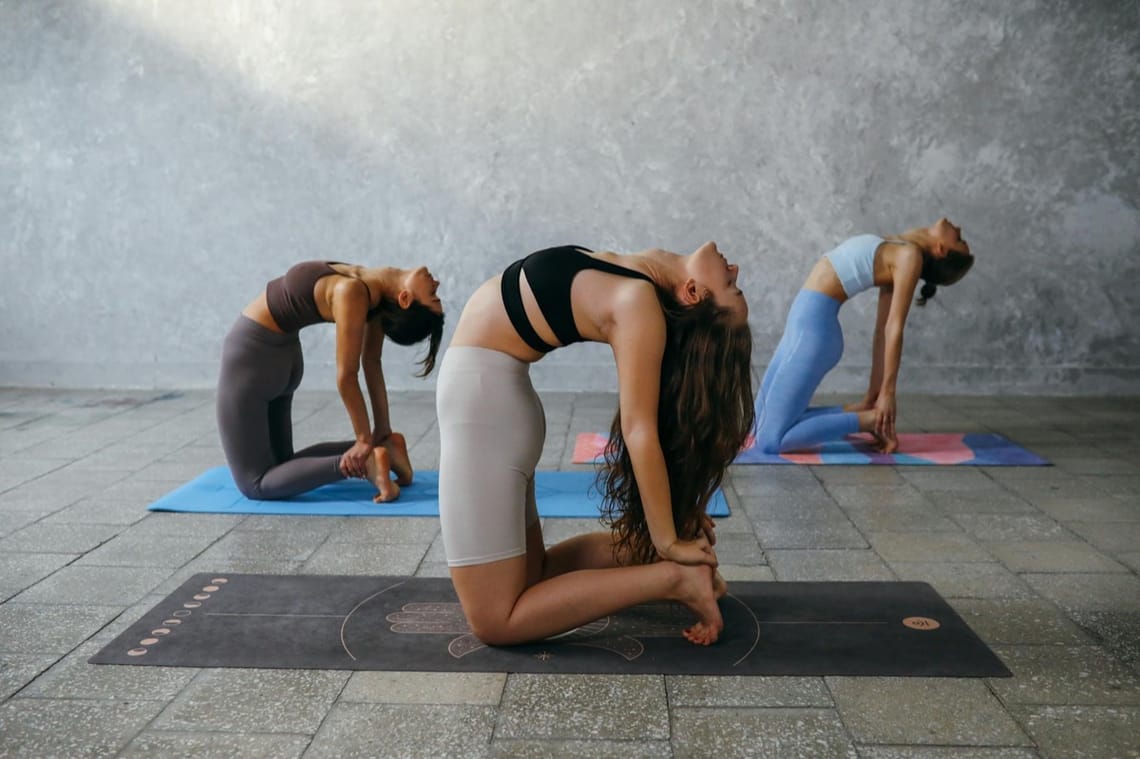
The hips are the body's junk drawer—they hold what we don't know how to process. Pigeon pose (Eka Pada Rajakapotasana prep), butterfly pose (Baddha Konasana), and yogic squat (Malasana) are not just stretches; they're invitations to sensation. The key is to stay present with whatever arises—tightness, emotion, heat, release—rather than forcing depth. Move slowly. Breathe into sensation without judgment. Let your body speak.
2. Sacral Chakra Pranayama: Ujjayi and Alternate Nostril Breathing
Ujjayi breath (ocean breath) activates the parasympathetic nervous system and creates internal heat that melts blocks. Practice it during hip openers to deepen release. Nadi Shodhana (alternate nostril breathing) balances the nervous system's twin branches—ida and pingala—which is essential for emotional regulation. Start with 5-10 rounds before or after asana practice.
3. VAM Mantra: The Sacral Chakra's Sonic Key
VAM is svadhisthana's bija mantra—a sound that resonates with the chakra's specific frequency. Unlike visualizations, which can feel abstract, mantra creates a felt vibration. Sit cross-legged or in a comfortable position, place your hands on your lower belly, and chant VAM aloud or internally for 5-10 minutes. Feel the sound moving through the sacral region. This practice rewires the nervous system's relationship to that space—from danger to safety, from numbness to aliveness.
4. Pelvic Floor Awareness: Ashwini Mudra and Gentle Locks
The pelvic floor is intimately linked to sexual energy and the sacral chakra's function. Ashwini mudra (horse gesture)—a gentle, rhythmic contraction and release of the anus and pelvic floor muscles—awakens this region with care. Do this lying down, 10-20 slow cycles, breathing naturally. This is not about forcing strength; it's about waking up sensation and regaining conscious relationship to this often-taboo area of the body.
5. Fluid Movement and Dance: Letting the Body Lead
Structured asanas are valuable, but so is unstructured movement. Put on music and dance with no goal except to feel your hips, pelvis, and belly move. This reestablishes the basic right to move as your body wants, not as you've been conditioned to move. Water element—which governs svadhisthana—teaches flow over rigidity. Spend 10-15 minutes moving without rules. Notice what emerges.
6. Yin Yoga: Long Holds for Deep Release
Yin poses like dragon pose (low lunge variation), butterfly, and reclined hip openers are held for 3-5 minutes, allowing the nervous system time to recognize safety and let go. This isn't about flexibility; it's about time and patience. Held long enough, the body releases what it's been gripping. This is where tears come, where breath softens, where the stuck begins to move.
7. Somatic Shaking and TRE: Releasing Held Charge
Trauma-Sensitive Yoga and Somatic Experiencing teach us that the body wants to move through stuck energy—it literally wants to shake. Intentional shaking, either while lying down or standing, helps discharge the nervous system's freeze response. Stand with bent knees and let your body vibrate for 2-3 minutes. It feels strange. That strangeness is the point—you're bypassing your thinking mind and speaking the body's language.
Diet, Essential Oils, and Lifestyle Choices for Sacral Chakra Health
While asana and pranayama are central, you can support svadhisthana through other means. Orange foods—sweet potatoes, carrots, oranges, apricots—carry the chakra's elemental signature and can be incorporated intentionally. Sesame oil and orange essential oil (used with a diffuser, not on skin) can evoke the chakra's qualities.
Lifestyle matters too: Create space for pleasure without guilt. This might mean cooking something you love slowly, bathing intentionally, wearing colors and textures you enjoy. Notice where you deny yourself small joys and practice allowing them. This is not selfish; it's healing. The sacral chakra learns safety when pleasure is treated as legitimate and nourishing, not frivolous or dangerous.
When to Work With a Teacher or Therapist
If your sacral chakra block is rooted in sexual or relational trauma, a yoga teacher trained in trauma-sensitive yoga can offer somatic support that's safer than solo practice. Schools like Yoga and Trauma Training, part of the Yoga Alliance Professional Standards, train teachers to hold space for release without retraumatization. A therapist trained in somatic work—like a Somatic Experiencing practitioner or trauma-informed therapist—can work alongside your yoga practice.
This isn't weakness; it's wisdom. Opening the sacral chakra can feel destabilizing. Having steady support makes it possible to go deeper without feeling unsafe.
The Deeper Teaching: Svadhisthana as Your Right to Exist in Your Body
Ultimately, working with the sacral chakra is about reclaiming a fundamental human right: the right to feel, to desire, to move, to create, and to be at home in your own skin. The Hatha Yoga Pradipika, a 15th-century text, teaches that when svadhisthana is activated, the yogi experiences bliss and freedom from disease. Not because you've transcended the body, but because you've finally befriended it.
This work takes time. Blocks don't form overnight, and they don't dissolve overnight. But with consistent practice—asana, pranayama, mantra, and compassionate attention—your nervous system learns a new truth: Your body is not a problem to be managed. It's not a vehicle to be transcended. It's the instrument through which you experience aliveness, creativity, and connection. Svadhisthana reminds you that you have the right to inhabit that instrument fully.
Related programs in our directory:
- an alignment-focused yoga school in New Delhi — 4.99★ · 154 reviews
- a trauma-informed yoga psychology school — 4.96★ · 76 reviews
Related Reading
LEARN WITH BE WELL ACADEMY
Chakra Balancing 101
Sacral chakra work touches creativity, emotion, and how we relate to pleasure. Amber Helms covers it — alongside all seven chakras — in her online course, with guided meditations and breathwork designed to bring each center into balance.
Explore the Course →$99 · One-time · Lifetime accessChakras and astrology are deeply connected — explore how planetary energies map to the chakra system on Online Astrology Planet.
Go Deeper
Compare real programs in the OYP YTT Database:
Subscribe to the newsletter
Subscribe to my newsletter to get the latest updates and news