The 5 Best Online Handstand Courses: Build Skills Beyond Yoga

Handstands need intelligent progression, not quick fixes. Here are five online courses that teach real technique—from wall foundations to freestanding holds.
You've probably felt it: palms pressed to the floor, shoulders over wrists, the strange vertigo of the world turning upside down. Handstands are humbling teachers. They expose imbalances in your shoulders, gaps in your core strength, and the nervous system's resistance to inversion. If you've tried to hold one and lasted maybe three seconds, you're in good company. The good news is that handstands respond to intelligent, patient training.
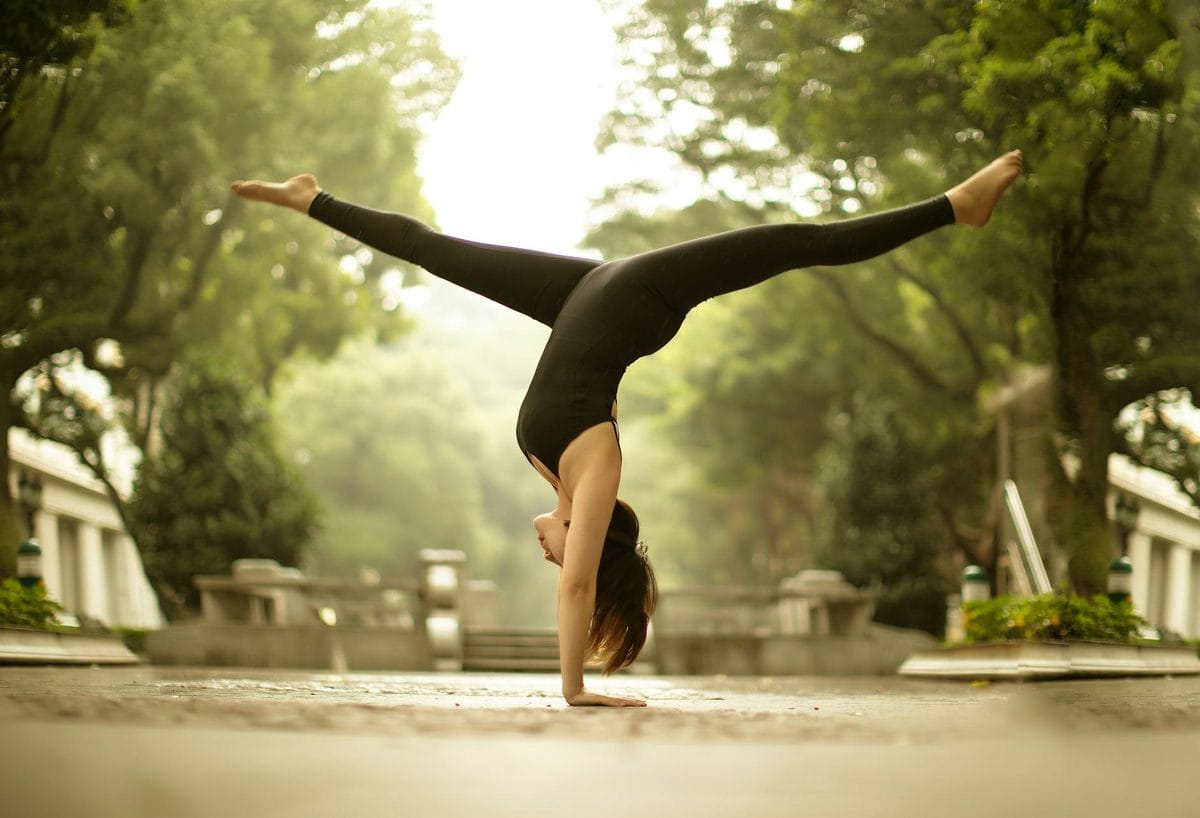
A handstand isn't strictly a yoga skill, though inversions appear throughout vinyasa, yin, and power classes. Gymnasts, calisthenics athletes, hand balancers, and acro dancers all rely on handstand mastery. What matters is finding a course that teaches progression, not just the final shape. That means wall work, shoulder conditioning, hollow body holds, and alignment cues that actually prevent wrist strain. Here are five programs worth your time and money.
1. Handstand Army: The Complete Foundation Course
Handstand Army stands out because it treats handstand training like a real skill, not a party trick. Founded by Gabriel Nossas and Yaro Koshkin, the platform specializes in hand balancing and calisthenics education. Their Complete Foundation Course runs about 4 to 6 weeks and costs around $97. The structure is methodical: you start with wrist conditioning and shoulder mobility work, progress through wall holds and chest-to-wall variations, then move toward freestanding balance.
What sets them apart is video quality and attention to detail. Each lesson is filmed from multiple angles so you can see exactly how your forearm should sit, where your gaze should land, and how to correct a banana-back tendency. The program includes a progression chart and daily practice recommendations. If you're a beginner, expect this to take longer than the stated timeline—and that's intentional. They encourage building genuine strength rather than rushing to a shaky hold.
2. GMB Handstand Course: Rings and Bodyweight Focus
Gold Medal Bodies (GMB) has built a reputation for high-quality gymnastics and calisthenics instruction. Their handstand course is part of their larger strength training ecosystem but stands alone as a solid investment at approximately $48 one-time or included in their $39/month membership. The progression is systematic: foundation, wall holds, freestanding hold, and press-to-handstand (taking weight from feet to hands without jumping).
GMB's strength is the community aspect and the detailed progression photos. You film yourself at each stage and can submit form checks in their forum, where coaches provide feedback. The instructional videos are efficient, without unnecessary talking, and the program respects that some people learn faster than others. Expect 8 to 12 weeks to build a 20-30 second free-standing hold. They also offer guided routines you can follow daily, which removes the guesswork.
3. Calisthenics Movement: The Complete Handstand Course
Calisthenics Movement, run by experienced hand balancers, offers a course priced around $27 to $37 depending on promotions. What you're paying for is honesty and simplicity. The course covers the essentials: warm-ups, shoulder conditioning, wall conditioning, spotting techniques, and the key transitions between variations. There's no fluff, no promises of results in 30 days, and no selling you extra equipment.
This program appeals to people who already have training experience—whether in yoga, gymnastics, or strength sports—and want to add handstands specifically. The teaching assumes you understand concepts like scapular engagement and core tension. If you're starting from zero fitness, GMB or Handstand Army might be more accessible. But if you want a lean, affordable option without the extra community features, Calisthenics Movement delivers.
4. FitnessFAQs Handstand Progression Videos: YouTube to Paid Tiers
FitnessFAQs operates on a model where you can access free YouTube content or pay for a structured course (around $19) with downloadable workouts. The channel is run by Marcus Filly and strength coaches who explain the biomechanics behind each progression. Their free content is excellent, making the paid course an optional upgrade if you want guided workout plans organized by phase.
The paid handstand course includes a 6-week plan, PDF sheets, and access to their private community. They go deeper into shoulder anatomy and why your particular wrists might hurt, offering individual troubleshooting. This works well if you've already done some training and hit a plateau, or if you prefer learning from someone who teaches via YouTube's conversational style.
5. YogaAlliance-Registered Programs: Inversion Modules Within YTT
If you're already pursuing a Yoga Teacher Training (YTT) certification, several schools include rigorous handstand and arm balance modules. Programs like Alo Moves (previously ALOHA), Yoga Internals, and Do You Yoga offer inversion-specific courses for $15-$30 per month, or you can enroll in their full YTT curricula ($500-$3000 depending on depth). These are best if you want handstands taught within a yoga philosophy framework, alongside pranayama and alignment principles.
A handstand taught in yoga context emphasizes not just strength but also steadiness of mind (sthira), which relates to the Yoga Sutras' concept of comfortable effort. You'll learn how a handstand connects to other inversions like headstand and shoulder stand, and how the yamas and niyamas—particularly santosha (contentment) and tapas (disciplined effort)—inform patient training. This approach suits people who see handstands as part of a broader practice rather than a pure athletic goal.
What to Look For When Choosing a Handstand Course
Before enrolling, ask yourself three things. First, what's your current fitness level? If you can't hold a wall plank for 30 seconds or do a few push-ups, start with Handstand Army or GMB, which build real foundational strength. Second, do you want community and feedback, or do you prefer self-paced solo practice? GMB and FitnessFAQs offer community elements; Calisthenics Movement and YouTube-based options are more solitary. Third, what's your primary goal? If it's yoga-related, a YTT module makes sense. If it's calisthenics or gymnastics strength, Handstand Army or Calisthenics Movement are more direct.
All five programs emphasize the same underlying truth: handstands require consistent, humble practice over weeks and months. There's no shortcut. Expect to spend 15-30 minutes daily, five days a week, for at least 8-12 weeks before holding a solid free-standing handstand. Shoulder and wrist injuries happen when people skip progressions or rush the timeline, so trust the process.
Beyond the Course: Conditioning and Mindset
A handstand course is a map, not the journey itself. You'll still need to show up on your mat or ground daily, maintain consistency even when progress stalls, and learn to distinguish between good soreness and injury pain. Add supplementary shoulder work: pike push-ups, face pulls, and dead hangs from a pull-up bar strengthen the precise muscles a handstand demands. Core work—hollow body holds, leg raises, and planks—prevents your back from arching, which breaks alignment and causes wrist strain.
Mentally, a handstand teaches what yoga philosophy calls abhyasa and vairagya: steady, devoted practice paired with non-attachment to results. You won't hold it perfectly on day five or week two. You'll face the ego's frustration, the nervous system's fear of inversion, and the curious experience of training a skill you can't yet do. That discomfort is the practice. The course you choose simply structures the work. The real learning happens in your body, over time, with patience.
Go Deeper
Compare real programs in the OYP YTT Database:
Related Reading
Subscribe to the newsletter
Subscribe to my newsletter to get the latest updates and news