Lululemon: The Yoga Brand with Genuine Fan Loyalty

Lululemon inspires loyalty that goes beyond marketing. Here's what $100+ yoga apparel actually offers—and who should buy it.
You've noticed it in yoga studios and on city streets: people wearing Lululemon with the confidence of someone in a brand they trust. If you're wondering whether the premium prices match the reputation, or if Lululemon is right for your yoga practice, you're asking the right questions. This isn't about hype. It's about understanding what a $128 pair of leggings actually delivers—and whether that investment fits your needs and values.
The Origin Story: From Vancouver Yoga Studio to Global Brand
Lululemon Athletica was founded in 1998 by Chip Wilson in Vancouver, British Columbia. Wilson wasn't a fashion designer—he was a cyclist frustrated by the athletic wear available at the time. He noticed yoga instructors teaching in cotton t-shirts and decided there was an opportunity to design technical fabrics specifically for movement and sweat management.
The brand opened its first standalone store in Kitsilano, a Vancouver neighborhood known for yoga practice and wellness culture. That location choice matters: Lululemon didn't start as a fashion brand. It started inside the yoga community, designing for the actual needs of practitioners. The early mission was explicit—create community spaces where people could learn about movement, nutrition, and wellness alongside buying gear.
Today, Lululemon operates over 500 stores globally and generates billions in annual revenue, but that founding principle persists. Every store still hosts free yoga classes and community events. That's not marketing theater. That's the business model baked in from day one.
Core Product Categories and Real Pricing
Leggings and Tight Bottoms
Lululemon's flagship product is their women's leggings line, most famously the Align pant ($128 USD). The Align uses Nulu fabric—a light, buttery-soft material designed for practice and leisure wear. For comparison, their Wunder Under leggings ($128) use Luxtreme fabric, which is thicker and more supportive for high-impact classes. For men, the ABC (Anti-Ball Crushing) pants run $138 and use similar technical construction.
The price point reflects fabric development, which Lululemon takes seriously. Nulu incorporates four-way stretch and moisture-wicking properties that standard athletic nylon doesn't offer. If you're practicing vinyasa five days a week, that durability and performance difference becomes tangible over 100+ wears.
Tops and Bras
Sports bras range from $68 to $128 depending on support level and fabric. The Energy Bra ($68) is designed for low-to-medium impact yoga and pilates. For higher-impact practices, the Enlite Bra ($98) offers more structure. On tops, the classic Align Tank runs $68, while the Swiftly Tech Tank ($68) adds moisture-wicking for warmer classes. Many studios require specific tops for teacher training, and Lululemon's tops are technically designed to allow movement without excess fabric getting in the way.
Outerwear and Accessories
The brand offers jackets ($158-$228), sweatshirts, hats, belts, and bags—all following the same technical-fabric philosophy. Their yoga mats (The Reversible Mat, $88-$98) use natural rubber and microfiber. Their water bottles, straps, and blocks are designed to integrate with their clothing ecosystem. This isn't accidental—Lululemon builds a complete gear experience.
Fabric Technology and What Justifies the Cost
A $128 Lululemon pant costs significantly more than a $40 pair from most competitors. The difference isn't brand markup alone. It's fabric engineering. Lululemon invests heavily in proprietary textile development.
Key Fabric Technologies
Nulu: A lightweight, four-way stretch fabric with nylon/lycra blend. It's designed for breathability and a close-to-skin feel without compression. Used in their popular Align and In Movement lines.
Luxtreme: Thicker, more structured fabric with moisture-wicking and stay-put properties. Popular in Wunder Under and Fast and Free lines. It performs well in heated classes where sweat management matters.
Silverescent: A proprietary technology that incorporates silver into the fabric for temperature regulation and odor resistance. Found in select sports bras and tops.
These aren't just marketing names. They're textile formulations that require R&D. When a Lululemon pant lasts 200+ wears without pilling, losing shape, or developing see-through sections, that durability reflects the fabric investment.
Sizing and the Fit Philosophy
Lululemon uses numbered sizing (sizes 0-14 for women, with 0 being approximately XS). This is intentional—the brand avoids S, M, L labels partly to remove size shame, partly to encourage accurate fit across different body types.
How to Find Your Lululemon Size
Most women fall into sizes 4-8. If you typically wear XS, you're likely a 0 or 2. If you wear S-M, you're probably 4-6. If you wear M-L, you're likely 8-10. The sizing is generous compared to traditional fashion brands—this is intentional. The brand designs for movement, not for a tight fit.
For yoga specifically, many teachers and frequent practitioners size down one size from their normal clothing size because Lululemon fabrics stretch and Lululemon wants the fit to evolve with your movement. A size 4 Align pant will feel slightly snug at rest but will move and stretch perfectly during practice.
Lululemon's return policy (Can't find it in store? Free returns within 30 days in stores or online) makes sizing experimentation practical. Many practitioners buy two sizes, test both at home, then return one.
The Community and Store Experience
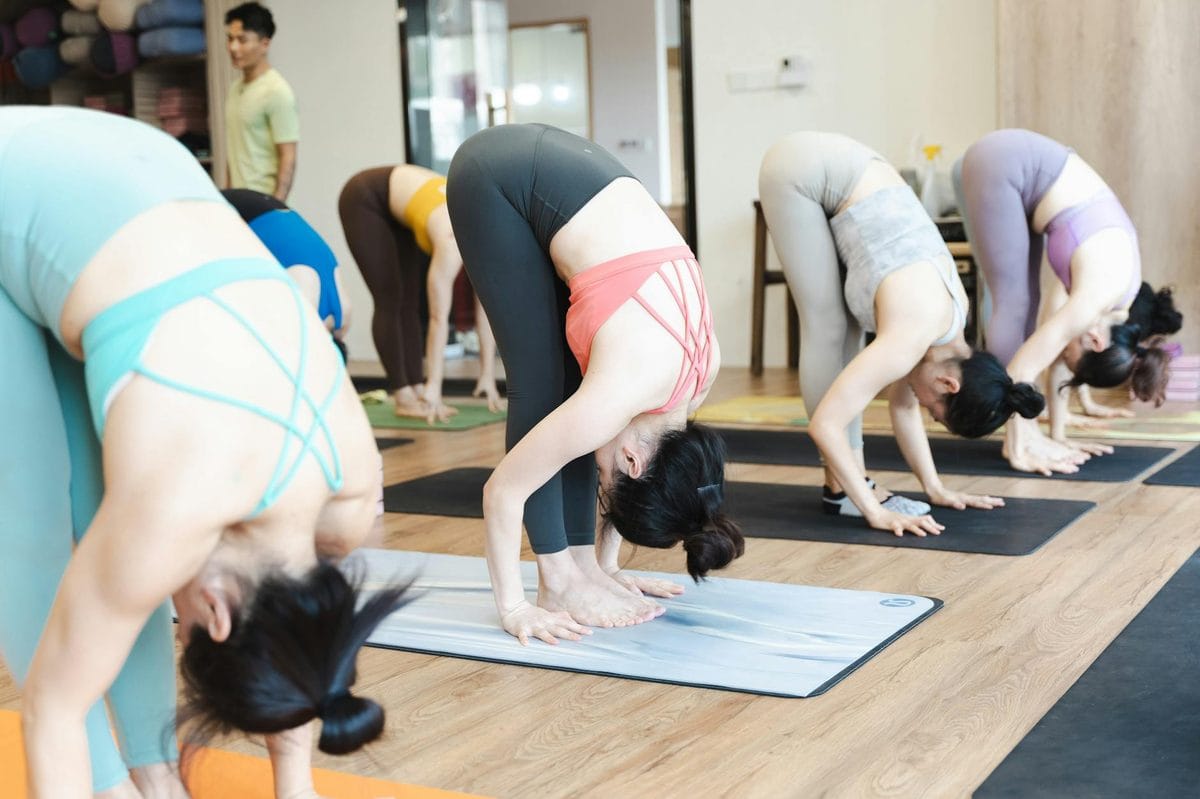
This is where Lululemon's loyalty becomes clear. The brand isn't selling pants. It's building community around yoga and wellness. Every Lululemon store hosts free classes—typically yoga, meditation, or strength training—multiple times weekly. These aren't perfunctory. They're taught by qualified instructors, often involving local yoga teachers.
Store staff are trained differently than typical retail employees. Many work in the brand because they practice yoga or run, not because it's a job. They can discuss fabric differences, give sizing advice based on practice type, and recommend products based on your actual needs. This isn't universal—some stores perform better than others—but the model encourages it.
Lululemon also runs ambassador programs, connecting local yoga teachers and athletes with the brand for community-building. This creates a feedback loop: teachers wear Lululemon, students see them, students trust the brand, students buy from the brand. That cycle has built real loyalty, not just repeat purchases.
Sustainability and Labor Practices
This is where Lululemon's story becomes more complicated. The yoga community values sustainability, and Lululemon has made efforts, but progress has been uneven.
What Lululemon Has Done
The brand commits to using traceable, verified fabrics where possible. They've worked toward responsible sourcing and have published transparency reports. In 2021, Lululemon announced a goal to reach net-zero emissions by 2040 and committed to mapping its entire supply chain. They've also invested in factory training programs and worker education.
Their take-back program allows customers to return worn Lululemon items for recycling or donation. This addresses the fast-fashion problem—if you wear something for 200+ times, sending it back for a second life at end-of-use is meaningful circular economy work.
Where Gaps Remain
Like most fashion brands, Lululemon manufactures primarily in countries with lower labor costs. While they've improved factory conditions and conduct audits, the brand hasn't fully closed the gap between yoga values (non-harm, connection to community) and global supply chain realities.
The price point also means Lululemon remains inaccessible to many yoga practitioners. A genuine commitment to wellness community would include more democratized pricing. The $128 legging is a luxury product, not a necessity for effective practice.
Additionally, while their take-back program exists, it requires customer participation. Most people simply throw away or donate clothing locally rather than returning it to the brand. The environmental impact is still significant, even if marginally better than alternatives.
Lululemon vs. Competitors
The yoga apparel market has expanded dramatically. Competitors include Alo Yoga, Outdoor Voices, Athleta, and direct-to-consumer brands. How does Lululemon compare?
Alo Yoga
Alo Yoga offers luxury positioning similar to Lululemon, with comparable pricing ($88-$128 leggings). Alo emphasizes aesthetics slightly more, with trendier designs and influencer marketing. Alo lacks Lululemon's in-store community programming, however. If you value fashion-forward yoga wear, Alo competes. If you want community integration, Lululemon wins.
Athleta
Athleta (owned by Gap Inc.) prices slightly lower ($78-$118 leggings) and emphasizes sustainability more explicitly. They use recycled materials more widely and have stronger labor commitments. For budget-conscious practitioners who prioritize environmental impact, Athleta can be the better choice. Lululemon's advantage remains community experience and brand prestige.
Direct-to-Consumer Brands
Brands like Girlfriend Collective, Outdoor Voices, and Gymshark price lower ($40-$80 leggings) by eliminating retail overhead. Quality varies significantly, and most lack Lululemon's proven 200+ wear durability. For price-sensitive buyers, these work. For investment pieces, Lululemon's track record is stronger.
Is Lululemon Worth It for Your Practice?
The answer depends on four factors:
Frequency of Practice
If you practice 3+ times weekly and will wear pieces 200+ times annually, Lululemon's durability justifies cost. If you practice once weekly or casually, you're overpaying for what you need. Do the math: $128 leggings ÷ 200 wears = $0.64 per wear. That's reasonable for an avid practitioner. $128 ÷ 50 wears = $2.56 per wear. That's expensive.
Body Type and Fit Needs
Lululemon's numbered sizing and generous cuts work well for many body types, but not all. If you have a petite frame, finding length may be hard. If you have a larger frame, size availability can be limited. Try in-store or use their return policy before committing.
Financial Capacity
The yoga community includes people at all economic levels. A $128 legging might represent 2-3 hours of work for a teacher in a high-cost city, or a full day of work for a teacher in a lower-cost region. Only you know if that's accessible. Premium gear doesn't make you a better practitioner. Your commitment does.
Values Alignment
If community programming and yoga-first design matter to you, Lululemon's model delivers. If sustainability is paramount, research their specific factories and recycling processes—their effort is real but incomplete. If affordability and accessibility are your priority, you might find better values elsewhere.
The Reality of Brand Loyalty
Lululemon has built something genuine: a community-first brand that started inside yoga, not outside it. That's rare in fashion. The free classes, the teacher ambassadors, the investment in technical fabrics for actual practitioners—these aren't theater.
But that authenticity doesn't erase pricing realities or supply chain complexities. Wearing Lululemon doesn't make you a better yogi. Your practice, your dedication, your integrity—those define your yoga. The gear is secondary.
If Lululemon fits your budget, your body, and your practice frequency, it's a solid investment. If it doesn't, there are excellent alternatives. The most important thing is that you show up on the mat, whether in Lululemon, Alo, Athleta, or a $15 pair of sweatpants from Target.
The real loyalty worth pursuing isn't to a brand. It's to your practice.
Related programs in our directory:
- an alignment-focused yoga school in Princeton — 4.95★ · 114 reviews
- a flow and alignment-oriented school in Boulder — 4.98★ · 171 reviews
Related Reading
Alo Yoga vs. Lululemon: Which Brand Fits Your Practice — A detailed comparison of two luxury yoga brands to help you choose based on fit, sustainability, and community values.
7 Eco-Friendly Yoga Mats: Natural Materials That Don't Slip or Slip — If sustainability matters to you, explore yoga mats made from natural rubber and recycled materials that align with environmental values.
The 7 Best Yoga Pants on Amazon: Features, Fit, and Price Comparison — Budget-friendly alternatives to luxury brands that still deliver quality, breathability, and durability for regular practice.
Yoga for Beginners: Everything You Need to Start a Home Practice — Focus on building your practice first; the right gear follows naturally as your commitment deepens.
Subscribe to the newsletter
Subscribe to my newsletter to get the latest updates and news